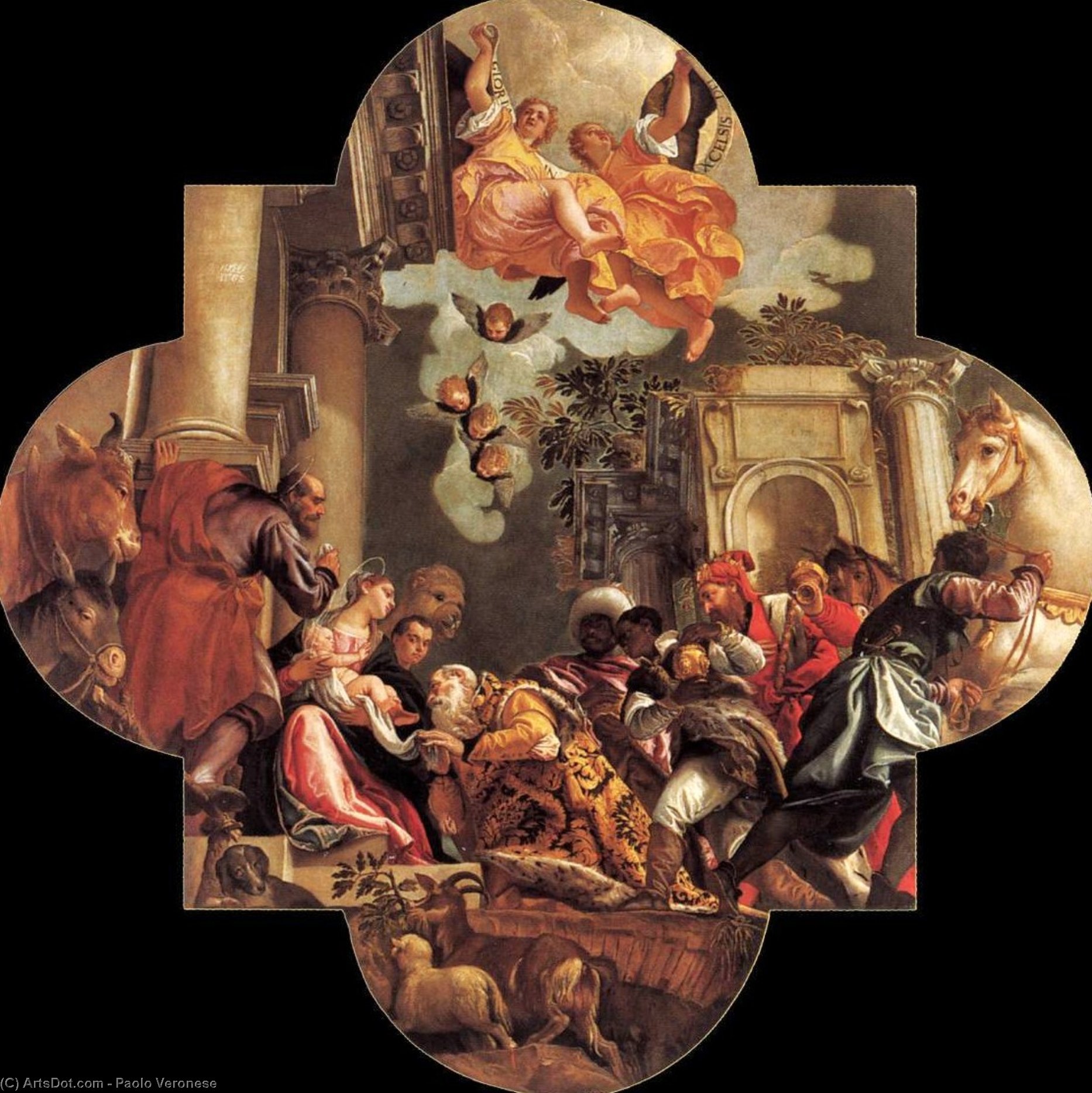
Page of Adoration of the Magi by VERONESE, Paolo in the Web Gallery of Art, a searchable image collection and database of European painting, sculpture and architecture (200-1900)
Paolo Veronese (1528-1588): Venetian Renaissance master celebrated for vibrant color, dramatic compositions & opulent scenes of feasts and architecture. Explore his legacy!
Delve into Venetian art history at Basilica dei Santi Giovanni e Paolo (San Zanipolo)! Admire masterpieces by Bellini & Veronese, explore Doge tombs, and discover Campo di Santi Giovanni e Paolo's Gothic grandeur.
A Symphony of Color and Faith: Exploring Paolo Veronese’s ‘Adoration of the Magi’
Paolo Caliari, universally known as Paolo Veronese, stands as a titan amongst Venetian Renaissance artists—a figure whose legacy continues to resonate centuries later. Born in Verona in 1528, his formative years were steeped in the artistic fervor of his hometown, where classical influences mingled with humanist ideals to shape the visual sensibilities of the era. His early training under Antonio Badile and Giovanni Francesco Caroto instilled him with foundational skills in traditional oil painting techniques, yet it was his relocation to Venice in the 1550s that truly propelled him toward artistic greatness. The city itself became Veronese’s unwavering muse—its bustling marketplaces, opulent palaces, and shimmering canals serving as inspiration for a monumental oeuvre characterized by grandeur and meticulous detail.
The Canvas of Splendor: Composition and Technique
Veronese's ‘Adoration of the Magi,’ completed in 1573, exemplifies his mastery of Baroque aesthetics. Measuring approximately 4.8 x 6.9 meters (nearly 16 feet by 23 feet), it dominates its chapel space within the Basilica Palladiana of Venice—a deliberate choice reflecting Veronese’s ambition to create a theatrical spectacle for religious devotion. The painting employs a pyramidal composition, drawing viewers' eyes upward towards the central figure of Jesus Christ cradled in Mary’s arms and surrounded by the Magi – Herod, Baltazar, Melchior, Caspar – and their entourage. Veronese meticulously rendered each participant with astonishing realism, utilizing sfumato—a technique pioneered by Leonardo da Vinci—to soften contours and create an ethereal glow that imbues the scene with luminosity. The artist’s masterful brushwork captures the textures of clothing, skin, and drapery with breathtaking accuracy, demonstrating a profound understanding of anatomy and perspective.
A Tapestry of Venetian Color: Palette and Light
Veronese's palette is arguably his most celebrated achievement—a riot of vibrant hues that capture the splendor of Venetian aristocratic patronage. He eschewed muted tones favored by earlier Renaissance artists, opting instead for bold reds, blues, yellows, and greens that pulsate with life. These colors are skillfully blended to create a sense of depth and atmosphere, mirroring the reflections on water surfaces and enhancing the dramatic impact of the scene. Veronese’s use of chiaroscuro—the interplay between light and shadow—further amplifies this effect, sculpting figures against illuminated backgrounds and emphasizing emotional expression. The diffused light emanating from unseen sources casts long shadows across the chapel floor, creating a palpable sense of drama and reinforcing the solemnity of the religious narrative.
Biblical Narrative Illuminated: Symbolism and Context
‘Adoration of the Magi’ transcends mere visual representation; it is laden with symbolic significance rooted in Christian iconography. The Magi represent the Gentile kings who traveled to Bethlehem to venerate Jesus's birth, symbolizing the universality of Christ’s salvation—reaching beyond Jewish tradition into pagan cultures. The doves perched atop the manger symbolize peace and divine grace, while the star signifies God’s providence guiding humanity toward enlightenment. Veronese’s depiction aligns perfectly with the Counter-Reformation fervor gripping Europe at the time, serving as a powerful affirmation of Catholic faith and artistic excellence. It reflects the Venetian Republic's commitment to preserving its cultural heritage amidst religious upheaval—a testament to Veronese’s enduring influence on Baroque art history.
Emotional Resonance: Capturing Sacred Reverence
Ultimately, ‘Adoration of the Magi’ succeeds in conveying a profound sense of spiritual awe and reverence. The faces of the figures are rendered with expressive detail, capturing moments of contemplation and emotion—the tenderness of Mary gazing upon her son, the solemn dignity of Herod surveying the scene. Veronese's meticulous attention to gesture and posture communicates not only physical realism but also psychological depth, inviting viewers into the sacred drama unfolding before their eyes. The painting’s grandeur and vibrancy serve as a reminder of the transformative power of art—its ability to inspire contemplation and elevate the human spirit.