



A Monument of Venetian Grandeur: The Soul of San Zanipolo
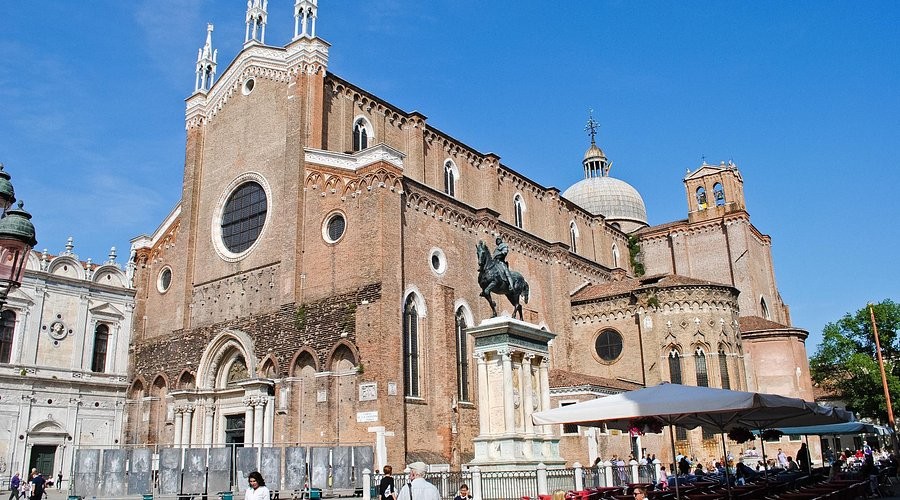
In the heart of Venice’s Castello district, where the labyrinthine calli open into the historic Campo di Santi Giovanni e Paolo, stands a monument that breathes the very essence of Venetian power and piety. The Basilica dei Santi Giovanni e Paolo, known affectionately to locals as San Zanipolo, is far more than a mere ecclesiastical structure; it is a profound chronicle of a maritime empire written in stone, glass, and pigment. To step beneath its soaring Gothic arches is to enter a space where the political destiny of the Serenissima Republic meets the eternal aspirations of the soul. The basilica serves as a solemn sanctuary for twenty-seven Doges, whose magnificent funerary monuments transform the nave into a silent, marble-clad assembly of Venice’s most influential rulers, each tomb a testament to an era of unparalleled maritime and artistic dominance.
The architectural journey of San Zanipolo is a captivating evolution of style, reflecting the shifting tides of Venetian history. While its foundations whisper of ninth-century Byzantine influences and early connections to Eastern Christendom, the basilica’s true character was forged during the Gothic era. This period of ambitious reconstruction bestowed upon the church its commanding presence, characterized by a sense of verticality and dramatic scale. The facade, punctuated by a breathtaking rose window, acts as a celestial gateway, filtering light through intricate stained glass to bathe the interior in an ethereal, shifting glow. As Renaissance architects later refined the structure, they infused it with a classical grandeur that harmonizes perfectly with its medieval bones, creating a space where the heavy weight of history feels remarkably luminous.
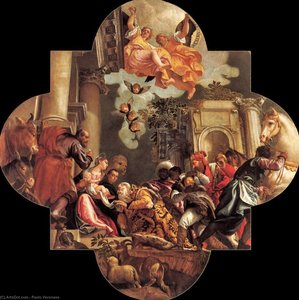
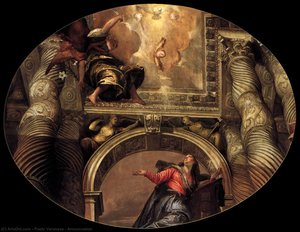
For the connoisseur of fine art, the basilica offers an unparalleled treasury of the Venetian Renaissance, a collection that serves as a masterclass in color, light, and emotion. The walls are graced by the hand of Giovanni Bellini, the progenitor of the Venetian school, whose works such as the Madonna with Child demonstrate a revolutionary mastery of soft transitions and atmospheric depth. His ability to imbue sacred subjects with a human tenderness through subtle nuances of hue remains a cornerstone of Western art history. This dialogue of light continues through the dramatic contributions of Paolo Veronese, whose monumental frescoes and narrative predellas capture the theatrical splendor of Venetian court life. Verenerse’s vibrant palette and complex compositions bring a sense of movement and opulence to the basilica, making every corner a discovery for those who seek the pulse of the Golden Age.
Beyond its role as a repository of masterpieces, San Zanipolo remains a living legacy, an architectural heartbeat that continues to resonate within the modern city. The surrounding Campo serves as a vibrant stage for cultural life, yet the basilica itself maintains a sacred stillness, inviting collectors and designers alike to contemplate the enduring power of beauty. For the interior designer, the basilica offers endless inspiration in its interplay of textures—from the cold, carved marble of the Doge tombs to the warm, golden light reflecting off Bellini’s canvases. It is a place where history is not merely studied but felt, offering an immersive experience that connects the contemporary observer to the profound artistic and political lineage of Venice.