The Rise of Realism: Challenging Academic Tradition in 19th-Century Italy
 Wikipedia: Macchiaioli
The Macchiaioli (Italian pronunciation: [makkjaˈjɔːli]) were a group of Italian painters active in Tuscany in the second half of the nineteenth century. They strayed from antiquated conventions taught by the Italian art academies, and did much of t...
The mid-19th century witnessed a seismic shift in the artistic landscape of Europe, and Italy was no exception. For centuries, Italian art had been defined by the legacies of the Renaissance masters – Michelangelo, Raphael, Leonardo – a weight of expectation that often stifled innovation. The rigid structures of the Academies, with their emphasis on idealized forms, historical narratives, and meticulous technique, began to feel increasingly detached from the realities of a rapidly changing world. A new generation of artists sought to break free from these constraints, yearning for a more direct engagement with contemporary life and a rejection of artifice in favor of authenticity. This burgeoning spirit of rebellion found its most compelling expression in Tuscany, with the emergence of a group known as the Macchiaioli – the “stain painters” – who would fundamentally alter the course of Italian art.
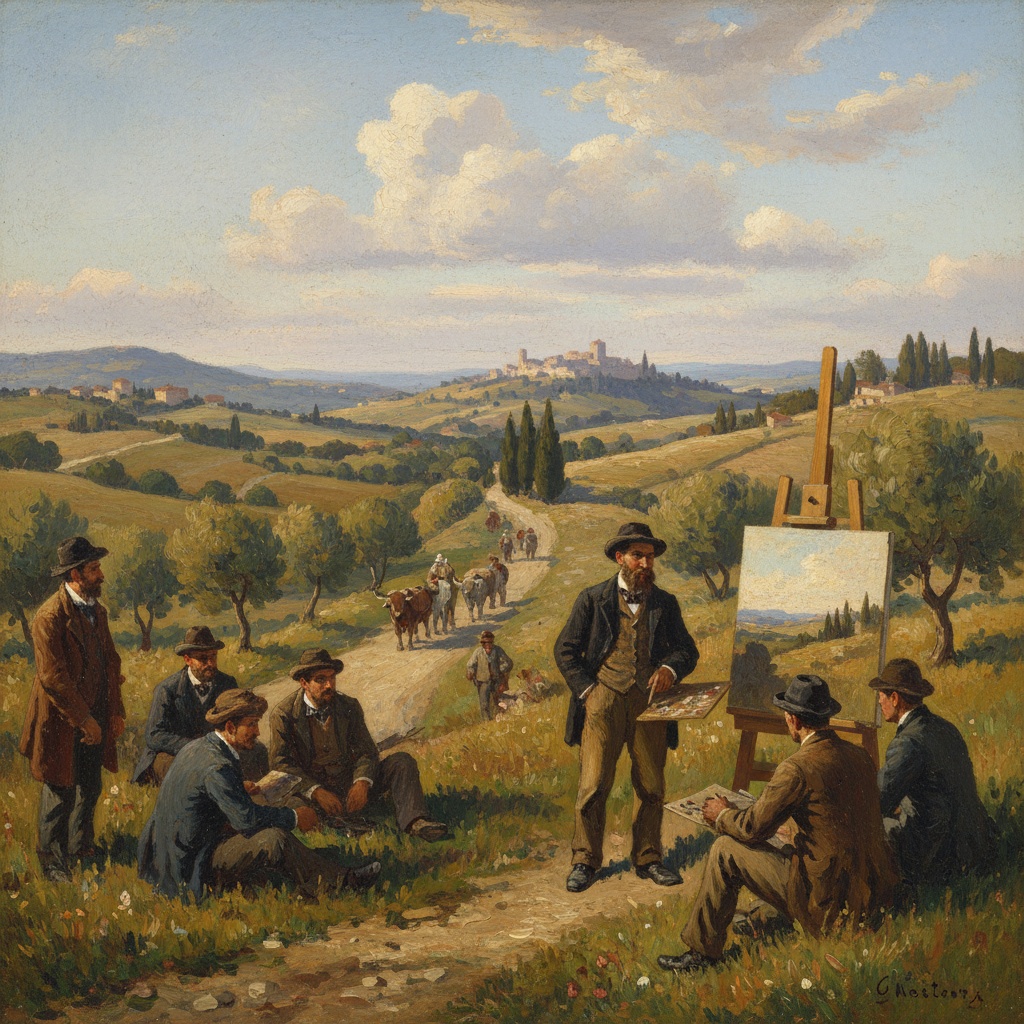
The prevailing academic style prioritized precise drawing and carefully modulated chiaroscuro, often resulting in paintings that felt polished but lacked immediacy. Artists like Fattori and his contemporaries questioned this approach, believing that true artistic expression lay not in slavish imitation of classical models but in capturing the fleeting effects of light and atmosphere directly from nature. This wasn’t simply a technical shift; it was a philosophical one, rooted in a desire to reflect the social and political upheavals of the Risorgimento – the movement for Italian unification – and to forge a distinctly modern Italian identity.
Giovanni Fattori’s Early Life & Artistic Formation: From Historical Painting to Plein Air
Born in Livorno in 1825, Giovanni Fattori initially followed a conventional artistic path. His early training focused on historical painting, a genre favored by the Academies for its ability to convey grand narratives and patriotic themes. However, even in these early works, a nascent talent for realism and an acute observational eye were evident. He diligently studied anatomy and perspective, mastering the technical skills that would later serve as the foundation for his revolutionary approach. But Fattori’s artistic sensibilities were increasingly drawn towards the everyday world – the bustling streets of Livorno, the rural landscapes of Tuscany, the lives of ordinary people.
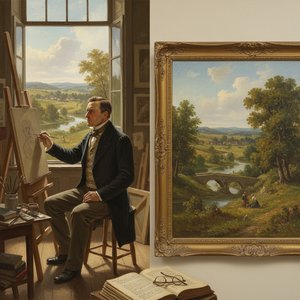
A pivotal moment in Fattori’s development came with his exposure to the Barbizon school, a group of French landscape painters who championed *plein air* painting – working directly from nature rather than in the studio. Inspired by their commitment to capturing the transient effects of light and atmosphere, Fattori began to venture outdoors himself, sketching and painting en plein air with increasing frequency. This marked a decisive break from academic convention and set him on a path towards becoming one of Italy’s foremost realist painters. His early attempts at historical subjects gradually gave way to scenes of military life, rural labor, and the evocative landscapes that would define his mature style.
The Macchiaioli Movement: Principles, Techniques, and Shared Ideals
The Caffè Michelangelo in Florence served as the intellectual heart of the Macchiaioli movement. Here, a group of like-minded artists – Giuseppe Abbati, Cristiano Banti, Telemaco Signorini, Silvestro Lega, and others – gathered to debate artistic theory, critique each other’s work, and forge a new aesthetic vision. They rejected the academic emphasis on precise drawing and meticulous detail in favor of a more spontaneous and direct approach to painting.
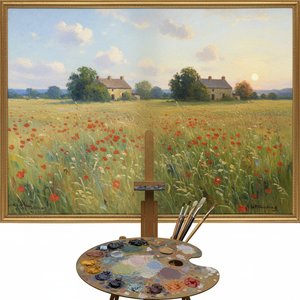
The term “macchia,” meaning “stain” or “patch,” aptly describes their technique – applying color in bold, unblended strokes that emphasized the strength and vibrancy of natural light. They sought to capture not the precise details of a scene but rather its overall impression, focusing on the interplay of light and shadow and the emotional impact of color. This approach was revolutionary for its time, challenging the established norms of Italian painting and paving the way for modernism. The Macchiaioli also shared a strong sense of patriotism, often depicting scenes that reflected the social and political upheavals of the Risorgimento.
Landscapes as Identity: Capturing the Tuscan Spirit in Fattori's Works
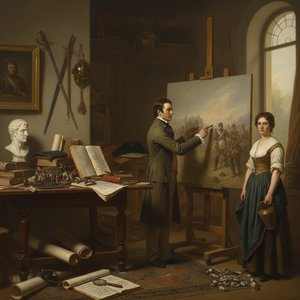
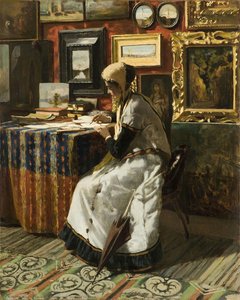 Unable to Wait
Explore 'Unable to Wait' by Telemaco Signorini, a pivotal Macchiaioli painting capturing modern life & artistic process. Realistic oil, dramatic light, & subtle beauty – a timeless Italian masterpiece.
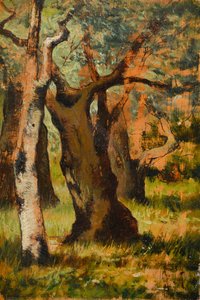
For Fattori, the landscapes of Tuscany were not merely picturesque backdrops but rather embodiments of Italian identity. He sought to capture the essence of the region – its rolling hills, sun-drenched fields, and rugged coastline – with a sensitivity and authenticity that had rarely been seen before. His paintings are imbued with a sense of place, conveying the unique character of Tuscany through subtle nuances of color and light.
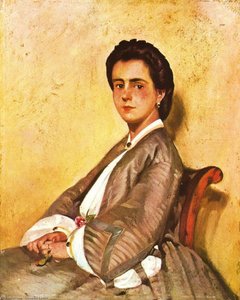
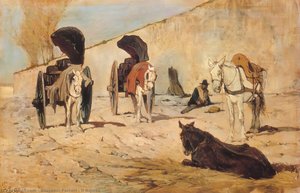
Portrait of Cousin Argia (1861) exemplifies Fattori’s ability to capture quiet dignity and composure within a realistic framework, showcasing his academic training alongside emerging Macchiaioli sensibilities. Works like In vedetta (also known as Il Muro Bianco) demonstrate his mastery of capturing the effects of light on surfaces, reducing forms to essential shapes and colors. He often depicted rural laborers working in the fields, portraying their lives with dignity and respect. These paintings were not simply depictions of everyday life; they were statements about Italian identity, celebrating the resilience and strength of the Tuscan people.
Military Subjects and Social Commentary: A Reflection of Risorgimento Italy
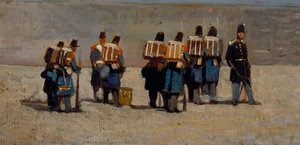
Fattori’s personal experiences during the First Italian War of Independence (1848-1849) profoundly influenced his artistic output. He served as a volunteer in the Florentine militia, witnessing firsthand the hardships and sacrifices of war. This experience led him to create a series of powerful paintings depicting scenes of military life – soldiers marching through dusty roads, wounded men recovering in makeshift hospitals, and the somber aftermath of battle.
These paintings were not glorifications of war but rather unflinching depictions of its realities. Fattori’s focus on the everyday lives of ordinary soldiers, their fatigue, their anxieties, and their quiet heroism, set his work apart from traditional military painting. He sought to convey the human cost of conflict, offering a poignant commentary on the social and political upheavals of the Risorgimento. His works often subtly critique the inequalities inherent in Italian society.
Fattori’s Legacy & Rediscovery: Influence on Modern Italian Art
Despite his significant contributions to Italian art, Fattori remained somewhat overshadowed during his lifetime. His revolutionary approach challenged established norms and initially met with resistance from conservative critics. However, his influence on subsequent generations of Italian artists was profound. He paved the way for modernism, inspiring painters to break free from academic constraints and embrace a more direct engagement with contemporary life.
In the late 20th century, Fattori’s work underwent a rediscovery, leading to renewed interest in his art and a reassessment of his place in Italian history. Today, he is recognized as one of the most important painters of the 19th century, a true innovator who fundamentally altered the course of Italian art. His paintings continue to captivate audiences with their sensitivity, authenticity, and enduring power. Explore Fattori’s masterpieces and discover the beauty of Macchiaioli realism at ArtsDot.com, where you can find high-quality reproductions that bring his vision to life.