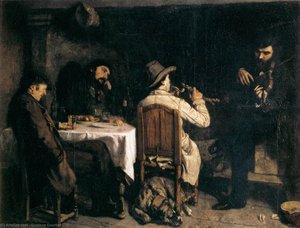
The Rise of Realism: Challenging Artistic Conventions
Literary realism is a movement and genre of literature that attempts to represent mundane and ordinary subject-matter in a faithful and straightforward way, avoiding grandiose or exotic subject-matter, exaggerated portrayals, and speculative elements...
For centuries, art had largely concerned itself with the ideal—the mythological hero, the divine narrative, the perfectly rendered form. But as the 19th century dawned, a profound shift began to ripple through the artistic landscape. A growing dissatisfaction with academic tradition and Romanticism’s emotional fervor fueled a desire for something more grounded, more immediate: truth. This wasn't merely a stylistic change; it was a philosophical rebellion against established norms, a yearning to depict the world as it *was*, not as it was imagined or idealized. The seeds of Realism were sown in the aftermath of revolutions and societal upheaval, a period where the lives of ordinary people—their struggles, their triumphs, their very existence—demanded recognition. Artists began to question the elevated status of historical painting and religious scenes, turning instead to the everyday realities unfolding around them.
This nascent movement wasn’t simply about rejecting beauty; it was about redefining it. The grandeur of classical compositions gave way to a focus on authenticity, on capturing the nuances of light, texture, and human emotion in their rawest form. It was a conscious effort to democratize art, bringing previously marginalized subjects—laborers, peasants, urban life—into the realm of high culture. This rejection of convention wasn’t without its critics; many found the subject matter vulgar or unrefined, but the Realists remained steadfast in their commitment to portraying the world with unflinching honesty.
France as the Epicenter: Sociopolitical Context & Early Pioneers
19th-century French art was made in France or by French citizens during the following political regimes: Napoleon's Consulate (1799–1804) and Empire (1804–14), the Restoration (1814–30), the July Monarchy (1830–48), the Second Republic (1848–52), the...
While precursors existed across Europe, France became the undeniable epicenter of the Realist movement. The political and social climate following the 1848 Revolution—a period marked by widespread unrest and a yearning for democratic reform—created fertile ground for this new artistic sensibility. The rise of industrialization and urbanization brought about dramatic changes in French society, exposing stark inequalities and challenging traditional hierarchies. Artists felt compelled to document these transformations, to bear witness to the lives of those often overlooked or ignored.
Early pioneers like Honoré Daumier used lithography—a relatively inexpensive medium—to satirize the bourgeoisie and expose social injustices. His work, though often critical, was deeply rooted in observation and a keen understanding of human nature. However, it was Gustave Courbet who truly solidified Realism as a distinct artistic force. He wasn’t merely depicting reality; he was making a statement about the very purpose of art—a declaration that painting should be “essentially concrete” and focused on representing “real and existing things.” This bold assertion, articulated in his 1855 manifesto, challenged the academic establishment and paved the way for a new generation of artists.
Gustave Courbet: The Leading Figure and His Revolutionary Approach
 Wikipedia: Gustave Courbet
Jean Désiré Gustave Courbet (UK: KOOR-bay; US: koor-BAY; French: [ɡystav kuʁbɛ]; 10 June 1819 – 31 December 1877) was a French painter who led the Realism movement in 19th-century French painting. Committed to painting only what he could see, he re...
Jean Désiré Gustave Courbet (1819-1877) wasn’t just an artist; he was a provocateur, a social commentator, and a staunch advocate for artistic independence. His commitment to painting only what he could see—rejecting idealized forms and romanticized narratives—was revolutionary in its simplicity and audacity. Works like A Burial at Ornans, exhibited in 1850, shocked the Parisian art world with its monumental scale typically reserved for historical or religious subjects being applied to a commonplace event: a provincial funeral. The painting’s unflinching depiction of grief and ordinariness challenged viewers' expectations and sparked intense debate.
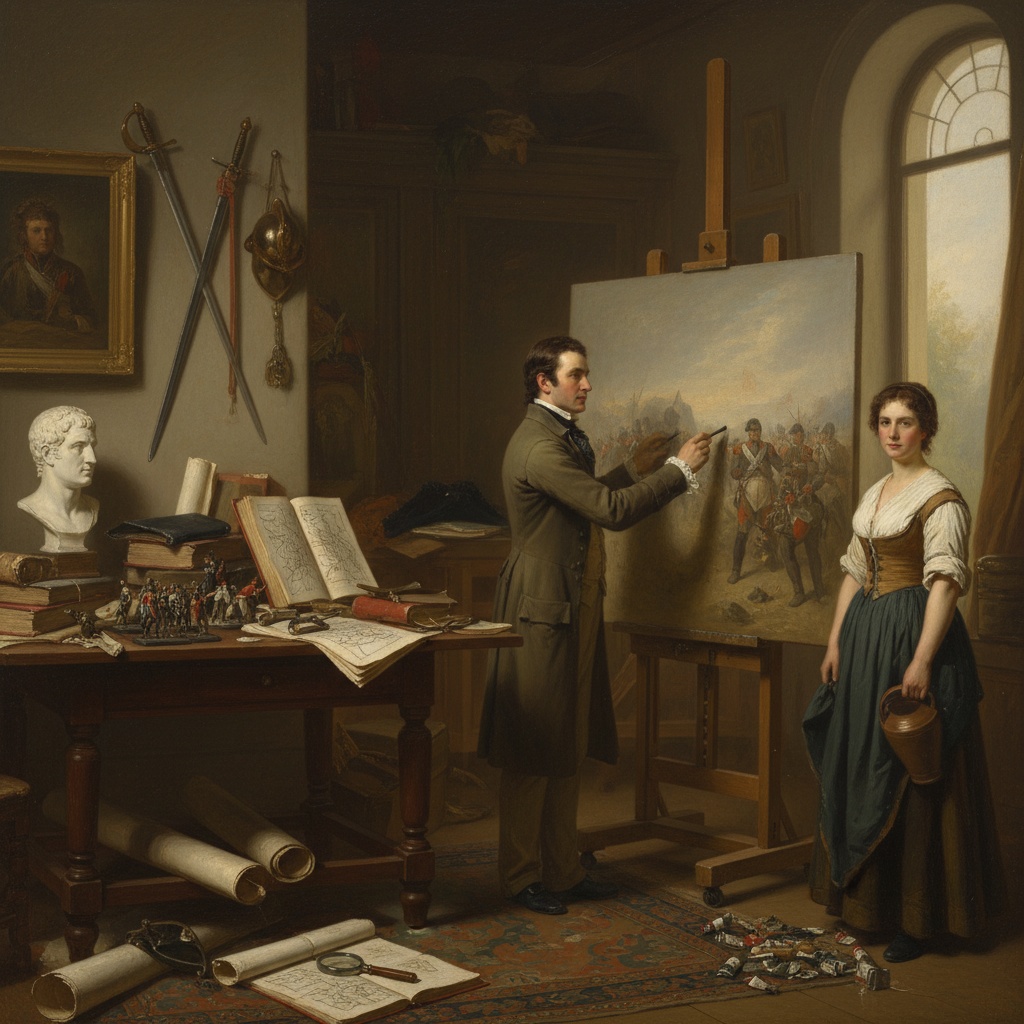
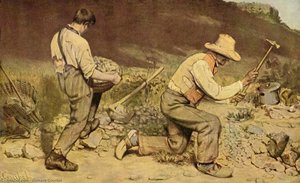
Courbet’s The Stonebreakers, though tragically destroyed during World War II, further exemplified his commitment to portraying the lives of the working class. His paintings weren’t simply representations of physical labor; they were statements about social inequality and the dignity of human work. He even established his own “Pavillon du Réalisme” in 1855 after two major works were rejected from the official Salon, showcasing his art independently and directly engaging with the public. His The Painter’s Studio, a complex allegorical composition, encapsulates his artistic philosophy—a reflection on seven years of his life as an artist surrounded by friends, patrons, and models, all representing different facets of French society.
Beyond France: Exploring Realist Movements Across Europe
While France served as the birthplace of Realism, its influence quickly spread across Europe, taking root in diverse cultural contexts. In Russia, artists like Ilya Repin focused on depicting the lives of peasants and the social injustices prevalent in Tsarist society. Their work often carried a strong political message, reflecting the growing unrest and desire for reform. In Germany, artists such as Adolph Menzel captured the realities of industrial life and the changing social landscape with meticulous detail.
However, perhaps one of the most compelling examples outside France can be found in Hungary with Mihály Munkácsy. His genre scenes, particularly his depictions of rural life and peasant struggles, resonated deeply with audiences. Similarly, in Poland, Aleksander Gierymski explored themes of Jewish life and the complexities of urban existence with a stark realism that challenged conventional artistic norms. Each nation adapted Realism to its own unique circumstances, reflecting local concerns and cultural values.
Key Characteristics of 19th-Century Realism: Technique, Subject Matter, and Style
Several defining characteristics distinguish 19th-century Realist painting. Subject matter shifted dramatically from historical or mythological scenes to the everyday lives of ordinary people—laborers, peasants, urban dwellers, portraits of contemporary figures. Artists prioritized truthful representation over idealized forms, focusing on capturing the nuances of light, texture, and human emotion in their rawest form. This often involved a rejection of traditional academic techniques in favor of more direct observation and a simpler style.
Brushwork tended to be looser and less refined than that of earlier movements, emphasizing the materiality of paint itself. Color palettes were often muted and earthy, reflecting the realities of everyday life rather than vibrant or idealized hues. The use of chiaroscuro—the dramatic contrast between light and shadow—was employed to create a sense of depth and realism. Realist artists weren’t afraid to depict unpleasant or challenging subjects, confronting viewers with the harsh realities of poverty, social injustice, and human suffering. This commitment to authenticity often resulted in paintings that were controversial but ultimately profoundly impactful.
The Enduring Legacy of Realism & Its Influence on Modern Art
Realism’s impact extended far beyond the 19th century, laying the groundwork for many subsequent artistic movements. Its emphasis on truthful representation and social commentary paved the way for Impressionism, which built upon its foundations by focusing on capturing fleeting moments of light and color. Later movements like Social Realism directly inherited its commitment to portraying the lives of the working class and addressing political issues.
The spirit of Realism—the desire to depict the world as it is, without embellishment or idealization—continues to resonate with artists today. Its legacy can be seen in contemporary photography, documentary filmmaking, and a wide range of artistic practices that prioritize authenticity and social engagement. At ArtsDot, we celebrate this enduring tradition by offering high-quality reproductions of masterpieces from the Realist movement, allowing you to bring the power and beauty of these iconic works into your own home. Explore our collection today and discover the captivating world of 19th-century Realism—a testament to the transformative power of art and its ability to reflect and shape our understanding of society.