

The Rise of Realism: Challenging Romantic Conventions
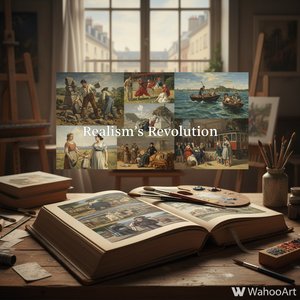
The mid-19th century witnessed a seismic shift in artistic sensibilities, a deliberate turning away from the emotional fervor and idealized narratives that had defined Romanticism for decades. While artists like Delacroix and Géricault still held sway, a new generation began to question the very foundations of their predecessors’ work. This wasn't merely a stylistic rebellion; it was a philosophical one. The Industrial Revolution was reshaping society at an unprecedented pace, bringing with it both progress and profound social upheaval. The burgeoning middle class demanded representation, not of mythical heroes or dramatic landscapes, but of their own lives – the everyday struggles, triumphs, and realities that constituted their existence. This demand fueled the rise of Realism, a movement dedicated to portraying life as it *was*, without embellishment or romanticized distortion.
Romanticism had often looked backward, drawing inspiration from history, literature, and exotic locales. Realists, conversely, turned their gaze firmly toward the present. They sought truth not in imagination but in observation – a meticulous study of contemporary life, its textures, its colors, and its inherent complexities. This commitment to accuracy wasn’t simply about technical skill; it was an act of defiance against established artistic norms and a powerful statement about the changing world order. The Salon exhibitions, traditionally dominated by historical and mythological subjects, became battlegrounds for this new aesthetic, with works depicting laborers, peasants, and urban scenes often met with scorn and derision.
Courbet and Beyond: Key Figures and Defining Characteristics
Realism was an artistic movement that emerged in France in the 1840s. Realists rejected Romanticism, which had dominated French literature and art since the early 19th century. The artist Gustave Courbet, the original proponent of Realism, sought to ...
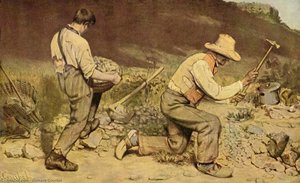
At the heart of the Realist movement stood Gustave Courbet, a figure whose uncompromising vision irrevocably altered the course of art history. His monumental painting, The Stonebreakers, exhibited in 1850, became an instant scandal. It depicted two laborers engaged in backbreaking work – not as noble figures worthy of admiration, but as weary, anonymous individuals ground down by poverty and toil. Courbet’s refusal to idealize his subjects, coupled with the painting's sheer scale (typically reserved for historical or religious scenes), was a deliberate provocation. He famously declared his intention to “translate the customs, ideas, and appearances of my time according to my own estimation.”
However, Realism wasn’t solely defined by Courbet’s radical approach. Artists like Honoré Daumier offered biting social commentary through lithographs and paintings, exposing the hypocrisy and corruption of Parisian society. Jean-François Millet focused on rural life, depicting peasants with dignity and empathy, though his work often faced criticism for romanticizing their hardships. Other key figures included Rosa Bonheur, renowned for her meticulously detailed animal studies, and Charles-François Daubigny, who captured the beauty of the French countryside with a keen eye for atmospheric effects. While each artist possessed a unique style, they shared a common commitment to portraying the world around them with honesty and accuracy.
Techniques of Truth: Materials, Methods, and Observational Accuracy
Academic art, academicism, or academism, is a style of painting and sculpture produced under the influence of European academies of art. This method extended its influence throughout the Western world over several centuries, from its origins in Italy...
The pursuit of “truth” in Realism extended beyond subject matter to encompass technique. Realist painters largely rejected the highly polished surfaces and idealized forms favored by academic art. Instead, they embraced a more direct and tactile approach, often employing impasto – thick layers of paint applied with visible brushstrokes – to create a sense of texture and physicality. This wasn’t simply about aesthetics; it was about conveying the materiality of the world itself.
The use of color also played a crucial role. Realists often favored earth tones and muted palettes, reflecting the realities of everyday life. They meticulously studied light and shadow, striving to capture the subtle nuances of atmosphere and form. Many artists worked *en plein air* – outdoors – allowing them to directly observe the effects of natural light on their subjects. This commitment to observational accuracy required a rigorous training in anatomy, perspective, and composition. Unlike the Romantic emphasis on emotional expression, Realist technique was often characterized by restraint and precision.
Realism as Social Commentary: Reflecting a Changing World
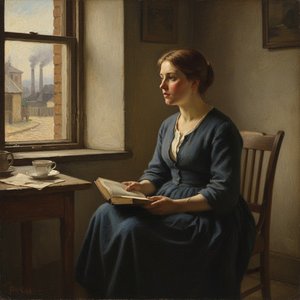
Beyond its aesthetic innovations, Realism served as a powerful vehicle for social commentary. The Industrial Revolution had created vast disparities in wealth and opportunity, leading to widespread poverty, exploitation, and unrest. Realist artists didn’t shy away from depicting these harsh realities – the plight of factory workers, the struggles of rural peasants, and the inequalities of urban life. Daumier's lithographs, for example, satirized the greed and corruption of the bourgeoisie, while Courbet’s paintings challenged conventional notions of beauty and social status.
This commitment to social realism wasn’t always well-received. Many critics accused Realist artists of being vulgar, subversive, or even revolutionary. However, their work resonated with a growing audience who felt alienated by the idealized representations of academic art. Realism provided a voice for the marginalized and disenfranchised, forcing viewers to confront uncomfortable truths about their society. It wasn’t simply about depicting reality; it was about challenging the status quo and advocating for social change.
The Legacy of Realism: Influence on Subsequent Art Movements
While Realism eventually gave way to new artistic movements – Impressionism, Post-Impressionism, and beyond – its influence remains profound. The emphasis on observational accuracy, the rejection of idealized forms, and the commitment to portraying contemporary life laid the groundwork for many subsequent developments in art history. The Impressionists, while focusing on light and color rather than social commentary, inherited Realism’s dedication to *en plein air* painting and its rejection of academic conventions.
Furthermore, Realism paved the way for later movements like Social Realism and Photorealism, which continued to explore themes of social justice and political critique. The legacy of Courbet and his contemporaries can be seen in the work of artists throughout the 20th and 21st centuries who seek to engage with the world around them with honesty, empathy, and a commitment to truth. The desire to represent life as it is – without embellishment or distortion – remains a powerful force in contemporary art.
Collecting Realist Art: A Guide for Enthusiasts
For collectors seeking to acquire works from this pivotal period, several factors should be considered. Gustave Courbet’s paintings are highly sought after and command significant prices, but works by artists like Daumier, Millet, Bonheur, and Duigny offer more accessible entry points into the movement. Lithographs by Daumier, for example, can be acquired at relatively affordable prices, while smaller oil paintings by lesser-known Realist artists represent excellent investment opportunities.
Provenance – the history of ownership – is crucial when evaluating any artwork, but particularly important for works from the 19th century. Condition is also a key consideration, as many Realist paintings have suffered damage over time due to their size and materials. At ArtsDot, we offer high-quality reproductions of masterpieces from the Realist movement, allowing you to experience the beauty and power of these iconic works in your own home. Explore our collection today and discover the enduring legacy of Realism – a testament to the transformative power of art.