


The Genesis of Realism: A Revolt Against Romantic Idealism
Realism was an artistic movement that emerged in France in the 1840s. Realists rejected Romanticism, which had dominated French literature and art since the early 19th century. The artist Gustave Courbet, the original proponent of Realism, sought to ...
The mid-19th century witnessed a seismic shift in the artistic landscape, a deliberate turning away from the emotional fervor and fantastical narratives that had defined Romanticism for decades. This wasn’t merely a stylistic change; it was a philosophical rebellion against what many artists perceived as artifice and escapism. The world was undergoing rapid transformation – industrialization, urbanization, and burgeoning social unrest – and artists began to feel an increasing responsibility to depict the realities of their time, not idealized visions of the past or exotic fantasies. Romanticism, with its emphasis on subjective experience and dramatic landscapes, felt increasingly detached from the lived experiences of a growing segment of society. A new aesthetic was needed, one grounded in observation, accuracy, and a commitment to portraying life as it truly *was*, blemishes and all.
This burgeoning movement, soon christened Realism, wasn’t born overnight. It evolved gradually, fueled by dissatisfaction with the established art academies and their preference for historical or mythological subjects. Artists questioned why grand narratives of heroism and divinity should take precedence over the everyday lives of ordinary people. The seeds of this change were sown in the work of artists like Honoré Daumier, whose lithographs offered biting social commentary on Parisian life, and Jean-François Millet, who began to depict rural laborers with a dignity previously unseen in art. However, it was Gustave Courbet who would ultimately become recognized as the movement’s leading figure, its most vocal proponent, and its most controversial champion.
Gustave Courbet and the Pursuit of 'Truth in Painting'
 Wikipedia: Gustave Courbet
Jean Désiré Gustave Courbet (UK: KOOR-bay; US: koor-BAY; French: [ɡystav kuʁbɛ]; 10 June 1819 – 31 December 1877) was a French painter who led the Realism movement in 19th-century French painting. Committed to painting only what he could see, he re...
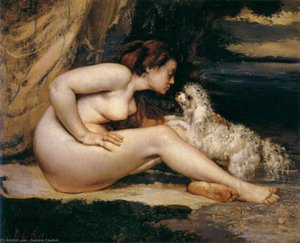
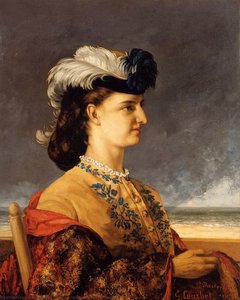
Jean Désiré Gustave Courbet wasn’t simply interested in depicting reality; he was obsessed with portraying it *truthfully*. He famously declared his intention to “paint only what I see,” a seemingly simple statement that carried profound implications. This meant rejecting academic conventions, eschewing idealized forms, and embracing subjects previously considered unworthy of artistic attention – the working class, rural life, and even scenes deemed unpleasant or sordid. His monumental work, The Stonebreakers, exhibited in 1850, became a lightning rod for criticism precisely because it depicted two laborers engaged in backbreaking work with unflinching realism. There was no romanticizing of their plight, no attempt to elevate them through allegory; they were simply presented as they were – exhausted, weathered, and undeniably human.
Courbet’s commitment extended beyond subject matter. He employed a new painting technique characterized by thick brushstrokes, impasto, and a deliberate rejection of smooth finishes. This wasn't about technical perfection; it was about conveying the materiality of the world, the texture of stone, the roughness of fabric, the very *presence* of his subjects. He challenged the traditional hierarchy of genres, elevating scenes of everyday life to the same level as historical or mythological paintings. His Lake Leman, for example, demonstrates a powerful connection with nature and an unadorned depiction of its beauty, devoid of sentimentalism.
Representation and Reality: Philosophical Underpinnings of the Movement
Representation is the use of signs that stand in for and take the place of something else. It is through representation that people organize the world and reality through the act of naming its elements. Signs are arranged in order to form semantic co...
The Realist movement wasn’t simply about *what* was depicted but also *how* it was depicted. At its core lay a complex engagement with the concept of representation – how signs, images, and artistic forms stand in for and interpret the world around us. Philosophers had long debated this notion, recognizing that human understanding is fundamentally mediated through symbols and constructs. Realist artists sought to minimize the distance between the artwork and reality itself, striving for an almost direct transcription of observed phenomena.
This pursuit wasn’t without its challenges. The very act of painting involves selection, interpretation, and artistic choices – it's impossible to create a perfectly objective representation. However, Realists believed that by focusing on accuracy, detail, and the avoidance of idealization, they could come closer to capturing the essence of their subjects. This emphasis on observation was influenced by emerging scientific thought, particularly the rise of positivism, which championed empirical evidence and rejected metaphysical speculation. The goal wasn’t to create a beautiful illusion but to offer a truthful reflection of the world, even if that reflection was unflattering or uncomfortable.
Beyond France: The Spread and Diversification of Realist Styles
While Courbet is often considered the central figure of French Realism, the movement quickly spread across Europe and beyond, taking on distinct characteristics in different national contexts. In Belgium, artists like Constantin Meunier focused on the lives of industrial workers, depicting their struggles and dignity with a powerful social conscience. His paintings offer a stark contrast to the romanticized depictions of labor often found in earlier art.
In America, Winslow Homer emerged as a leading Realist painter, capturing the raw power and beauty of marine life and landscapes. His work, while sharing the Realists’ commitment to observation and accuracy, also reflected a uniquely American sensibility – a fascination with nature, a sense of isolation, and a focus on the lives of ordinary people. The Wave, for example, is not merely a depiction of the ocean; it's an exploration of humanity’s relationship with the natural world, its power and indifference. Each nation adapted Realism to reflect its own unique social, political, and cultural landscape.
Realism's Legacy: Influence on Subsequent Art Movements
The impact of Realism extended far beyond the 19th century. It laid the groundwork for many subsequent art movements, including Impressionism, Post-Impressionism, and even aspects of Modernism. The Realists’ rejection of academic conventions paved the way for artists to experiment with new techniques and subject matter. Their emphasis on observation and accuracy influenced the development of photography as an artistic medium.
Perhaps most importantly, Realism challenged the very definition of art itself. It demonstrated that beauty wasn't limited to idealized forms or grand narratives; it could be found in the everyday lives of ordinary people, in the landscapes around us, and even in scenes previously considered unworthy of artistic attention. This legacy continues to resonate today, inspiring artists to engage with the world around them with honesty, integrity, and a commitment to portraying life as it truly is.
Collecting Realism Today: Key Artists & Masterpieces
For collectors seeking works that embody both historical significance and aesthetic power, Realism offers a wealth of opportunities. Gustave Courbet remains the cornerstone of any serious collection, with masterpieces like A Burial at Ornans representing the pinnacle of his achievement. Jean-François Millet’s depictions of rural life are equally compelling, offering a poignant glimpse into the lives of 19th-century peasants.
Beyond France, artists like Constantin Meunier and Winslow Homer provide unique perspectives on Realism within their respective national contexts. Exploring smaller works – still lifes, landscapes, portraits – can also offer valuable insights into the movement’s diverse aesthetic range. At ArtsDot.com, we specialize in handmade oil painting reproductions of these iconic masterpieces, allowing you to bring the beauty and power of Realism into your own home. Our commitment to quality ensures that each reproduction captures the authentic brushstrokes, textures, and emotional depth of the original artwork.