 Preview
 Send
Send Share
Share
 Details

 Download
 Similars
 X-Ray
X-Ray Diaporama
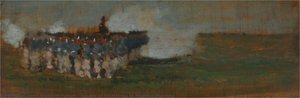
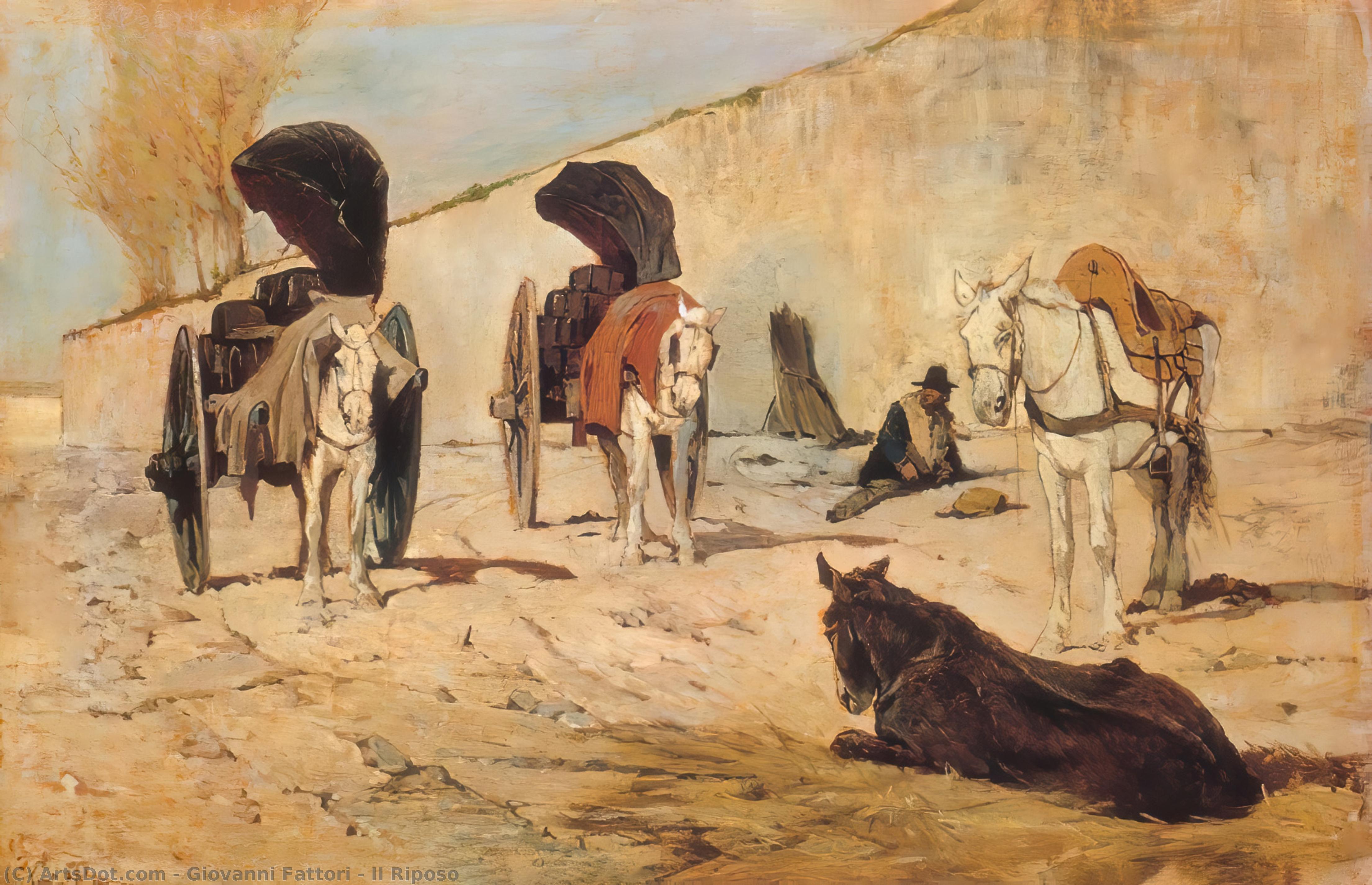
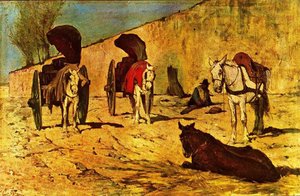
Il Riposo
 Oil On Canvas
- WallArt
- Macchiaioli
 1887
1887 21.0 x 33.0 cm
 Pitti Palace Museum
 Read More
Hand Made Oil Reproduction
Hand-painted oil on canvas in your size and frame, made to order by our artists. ( Buy Print Buy Image)




P118B $10

P118H $10

P118W $10

P438Z $10

P508JH $12

P508YH $12

P805H $10

P805Z $10

P919BZ $10

P919G $10

P919XJ $10

P959ZH $10

P968JZ $12

W106C $8

W218G $10

W218JH $8

W218Y $10

W307PJ $10

W316G $10

W316PJ $8

W316Y $10

W398PJ $8

W4111J $10

W500HY $15

W500JH $15

W692G $12

W849H $8

W940BG $15

W953PJ $8




Pick from our preset sizes that match the artwork's original proportions.

You may enter your own dimensions to fit a specific frame or space. If your selected size does not match the original image's proportions, we will either crop the artwork or extend the painting with additional hand-painted elements. A digital mockup will be sent for your approval before production begins.
Please note that the on-screen preview does not reflect the actual cropping or extension. Only the mockup will accurately show the final composition.
While custom sizes are available, we recommend selecting a dimension from the predefined list to preserve the original proportions.
After order, ArtsDot.com team will email client for instructions and provide a mockup preview
Worldwide Delivery () in 3/4 weeks instead of standard 5 weeks. (16 August). No compromise on quality.

Free Worldwide Express Shipping

High-Quality Linen Canvas

Full Shipping Insurance

Customs Tax Refund Guarantee

True Color Matching Guarantee

60-Day Return Policy (Defects Only)

100% Money-Back Guarantee

Bulk Discount Offer
 Glass option is only available in size under 110 CM

Il Riposo
Reproduction Medium
Reproduction Size
-


Total Price
$ 263
Artwork Description
Il Riposo (The Rest) – Giovanni Fattori’s Vision of Tuscan Tranquility
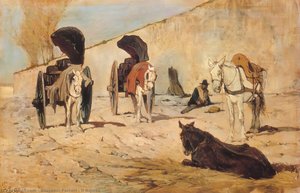
Giovanni Fattori's *Il Riposo*, painted in 1887, stands as a cornerstone of Macchiaioli art and embodies the movement’s revolutionary approach to landscape painting. More than just depicting a pastoral scene, Fattori captures a profound meditation on stillness, resilience, and the beauty inherent in nature’s rhythms—themes that resonate powerfully even today. Located at the Pitti Palace Museum in Florence, Italy, this oil on canvas measures 21 x 33 cm and offers viewers an intimate glimpse into Fattori's artistic sensibilities.Composition and Technique: Embracing Light and Shadow
The painting’s composition is strikingly deliberate. Three horses dominate the central space, positioned with careful consideration to create a dynamic yet harmonious balance. Two men are situated near the center, engaged in tending to their animals, while a woman stands slightly to the left, adding a touch of human presence to the serene landscape. Notably, two umbrellas punctuate the scene—one perched atop the leftmost horse and another nestled amongst the figures on the right—suggesting both protection from the sun’s glare and an awareness of the ephemeral nature of time. Fattori masterfully employs *macchiaioli* technique – a method characterized by bold brushstrokes and vibrant color palettes – to convey the impressionistic essence of the Tuscan countryside. Thick, textured paint layers capture the interplay of light and shadow with remarkable accuracy, transforming the canvas into an immersive experience for the eye. The artist’s use of complementary colors—particularly reds and blues—intensifies the visual impact and reinforces the painting's emotional core.Historical Context: Macchiaioli and Beyond
Giovanni Fattori was a pivotal figure in the Macchiaioli movement, which emerged in Tuscany during the late 1870s and challenged prevailing academic conventions. Rejecting meticulous realism, Macchiaioli artists prioritized capturing the immediacy of sensory experience—the fleeting effects of light and color on the landscape—rather than striving for photographic accuracy. Fattori’s decision to depict a desert-like setting – an uncommon choice for Tuscan painters – underscores his artistic ambition and willingness to experiment with stylistic innovations. This departure from traditional landscapes reflects Fattori's broader engagement with Symbolist ideas, exploring themes of solitude, contemplation, and the spiritual significance of nature.Symbolism: Horses as Embodiments of Strength and Resilience
The horses themselves hold considerable symbolic weight within *Il Riposo*. Representing not merely animals but also embodiments of strength, resilience, and vitality—qualities admired in rural Tuscany—they serve as focal points for Fattori’s artistic vision. Their posture exudes calmness and repose, mirroring the overall mood of the painting. The umbrellas symbolize protection from adversity and a recognition of life's transient beauty. Taken together, these elements contribute to a deeper narrative about confronting challenges with grace and appreciating the quiet moments of contemplation that define human experience.Emotional Impact: A Moment Frozen in Time
Ultimately, *Il Riposo* succeeds in conveying an overwhelming sense of tranquility and serenity. Fattori’s masterful rendering of light and color transports viewers into the heart of the Tuscan landscape—a place where time seems to slow down and beauty reigns supreme. The painting invites contemplation on themes of peace, solitude, and connection with nature—resonances that continue to captivate audiences today. It is a testament to Fattori's ability to transform observation into art—creating an enduring image of pastoral harmony and profound emotional depth.- Artist: Giovanni Fattori
- Birth Year: 1825
- Death Year: 1908
- Birth City: Livorno
- Birth Country: Italy
Giovanni Fattori, a Life Immersed in Light and Landscape
Fattori was initially guided towards a practical profession by familial expectations, but his innate talent for drawing soon asserted itself, leading to an apprenticeship with Giuseppe Baldini in 1845. This marked the beginning of a formal artistic education that would eventually lead him to Florence and the Academy of Fine Arts, though his studies were briefly interrupted by involvement in the tumultuous years of the Risorgimento – Italy’s struggle for unification.
These formative experiences, witnessing firsthand the fervor and upheaval of nation-building, profoundly shaped his later work, imbuing it with a sense of patriotic spirit an
Related Artworks

Artist Biography
A Life Immersed in Light and Landscape
Giovanni Fattori, a name intrinsically linked to the Macchiaioli movement and a precursor to Impressionism, emerged from the vibrant artistic landscape of 19th-century Italy. Born in Livorno in 1825, his journey from aspiring commerce student to celebrated painter is a testament to the compelling power of artistic calling. Initially guided towards a practical profession by familial expectations, Fattori’s innate talent for drawing soon asserted itself, leading to an apprenticeship with Giuseppe Baldini in 1845. This marked the beginning of a formal artistic education that would eventually lead him to Florence and the Academy of Fine Arts, though his studies were briefly interrupted by involvement in the tumultuous years of the Risorgimento – Italy’s struggle for unification. These formative experiences, witnessing firsthand the fervor and upheaval of nation-building, profoundly shaped his later work, imbuing it with a sense of patriotic spirit and a keen observation of contemporary life. His early artistic explorations leaned towards historical narratives and portraits, influenced by the style of Giuseppe Bezzuoli, but these were merely stepping stones on a path that would lead him to embrace a radically new approach to painting.The Birth of the Macchiaioli
The 1850s proved pivotal for Fattori’s artistic development. Florence became a crucible of innovation as he frequented the Caffè Michelangelo, a vibrant hub where artists challenged academic conventions and experimented with novel forms of expression. It was here that he connected with Telemaco Signorini and other like-minded creatives, forging the core of what would become known as the Macchiaioli – a group whose name derives from the Italian word “macchia,” meaning spot or patch. This wasn’t merely a stylistic label; it represented a fundamental shift in artistic philosophy. Inspired by the Barbizon School painters and particularly Giovanni Costa, Fattori embraced *plein-air* painting—working outdoors directly from nature—and focused on capturing the effects of light and shadow through bold, unblended brushstrokes. This technique, emphasizing visual impressions rather than meticulous detail, was revolutionary for its time. His groundbreaking work, Dopo la Battaglia di Magenta (After the Battle of Magenta), completed in 1860-61, stands as a landmark achievement—a pioneering depiction of contemporary history that broke from traditional heroic representations of warfare and offered a starkly realistic portrayal of its aftermath. The painting’s raw emotional power and unconventional composition signaled a new direction for Italian art.Maturity and Tuscan Visions
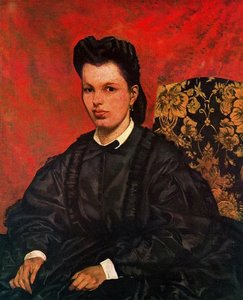
Fattori’s mature style was characterized by a masterful synthesis of *plein-air* observation and carefully considered studio composition. He didn't abandon structure in favor of pure impressionism; instead, he skillfully blended the immediacy of outdoor painting with the deliberate arrangement of forms learned through academic training. Recurring themes emerged throughout his career: landscapes imbued with the golden light of Tuscany, poignant portraits – notably those of his sister-in-law Argia– and evocative scenes of military life that reflected his earlier experiences during the Risorgimento. After 1880, Fattori found himself increasingly drawn to the Maremma region, a wild and untamed landscape south of Florence. This area became a source of endless inspiration, profoundly influencing his later works with its unique atmosphere, rugged beauty, and the lives of those who inhabited it. He also dedicated considerable energy to etching after 1884, demonstrating his versatility as an artist and exploring new avenues for expressing his artistic vision. The Maremma, with its vast plains and dramatic skies, provided Fattori with a canvas upon which he could explore the relationship between humanity and nature, often depicting solitary figures dwarfed by the immensity of the landscape.A Lasting Legacy: Shaping Italian Identity
Giovanni Fattori’s significance extends far beyond his technical innovations. As a leading figure of the Macchiaioli movement, he played a crucial role in establishing a distinctly Italian approach to modern painting, one that diverged from prevailing academic traditions and embraced a more direct engagement with the natural world. His emphasis on *plein-air* painting and capturing fleeting moments of light foreshadowed the developments of Impressionism, demonstrating his forward-thinking artistic sensibility. Perhaps most importantly, Fattori’s depictions of Italian life—particularly during the Risorgimento—helped to forge a sense of national identity through art. He captured not just the landscapes of Italy but also the spirit and struggles of its people, creating images that resonated deeply with a nation striving for unity and self-determination. His paintings became visual embodiments of Italian patriotism, celebrating the resilience and dignity of ordinary citizens. Today, his works are proudly displayed in prestigious museums such as the Museo Civico Giovanni Fattori in Livorno and the Galleria d'Arte Moderna del Civico Museo Revoltella in Trieste, ensuring that his legacy continues to inspire generations of artists and art enthusiasts alike. He remains a pivotal figure in Italian art history, a master of light, landscape, and the human spirit.- Key Influences: Barbizon School painters, Giovanni Costa, Giuseppe Bezzuoli.
- Major Themes: Tuscan landscapes, military life, portraits, scenes of contemporary Italy.
- Artistic Style: Macchiaioli, *plein-air* painting, bold brushstrokes, emphasis on light and shadow.
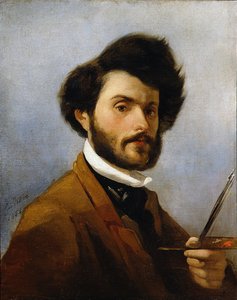
Giovanni Fattori
1825 - 1908 , Italy
Quick Facts
- Artistic Movement Or Style: Macchiaioli, plein air
- Artists Or Movements Influenced By This Artist: ['Impressionism']
- Artists Who Influenced This Artist:
- Giovanni Costa
- Barbizon School painters
- Date Of Birth: September 6, 1825
- Date Of Death: August 30, 1908
- Full Name: Giovanni Fattori
- Nationality: Italian
- Notable Artworks:
- Dopo la Battaglia di Magenta
- Il carro rosso
- Roman wagons
- Place Of Birth: Livorno, Italy
Related Articles
Giovanni Fattori: Realism, Identity & the Tuscan Landscape – A Macchiaioli Master
Explore the life & art of Giovanni Fattori, a leading figure of the Macchiaioli movement. Discover his revolutionary realism, captivating Tuscan landscapes, and lasting impact on Italian painting. Learn more at ArtsDot.
Romantic Realism's Finest: 10 Masterpieces for Your Home | ArtsDot
Explore 10 defining masterpieces of Romantic Realism! Discover Courbet, Millet & Daumier's powerful paintings—capturing emotion and social realities. Find museum-quality reproductions for your home at ArtsDot.com.

Oil on Canvas: A Historical & Technical Exploration of a Timeless Artistic Medium
Explore the rich history & enduring techniques of oil painting on canvas. Discover the science behind its longevity, conservation practices, and contemporary relevance. Expert insights for art enthusiasts.

The Enduring Legacy of Oil on Canvas: Technique, History & Aesthetic Impact
Explore the rich history & techniques of oil painting – from Renaissance masters to Impressionism. Discover pigments, layering methods, and why this timeless medium endures. Expert insights for artists & art enthusiasts.

The Enduring Power of Painting: A Historical & Contemporary Exploration of Form and Emotion
Explore the rich history & enduring techniques of oil painting with ArtsDot. Discover masterpieces, learn about art collecting, and find authentic handmade reproductions crafted by skilled artists.