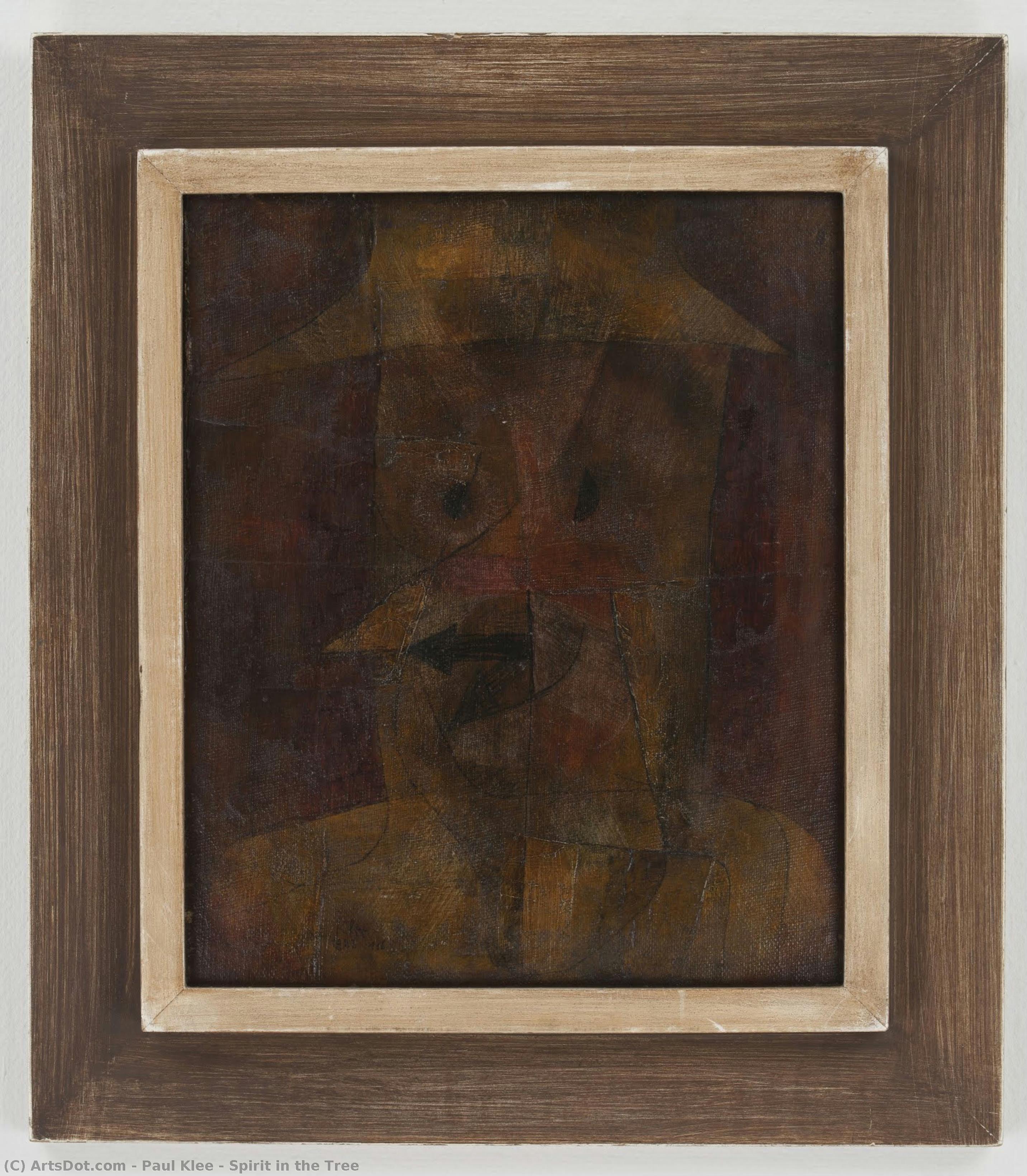
Paul Klee’s ‘Spirit in the Tree’ (1923) transforms an old man into a mystical figure within a stylized tree, showcasing his signature simplified lines and muted color palette.
Discover Paul Klee (1879-1940): Swiss-German artist blending Expressionism, Cubism & Surrealism. Explore his color theory, Bauhaus influence, and playfully insightful art.
Discover modern & contemporary art at Sezon Museum of Modern Art in Karuizawa, Japan! Explore 800+ works by Man Ray, Isamu Noguchi & more within stunning natural surroundings and unique architecture.
Paul Klee’s ‘Spirit in the Tree’: A Journey into Abstract Symbolism
Paul Klee, born in Bern in 1879, wasn't merely an artist; he was a weaver of worlds—a poet rendered in color and line. His oeuvre is characterized by a deeply personal language, one that simultaneously embraces childlike simplicity and profound philosophical inquiry. ‘Spirit in the Tree,’ painted in 1923 during his influential Bauhaus period, exemplifies this unique approach perfectly. Initially titled “Old Man in a Tree,” the work underwent a transformative shift under Klee’s hand, evolving from a straightforward portrait into a layered meditation on nature, age, and the very essence of being. This transformation is particularly striking when considering how he achieved it—by stripping away detail and relying heavily on simplified lines to convey an almost ethereal quality. The painting isn't about depicting a literal old man; instead, it’s about capturing a spirit residing within the ancient embrace of a tree, a potent symbol of life, wisdom, and connection to something larger than ourselves.
A Study in Geometric Abstraction and Earthy Tones
‘Spirit in the Tree’ is a masterclass in understated abstraction. Klee employs a deliberate reductionist approach, utilizing rectangular shapes—squares and rectangles predominantly—to construct both the figure of the spirit and the framework of the tree itself. These geometric forms aren't rendered with precision; rather, they possess a gentle fluidity, suggesting movement and organic growth. The color palette is deliberately muted, dominated by earthy browns, ochres, and beiges – tones that evoke the textures of bark, soil, and weathered wood. Subtle variations in tone create a sense of depth and volume, preventing the composition from feeling flat or static. This restrained use of color allows the symbolic weight of the image to take center stage, inviting viewers to contemplate its deeper meaning rather than being distracted by superficial details. The choice of oil paint on gauze adds an intriguing textural element; the slightly rough surface creates a tactile quality that contrasts with the smooth, stylized forms.
The Transformation of Form: From Man to Spirit
Klee’s genius lies in his ability to subtly shift our perception through line and form. The initial depiction of an “old man” is recognizable, but quickly dissolves into a more generalized representation. The hat, initially a prominent feature, becomes a simplified geometric shape—a suggestion rather than a precise rendering. Crucially, Klee abandons detailed facial features, reducing the figure to its essential core. This deliberate simplification isn’t a failure of observation; it's an active choice that elevates the image beyond mere representation and imbues it with symbolic resonance. The lines themselves are not sharp or defined but rather soft and flowing, contributing to the overall dreamlike quality of the work. It is this transformation—the metamorphosis from a recognizable human form into a spirit inhabiting a tree—that makes ‘Spirit in the Tree’ so compelling.
Symbolism and Context: Bauhaus, Tunisia, and Beyond
To fully appreciate ‘Spirit in the Tree,’ it's essential to consider Klee’s artistic development during this period. His trip to Tunisia in 1914 proved pivotal, exposing him to a vibrant new world of color and light that profoundly influenced his style. He began experimenting with bolder palettes and more abstract forms, moving away from the representational traditions he had previously embraced. The painting was created during his time at the Bauhaus school, where he explored principles of design and form alongside other influential artists like Walter Gropius. This period saw Klee increasingly interested in exploring color grids and geometric abstraction – techniques that are evident in ‘Spirit in the Tree’s’ structured composition. The work can be seen as a distillation of these influences—a synthesis of his earlier explorations with simplified forms, symbolic imagery, and a deeply personal vision.
A Reproduction for Your Space: Bringing Klee's Vision Home
ArtsDot offers meticulously hand-painted reproductions of ‘Spirit in the Tree,’ capturing the essence of Klee’s unique style and emotional depth. Our artists recreate the painting’s subtle textures, muted color palette, and evocative symbolism with exceptional care. Whether you are an art enthusiast, a collector seeking to expand your collection, or simply someone looking for a piece that adds a touch of contemplative beauty to your home, our reproduction provides an authentic representation of this iconic work. Each reproduction is created on high-quality archival canvas, ensuring its longevity and vibrancy for generations to come. Consider ‘Spirit in the Tree’ as more than just a painting; it's an invitation to contemplate the interconnectedness of nature, humanity, and the spirit within us all.