A Visionary Fragment: The Dramatic World of Petre Otskheli
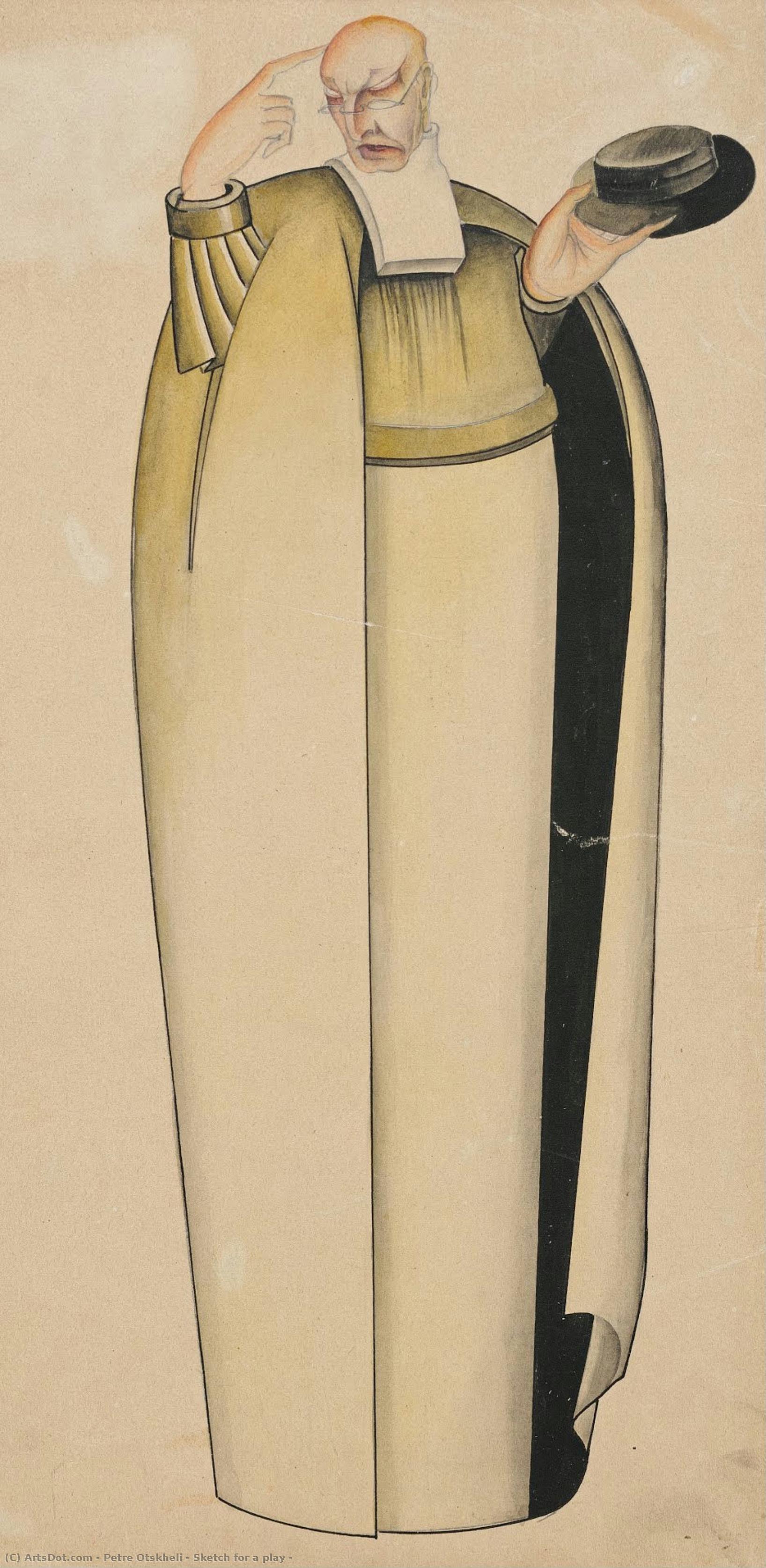
In the hauntingly evocative 1932 work, Sketch for a play, we are invited into a fleeting moment of theatrical tension captured through the masterful hand of Petre Otskheli. This black and white composition serves as more than just a preliminary drawing; it is a window into the soul of Georgian modernism. The piece centers on a singular, enigmatic figure—a man draped in robes, his countenance etched with an expression that oscillates between madness and profound revelation. As he holds a plate, pointing toward it with a deliberate, singular finger while another rises in a gesture of command or warning, the viewer is immediately thrust into the heart of a narrative unfolding. The presence of shadowy figures in the background adds layers of depth and mystery, suggesting a larger, unseen drama that breathes life into the stillness of the paper.
The technique employed here speaks to Otskheli’s profound roots in scenographic constructivism. Through a delicate interplay of light and shadow, the artist creates a sense of three-dimensional space within a monochromatic realm. The starkness of the black and white medium strips away the distraction of color, forcing the eye to focus on the raw emotion of the subject and the rhythmic placement of forms. There is a palpable weight to the lines, a deliberate use of contrast that lends the central figure an almost sculptural presence. This mastery of form allows the artist to suggest movement and atmosphere, making the static image feel as though it is caught in a mid-breath pause during a climactic theatrical performance.
Beyond its technical brilliance, Sketch for a play carries a heavy historical resonance. Created during a period of immense political upheaval in the Caucasus, the work reflects the tension and fragility of the era. Otskheli, whose life was tragically cut short by the very forces of repression he sought to navigate through art, imbues this sketch with an underlying sense of urgency. The bowl placed near the center and the ritualistic nature of the man's gestures hint at symbolic themes of sustenance, sacrifice, or perhaps the unfolding of a tragic fate. For the collector or interior designer, this piece offers a sophisticated touch of intellectual depth; it is a conversation starter that brings a sense of historical gravity and avant-garde elegance to any curated space.
Integrating such a profound work into a modern interior provides an opportunity to celebrate the intersection of fine art and theatrical history. Whether displayed in a minimalist gallery setting or as a focal point in a study filled with literature, this reproduction captures the essence of a lost era of Georgian creativity. It is an invitation to contemplate the ephemeral nature of performance and the enduring power of the artist's vision to transcend time and tragedy.