A Visionary Fragment: The Soul of Scenographic Modernism
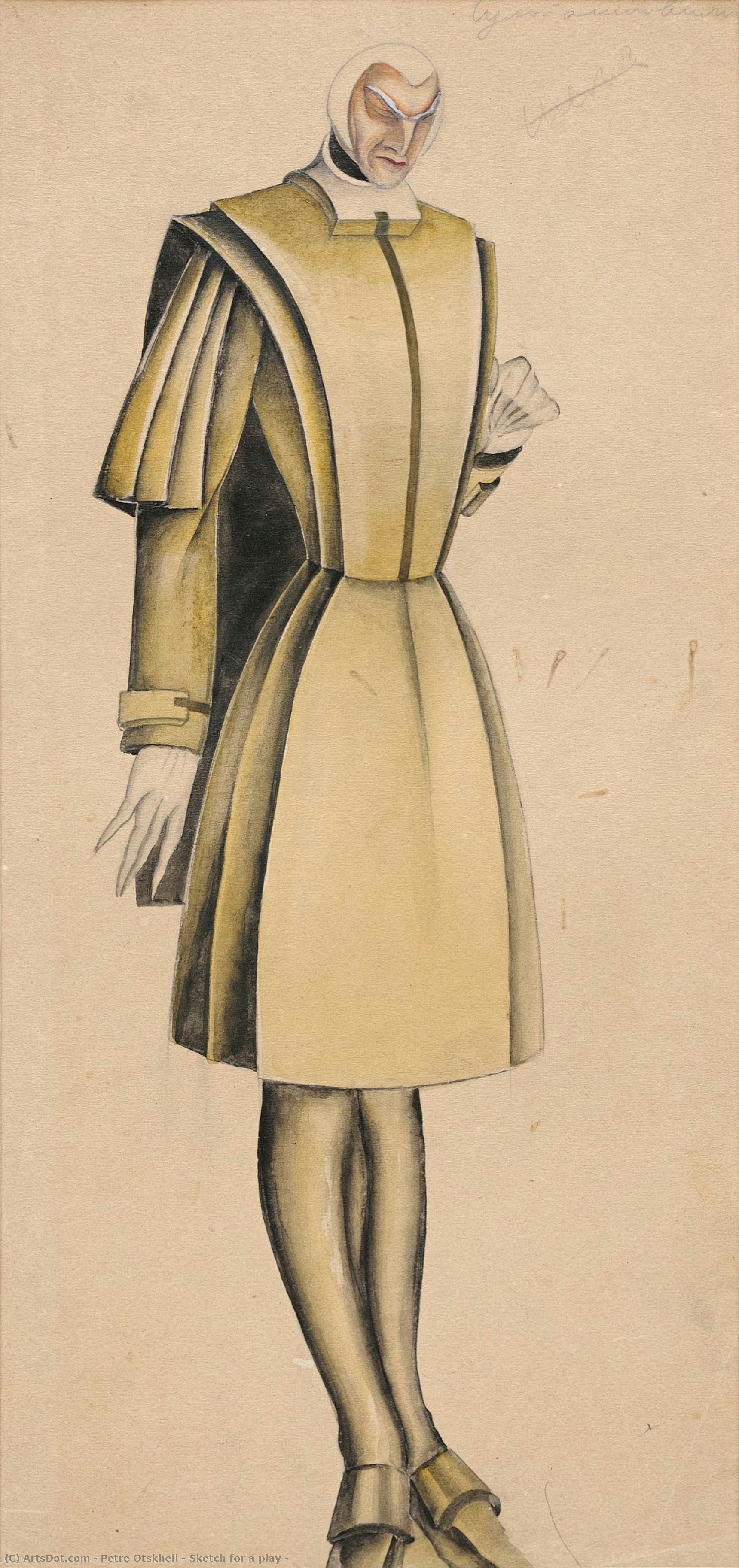
In the delicate interplay between reality and representation, "Sketch for a play" (1932) stands as a hauntingly beautiful testament to the genius of Petre Otskheli. This evocative work, captured in a striking monochrome medium, serves as more than just a preparatory drawing; it is a window into the avant-garde spirit of the early 20th century. The piece presents a profound dialogue between the subject and his own image, featuring a man poised with an air of formal confidence, his hands clasped in a gesture that suggests both composure and deep introspection. As he stands before a depiction of himself, the boundaries between the living person and the artistic creation begin to blur, inviting the viewer into a psychological space where identity is both performed and perceived.
The composition is masterfully executed, utilizing the stark contrasts of black and white to sculpt form and depth. Otskheli’s mastery of line and shadow creates a sense of structural weight, characteristic of his roots in scenographic constructivism. Even within this intimate scale of 38 x 20 cm, there is an expansive quality to the work; the background elements, such as the subtle suggestion of a chair, ground the subject in a tangible, theatrical reality. The interplay of light suggests a stage setting, where every shadow holds a secret and every highlight directs the eye toward the central tension of the piece: the duality of the man and his painted counterpart.
To understand this sketch is to touch the tragic brilliance of Otskheli’s brief but luminous career. Created during a period of immense creative ferment in Georgia, the work reflects the innovative visual experiments that defined the relationship between set design and modern art. There is an inherent melancholy embedded in the work's historical context—a reminder of an era of bold experimentation that was soon silenced by political upheaval. For the collector or the interior designer, this piece offers a sophisticated layer of intellectual depth. It is not merely a decorative element but a conversation starter, bringing a sense of historical gravity and avant-garde elegance to any curated space.
Integrating a high-quality reproduction of this masterpiece into a contemporary interior allows for a seamless blend of historical narrative and modern aesthetic. Whether placed in a minimalist gallery-style room or a classic study, the work’s monochromatic palette and structural strength provide a focal point that is both calming and intellectually stimulating. It serves as an inspiration for those who appreciate art that explores the complexities of the human condition, making it an exquisite choice for those seeking to surround themselves with pieces that possess true emotional resonance and historical significance.