A Vision of Modernity: The Graphic Allure of Philishave
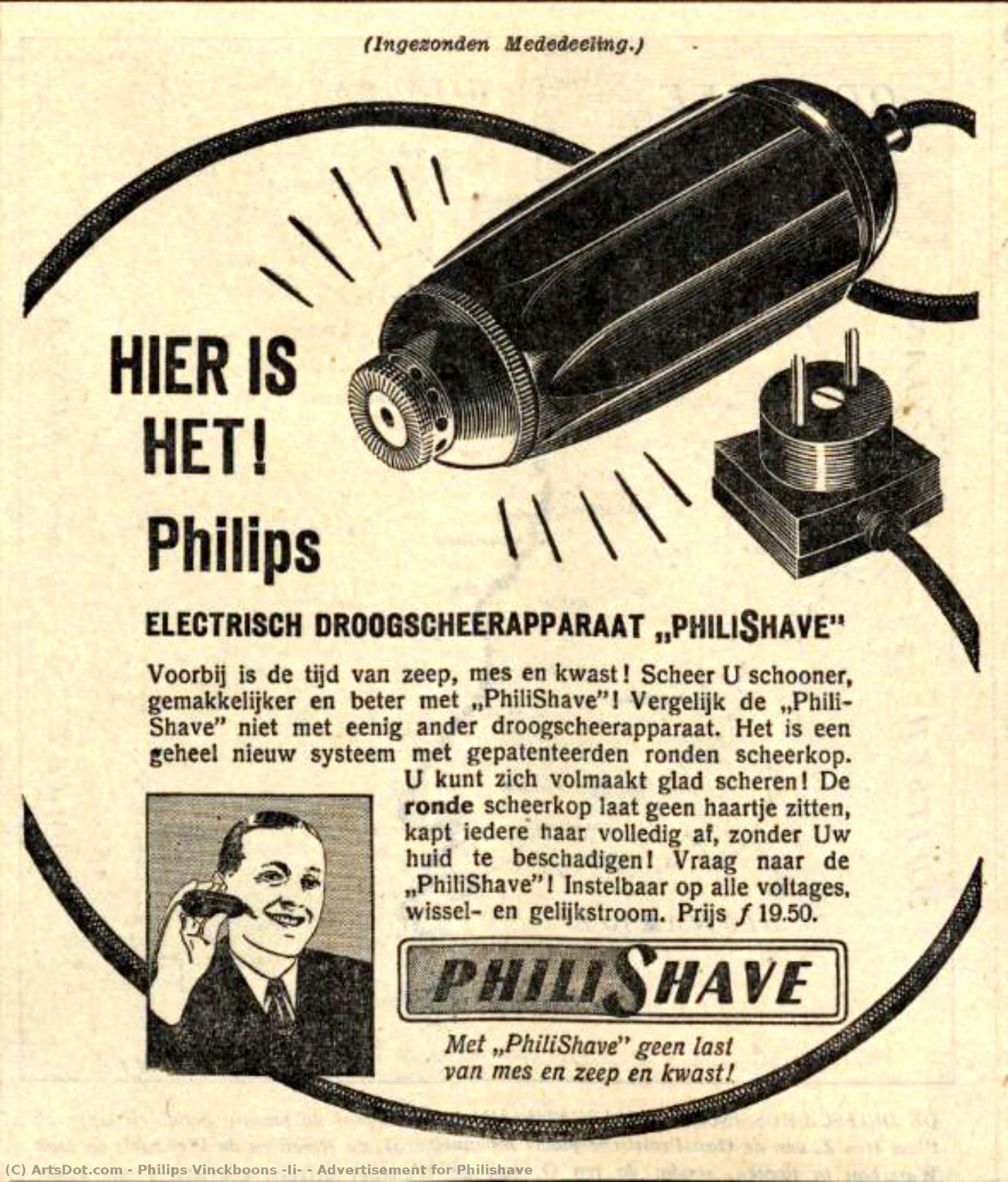
In the landscape of mid-century commercial art, few pieces capture the electric pulse of progress quite like the 1940 advertisement for Philishave. This striking work serves as a window into an era defined by rapid technological advancement and the birth of modern consumer culture. At its heart, the composition is a masterclass in bold, graphic storytelling, centering on the revolutionary Philips electric razor. The image does not merely present a product; it presents a lifestyle of effortless precision. Through a carefully orchestrated arrangement of diagonal lines and geometric forms, the artwork directs the eye with an energetic momentum that mirrors the very innovation it seeks to promote. It is a piece that speaks to the intersection of industrial design and fine illustration, making it a captivating choice for those who appreciate the sleek, streamlined aesthetics of the twentieth century.
The technique employed in this advertisement reflects the sophisticated printing capabilities of its time, utilizing offset lithography to achieve crisp, definitive lines and saturated, solid colors. There is a deliberate flatness to the perspective, a hallmark of the era's advertising style, which prioritizes immediate visual impact and clarity over traditional depth. This stylistic choice allows the subject matter—the razor itself—to command the viewer's attention with almost sculptural prominence. The interplay of light and shadow is used with surgical precision, creating artificial, directional highlights that define the rounded contours of the razor head and lend a tactile quality to the metallic surfaces. For the collector or interior designer, this piece offers a sophisticated textural contrast, its clean edges and smooth color fields providing a striking focal point in any contemporary or retro-inspired setting.
Beyond its technical prowess, the advertisement is rich with the symbolic language of mid-century optimism. The inclusion of a stylized man with a perfectly groomed beard serves as a human anchor, transforming a mechanical object into a symbol of personal care and social refinement. During this period, the transition from traditional wet shaving to electric technology represented more than just convenience; it symbolized a move toward a cleaner, faster, and more efficient modern life. The subtle influence of Art Deco can be felt in the typography and the structured, rhythmic layout, evoking a sense of elegance and permanence. To display a reproduction of this work is to invite a sense of historical nostalgia and sophisticated charm into a space, celebrating a moment in time when design and utility danced together in perfect, streamlined harmony.