 Preview
 Send
Send Share
Share
 Details

 Download
 Similars
 X-Ray
X-Ray Diaporama
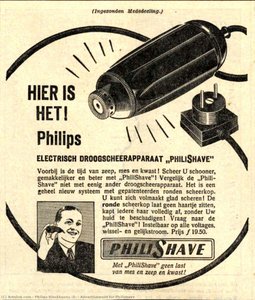
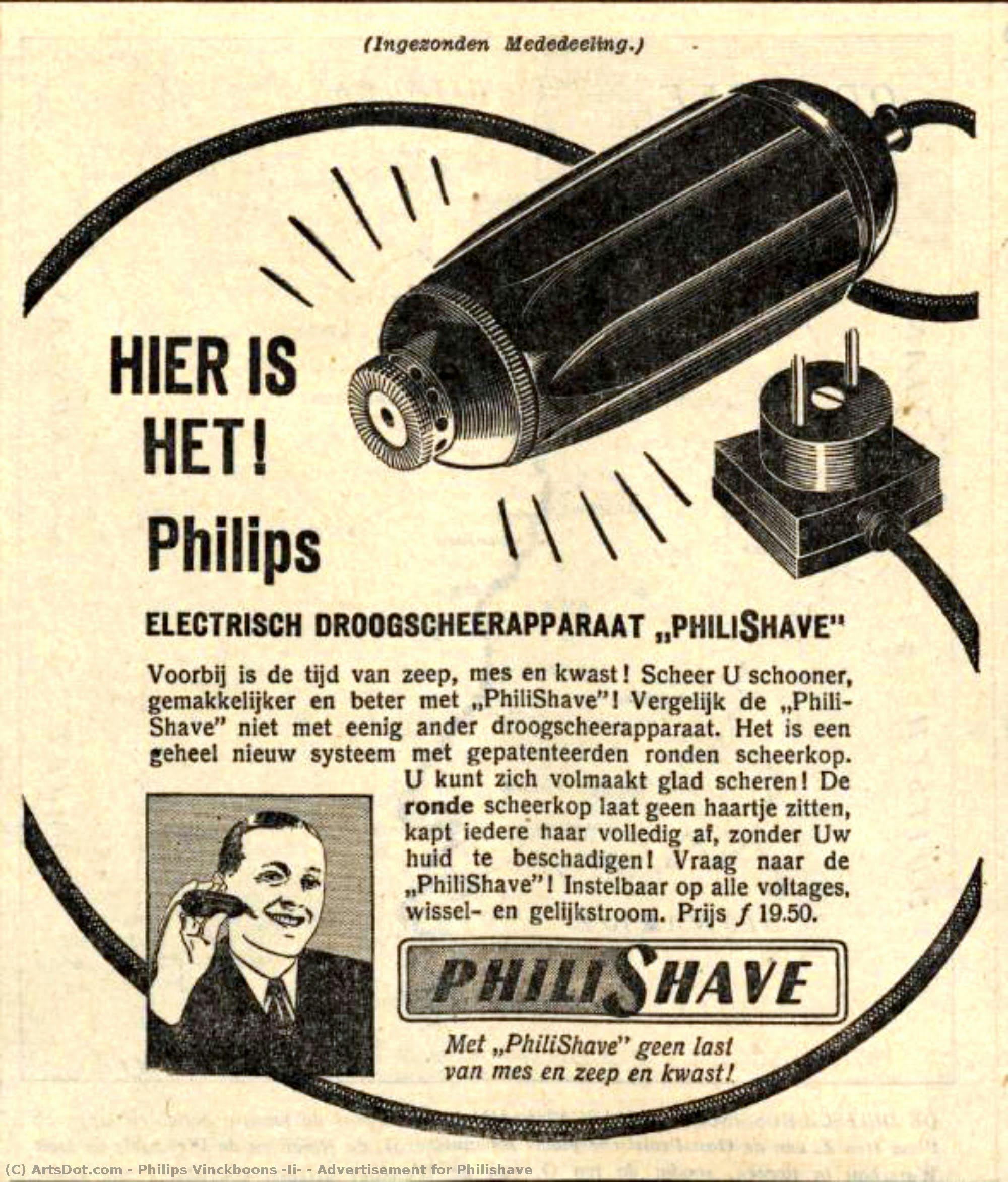
Advertisement for Philishave


 Read More
Hand Made Oil Reproduction
Hand-painted oil on canvas in your size and frame, made to order by our artists. ( Buy Print Buy Image)




P118B $10

P118H $10

P118W $10

P438Z $10

P508JH $12

P508YH $12

P805H $10

P805Z $10

P919BZ $10

P919G $10

P919XJ $10

P959ZH $10

P968JZ $12

W106C $8

W218G $10

W218JH $8

W218Y $10

W307PJ $10

W316G $10

W316PJ $8

W316Y $10

W398PJ $8

W4111J $10

W500HY $15

W500JH $15

W692G $12

W849H $8

W940BG $15

W953PJ $8




Pick from our preset sizes that match the artwork's original proportions.

You may enter your own dimensions to fit a specific frame or space. If your selected size does not match the original image's proportions, we will either crop the artwork or extend the painting with additional hand-painted elements. A digital mockup will be sent for your approval before production begins.
Please note that the on-screen preview does not reflect the actual cropping or extension. Only the mockup will accurately show the final composition.
While custom sizes are available, we recommend selecting a dimension from the predefined list to preserve the original proportions.
After order, ArtsDot.com team will email client for instructions and provide a mockup preview
Worldwide Delivery () in 3/4 weeks instead of standard 5 weeks. (17 August). No compromise on quality.

Free Worldwide Express Shipping

High-Quality Linen Canvas

Full Shipping Insurance

Customs Tax Refund Guarantee

True Color Matching Guarantee

60-Day Return Policy (Defects Only)

100% Money-Back Guarantee

Bulk Discount Offer
 Glass option is only available in size under 110 CM

Advertisement for Philishave
Reproduction Medium
Reproduction Size
-


Total Price
$ 263
Artwork Description
A Vision of Modernity: The Graphic Allure of Philishave
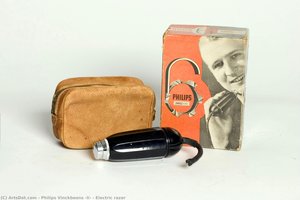
In the landscape of mid-century commercial art, few pieces capture the electric pulse of progress quite like the 1940 advertisement for Philishave. This striking work serves as a window into an era defined by rapid technological advancement and the birth of modern consumer culture. At its heart, the composition is a masterclass in bold, graphic storytelling, centering on the revolutionary Philips electric razor. The image does not merely present a product; it presents a lifestyle of effortless precision. Through a carefully orchestrated arrangement of diagonal lines and geometric forms, the artwork directs the eye with an energetic momentum that mirrors the very innovation it seeks to promote. It is a piece that speaks to the intersection of industrial design and fine illustration, making it a captivating choice for those who appreciate the sleek, streamlined aesthetics of the twentieth century.
The technique employed in this advertisement reflects the sophisticated printing capabilities of its time, utilizing offset lithography to achieve crisp, definitive lines and saturated, solid colors. There is a deliberate flatness to the perspective, a hallmark of the era's advertising style, which prioritizes immediate visual impact and clarity over traditional depth. This stylistic choice allows the subject matter—the razor itself—to command the viewer's attention with almost sculptural prominence. The interplay of light and shadow is used with surgical precision, creating artificial, directional highlights that define the rounded contours of the razor head and lend a tactile quality to the metallic surfaces. For the collector or interior designer, this piece offers a sophisticated textural contrast, its clean edges and smooth color fields providing a striking focal point in any contemporary or retro-inspired setting.
Beyond its technical prowess, the advertisement is rich with the symbolic language of mid-century optimism. The inclusion of a stylized man with a perfectly groomed beard serves as a human anchor, transforming a mechanical object into a symbol of personal care and social refinement. During this period, the transition from traditional wet shaving to electric technology represented more than just convenience; it symbolized a move toward a cleaner, faster, and more efficient modern life. The subtle influence of Art Deco can be felt in the typography and the structured, rhythmic layout, evoking a sense of elegance and permanence. To display a reproduction of this work is to invite a sense of historical nostalgia and sophisticated charm into a space, celebrating a moment in time when design and utility danced together in perfect, streamlined harmony.
Related Artworks


Artist Biography
early life and career
philips vinckboons (ii), a renowned dutch architect, was born in 1607 in the netherlands. he was part of the school of jacob van campen, embodying the essence of dutch classicism. vinckboons' work was highly regarded in his native city of amsterdam, where he left an indelible mark on the architectural landscape.notable works and contributions
* **fluorescent lamp**: one of vinckboons' notable works is the fluorescent lamp, now housed in the nemo science museum (amsterdam, netherlands). this piece showcases his innovative approach to design. (view on ArtsDot) * **influence on dutch architecture**: vinckboons' adherence to dutch classicism influenced a generation of architects, shaping the country's architectural identity.legacy and remembrance
* **museum universiteitsbibliotheek (leiden, netherlands)**: though not directly associated with vinckboons, this institution is a testament to the netherlands' rich cultural heritage, which vinckboons contributed to. (discover more on ArtsDot) * **st. joriskerk (amersfoort, netherlands)**: this historic church, now an art museum, represents the evolution of dutch art and architecture, a context in which vinckboons' work can be understood. (explore st. joriskerk on ArtsDot)- key dates: born in 1607, deceased on october 2, 1678.
- notable movement: dutch classicism, under the influence of jacob van campen.
- legacy: vinckboons' architectural designs remain a cornerstone of dutch architectural history.
further exploration on ArtsDot
* philips vinckboons (ii) | 24 artworks - dive into the comprehensive collection of vinckboons' works. * the museum town hall of amsterdam, netherlands - understand the broader context of dutch art and architecture.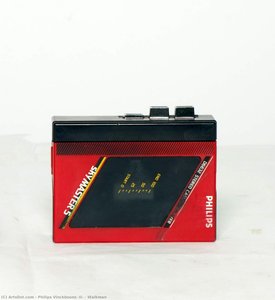
philips vinckboons (ii)
1607 - 1678 , Netherlands
Quick Facts
- Artistic Movement Or Style: Vanitas still lifes, 'smoker' scenes
- Artists Or Movements Influenced By This Artist: ['Utrecht Caravaggisti']
- Artists Who Influenced This Artist:
- Pieter Lastman
- Peter Paul Rubens
- Date Of Birth: 1607
- Date Of Death: 1655 (likely)
- Full Name: Hendrick Andriessen”, known as Mancken Heyn
- Nationality: Flemish
- Notable Artworks:
- Vanitas with a skull
- Smoker still lifes
- Place Of Birth: Antwerp, Belgium
Related Articles
Echoes of Time: Nostalgia, Technique & Cultural Significance in Vintage Paintings
Explore the captivating world of vintage paintings! Discover key styles, cultural significance & collecting tips from art experts at ArtsDot. Find authentic reproductions and elevate your home décor.
Echoes of War & Hope: Top 10 Artworks Reflecting the 1940s | ArtsDot
Journey through a decade of resilience & change with our Top 10 artworks of the 1940s. Explore iconic paintings by Rockwell, Hopper & more—reflecting WWII's impact and post-war hope. Find museum-quality reproductions at ArtsDot.com
Echoes of Time: Exploring the Enduring Appeal of Vintage Artwork
Explore the captivating world of vintage art! Discover its history, enduring appeal, & how to build your own collection. Expert advice, custom reproductions & museum-quality prints at ArtsDot.
Echoes of Eras Past: Exploring Themes & Techniques in Vintage Art Collections
Explore the captivating world of vintage art! Discover historical movements, iconic themes & collecting tips. Find handmade reproductions & expert appraisal at ArtsDot.

Echoes of Time: Exploring the Enduring Appeal & Historical Context of Vintage Art Prints
Explore the captivating world of vintage art prints! Discover their history, collecting tips & enduring appeal. Expert insights on chromolithography and building a legacy collection with ArtsDot.