 Preview
 Send
Send Share
Share
 Details

 Download
 Similars
 X-Ray
X-Ray Diaporama
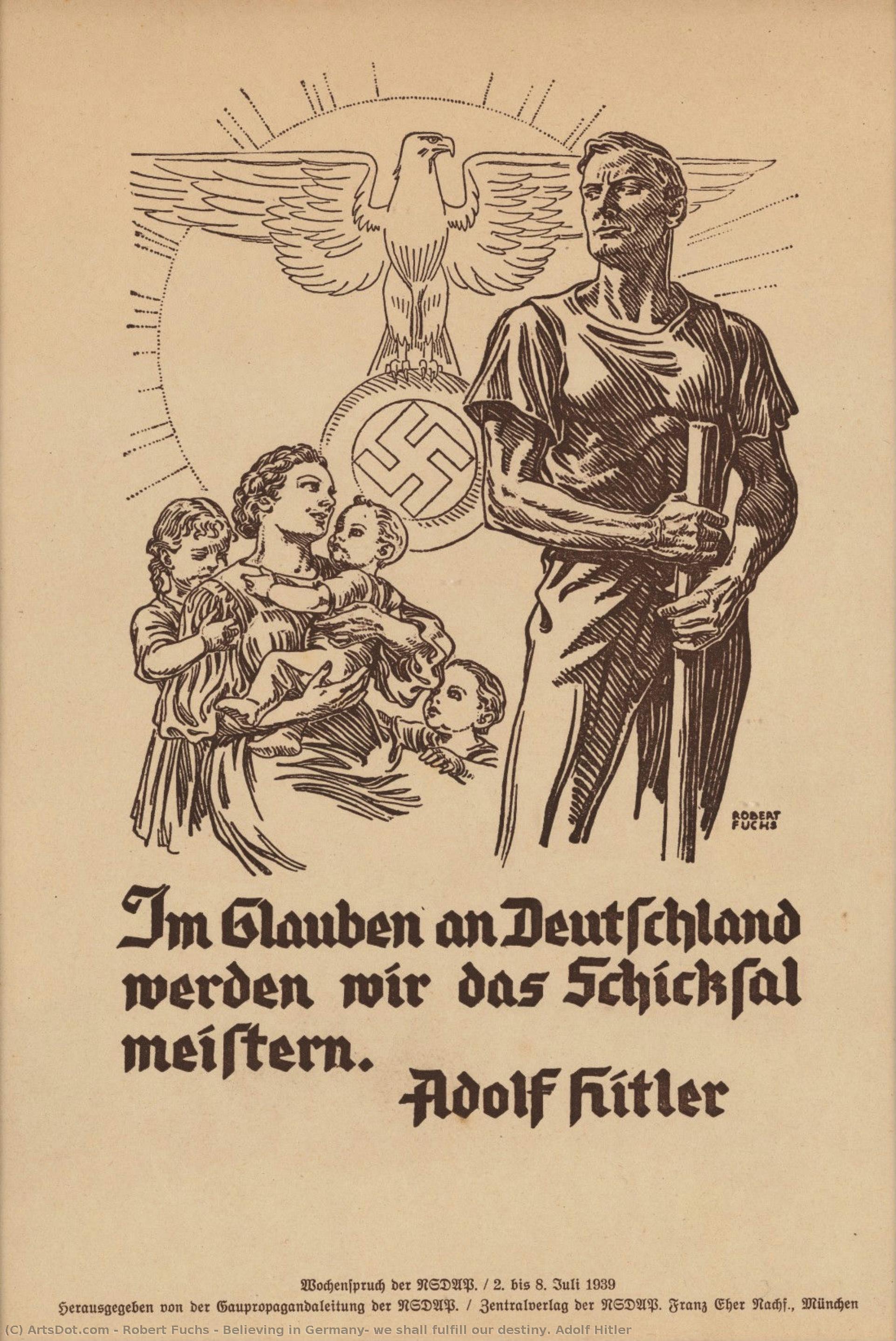
Believing in Germany, we shall fulfill our destiny. Adolf Hitler


 Read More
Hand Made Oil Reproduction
Hand-painted oil on canvas in your size and frame, made to order by our artists. ( Buy Print Buy Image)




P118B $10

P118H $10

P118W $10

P438Z $10

P508JH $12

P508YH $12

P805H $10

P805Z $10

P919BZ $10

P919G $10

P919XJ $10

P959ZH $10

P968JZ $12

W106C $8

W218G $10

W218JH $8

W218Y $10

W307PJ $10

W316G $10

W316PJ $8

W316Y $10

W398PJ $8

W4111J $10

W500HY $15

W500JH $15

W692G $12

W849H $8

W940BG $15

W953PJ $8




Pick from our preset sizes that match the artwork's original proportions.

You may enter your own dimensions to fit a specific frame or space. If your selected size does not match the original image's proportions, we will either crop the artwork or extend the painting with additional hand-painted elements. A digital mockup will be sent for your approval before production begins.
Please note that the on-screen preview does not reflect the actual cropping or extension. Only the mockup will accurately show the final composition.
While custom sizes are available, we recommend selecting a dimension from the predefined list to preserve the original proportions.
After order, ArtsDot.com team will email client for instructions and provide a mockup preview
Worldwide Delivery () in 3/4 weeks instead of standard 5 weeks. (17 August). No compromise on quality.

Free Worldwide Express Shipping

High-Quality Linen Canvas

Full Shipping Insurance

Customs Tax Refund Guarantee

True Color Matching Guarantee

60-Day Return Policy (Defects Only)

100% Money-Back Guarantee

Bulk Discount Offer
 Glass option is only available in size under 110 CM

Believing in Germany, we shall fulfill our destiny. Adolf Hitler
Reproduction Medium
Reproduction Size
-


Total Price
$ 363
Artwork Description
A Haunting Echo of History: The Power of Propaganda
In the vast, often turbulent gallery of human history, few artifacts possess the visceral, unsettling power of political propaganda. The 1939 poster, Believing in Germany, we shall fulfill our destiny, serves as a chilling window into the psychological landscape of World War II. This piece is not merely an image but a calculated instrument of mobilization, designed to stir the soul and command the will of a nation. As an object of historical study, it captures a moment when art was weaponized to reshape reality, using the visual language of duty, sacrifice, and nationalistic fervor to bind a population to a singular, devastating cause.
The composition is masterfully, if ruthlessly, structured to direct the viewer's gaze toward a central, authoritative figure. Adolf Hitler is depicted not as a distant dictator, but as a paternal presence, surrounded by children who represent the idealized future of the German state. This juxtaposition of leadership and innocence is a hallmark of the era's propaganda technique, aiming to soften the harsh realities of war with the promise of domestic stability and generational continuity. Above this scene, the heavy, dominating presence of the swastika looms, acting as both a celestial crown and an inescapable shadow that binds the figures beneath its weight.
Symbolism and the Language of Control
Every element within this work is saturated with symbolic intent, creating a narrative that seeks to justify destiny through ideology. The inclusion of a pale blue dove—a universal symbol of peace—is particularly poignant; in this context, it feels twisted, representing a peace achieved only through total victory and the imposition of order. The children, rendered in a simplified, almost ethereal style with white clothing, embody purity and the untainted potential of the next generation, making them the emotional anchors of the piece. They are the stakes for which the war is being fought.
The color palette reinforces this sense of somber gravity. Dominated by muted browns, blacks, and deep greys, the work avoids the vibrancy of life, opting instead for a tonal range that suggests strength, permanence, and the grit of the earth. The starkness of the lines and the lack of soft shadows create a rigid, angular aesthetic that mirrors the uncompromising nature of the ideology it promotes. It is a visual manifestation of control, where every shape and shade is meticulously placed to leave no room for doubt or dissent.
Technique and the Aesthetic of Mobilization
From a technical perspective, the poster utilizes a style reminiscent of woodcut or linocut printing, characterized by sharp, decisive lines and a limited but impactful tonal range. This method was historically favored for its ability to produce high-contrast, easily reproducible images that could be plastered across city walls and public squares, ensuring the message reached every level of society. The flat lighting and shallow perspective strip away the complexities of the real world, presenting instead an idealized, two-dimensional reality that is easy to digest and impossible to ignore.
For the collector or the historian, a high-quality reproduction of this work offers more than just a decorative element; it provides a profound opportunity for contemplation. To display such a piece is to engage with the heavy weight of the past. It serves as a stark reminder of how easily the tools of art can be used to manipulate emotion and alter the course of civilization. Whether viewed through the lens of graphic design history or as a somber relic of 20th-century conflict, this poster remains an indelible, haunting masterpiece of political communication.
Related Artworks





Artist Biography
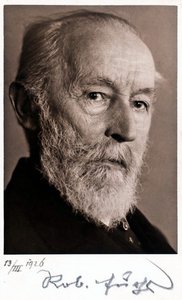
The Melodic Legacy of Robert Fuchs: A Bridge Between Eras
In the grand, sweeping tapestry of Austro-Hungarian musical history, few figures embody the delicate tension between tradition and the dawn of modernism as gracefully as Robert Fuchs. Born in 1847 in the serene landscape of Frauental an der Laßnitz, Styria, Fuchs emerged from a lineage of intellectual and artistic rigor. As the youngest brother of the composer and conductor Johann Nepomuk Fuchs, his musical destiny was woven into the very fabric of the Viennese tradition. His early life was shaped by the disciplined pursuit of excellence, nurtured under the tutelage of legendary masters such as Felix Otto Dessoff and Joseph Hellmesberger at the Vienna Conservatory. This foundational training did more than just impart technical mastery; it instilled in him a profound respect for the classical structures that had defined the era of Mozart and Beethoven, even as he began to sense the shifting winds of a new century.
Fuchs’s career was characterized by a rare duality: he was both a guardian of the past and a quiet architect of the future. While his heart remained anchored in the lyrical beauty of Romanticism, his role as a pedagogue placed him at the epicenter of musical evolution. Appointed as a Professor of Music Theory at the Vienna Conservatory in 1875—a prestigious position he held for nearly four decades—he became a vital link in the chain of musical lineage. It is a profound historical irony that while Fuchs himself often preferred a life of quiet modesty, his classroom served as a crucible for the giants of the Second Viennese School. Within his lectures, the seeds of modernism were sown, as he mentored students such as Arnold Schoenberg and Alban Berg, guiding the minds that would eventually dismantle the very tonal traditions he so skillfully mastered.
A Symphony of Lyricism and Technical Brilliance
To listen to the works of Robert Fuchs is to encounter a composer who found profound joy in the elegance of melody. His compositional voice was never one of jarring dissonance or aggressive experimentation; rather, it was defined by an unfailingly tuneful quality that earned him the admiration of even the most discerning critics. His output, which spanned symphonies, chamber music, and piano concertos, is marked by a sophisticated craftsmanship that balances technical complexity with an accessible, emotive charm. Perhaps his most enduring contribution to the repertoire lies in his series of serenades. These works were so beloved by the public during his lifetime that he earned the affectionate moniker "Serenaden-Fuchs" (the Serenader Fox), a testament to his ability to capture the light, dancing spirit of the era.
Beyond the sheer beauty of his melodies, Fuchs’s chamber music stands as a pinnacle of his creative achievement. It is in these intimate settings that his technical prowess truly shines, revealing a composer capable of profound nuance and structural depth. His ability to weave intricate textures was noted by none less than Johannes Brahms, a composer notoriously stingy with praise, who remarked on the skill and charm inherent in Fuchs’s inventions. Even the great Gustav Mahler was not immune to his influence, with contemporary critics famously noting "Fuchsisms" within the architecture of Mahler’s Second Symphony. This suggests that Fuchs possessed an intuitive grasp of musical development that resonated even within the most radical departures from tradition.
The Quiet Master and His Historical Significance
Despite the immense talent he possessed, Robert Fuchs lived a life of remarkable restraint. He was a man who famously eschewed the spotlight, often refusing to arrange concerts for his own works, preferring instead the quietude of his academic duties and private composition. This lack of self-promotion meant that while he was highly regarded by his peers—including legendary conductors like Arthur Nikisch and Hans Richter—his name did not achieve the widespread, enduring fame of some of his contemporaries. He remained a figure of the shadows, a master of the craft who focused on the purity of the note rather than the roar of the applause.
Ultimately, the historical significance of Robert Fuchs lies in his role as a stabilizing force during a period of immense musical upheaval. He provided the structural and theoretical bedrock upon which the next generation could build their radical new worlds. By maintaining the high standards of the Viennese tradition while fostering an environment where innovation could flourish, he ensured that the transition from Romanticism to Modernism was not merely a rupture, but a continuous, albeit transformative, evolution. His life, spanning from the mid-19th century to 1927, serves as a poignant reminder of the beauty found in the balance between honoring one's heritage and embracing the unknown.
Robert Fuchs
1847 - 1927 , Austria
Quick Facts
- Artistic Movement Or Style: Classical Music
- Artists Or Movements Influenced By This Artist: ['Brahms']
- Artists Who Influenced This Artist:
- Felix Otto Dessoff
- Joseph Hellmesberger
- Date Of Birth: February 15, 1847
- Date Of Death: February 19, 1927
- Full Name: Robert Fuchs
- Nationality: Austrian
- Notable Artworks:
- Serenade for string orchestra No. 1 in D major
- Piano Concerto in B♭ minor
- Place Of Birth: Vienna, Austria
Related Articles

William Owen: A Poetic Vision of War & Landscape in British Modernism
Explore the poignant war poetry of Wilfred Owen, a key figure in British Modernism. Discover his innovative style, themes of loss & camaraderie, and lasting impact on 20th-century literature. Analysis & historical context included.

Echoes of War & Hope: Top 10 Artworks Reflecting the 1940s | ArtsDot
Journey through a decade of resilience & change with our Top 10 artworks of the 1940s. Explore iconic paintings by Rockwell, Hopper & more—reflecting WWII's impact and post-war hope. Find museum-quality reproductions at ArtsDot.com

Hubert Robert: Picturing Ruins, Preserving Memory – A Study of Romantic Antiquarianism & Artistic Innovation
Explore the captivating world of Hubert Robert, master of Romantic landscape painting & 'capriccio' ruins. Discover his historical context, artistic innovations, and collecting insights with ArtsDot.

David Roberts: A Scottish Pioneer of Topographical Art & Orientalist Vision
Explore the captivating world of David Roberts, a pioneering Scottish painter renowned for his detailed Orientalist scenes & stunning Egyptian landscapes. Discover his legacy and find museum-quality reproductions at ArtsDot.

Echoes of Trauma & Hope: Representing Transformation in Artworks of 1918
Explore the profound artistic responses to World War I's trauma & hope. Discover Expressionist masterpieces by Bacon, de Kooning & more. Expert insights for collectors & art enthusiasts at ArtsDot.