A Moment Frozen in Light: The Ethereal Grace of Renoir’s Masterpiece
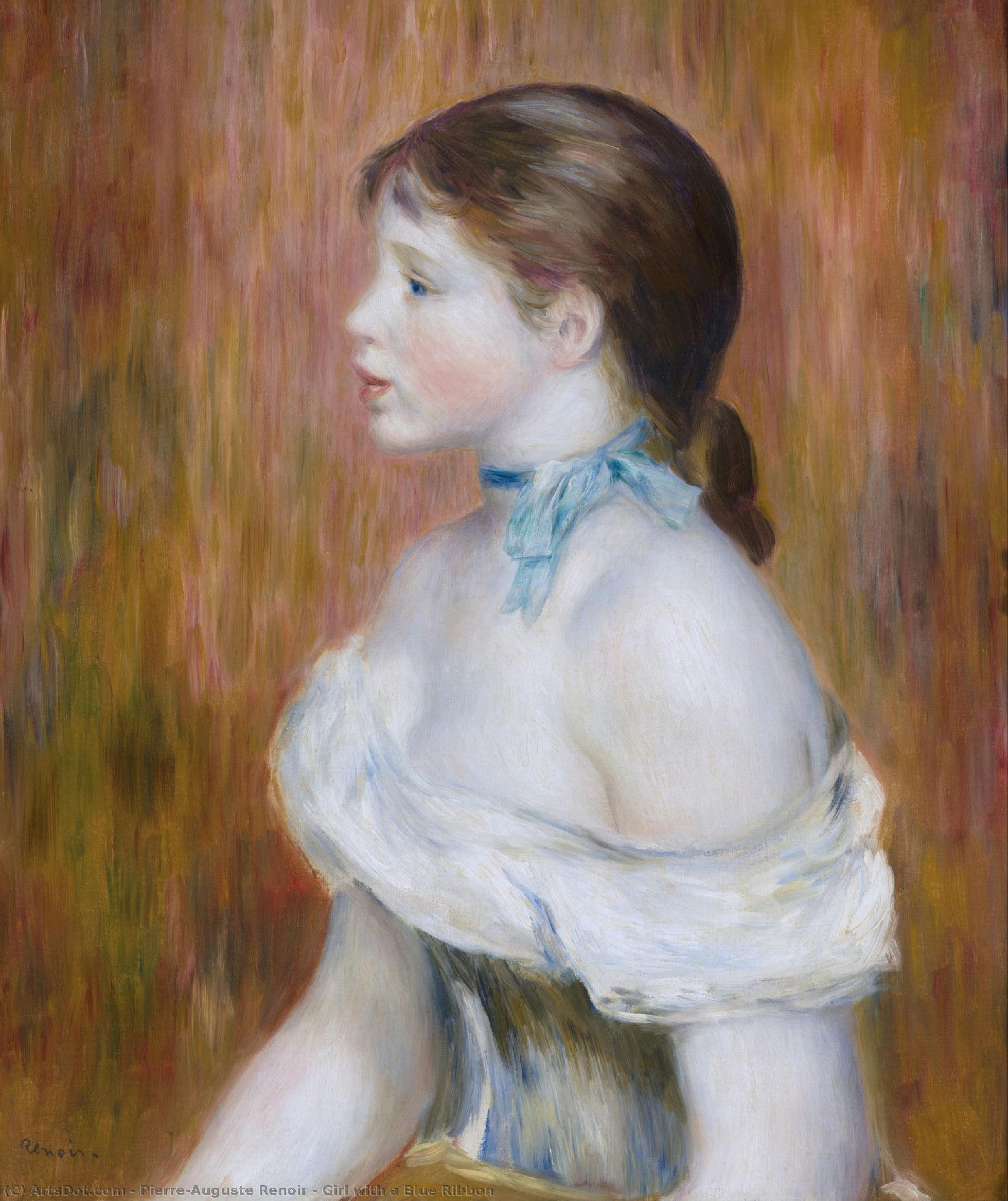
In the quiet corridors of the Museum of Fine Arts of Lyon, there exists a portrait that does more than merely depict a face; it captures a soul in transition. Pierre-Auguste Renoir’s 1888 masterpiece, “Girl with a Blue Ribbon,” serves as a breathtaking testament to the power of Impressionism to transcend mere observation. The painting presents us with a young woman whose gaze, steady and contemplative, meets the viewer with an intimacy that feels both timeless and fleeting. Bathed in a soft, enveloping light, the subject appears caught in a moment of silent reverie, her presence anchored by the vibrant sapphire note of the ribbon at her neck. This single splash of color acts as a chromatic heartbeat within the composition, drawing the eye toward the delicate porcelain quality of her skin and the gentle, thoughtful expression that defines her character.
To look upon this work is to witness Renoir at a pivotal crossroads in his artistic evolution. By 1888, the artist was moving away from the purely spontaneous, broken brushstrokes of his early Impressionist years toward a more structured, classical synthesis. He sought to marry the freedom of light and color with a renewed commitment to form and contour. In this portrait, we see the successful marriage of these two worlds. The background, a warm tapestry of ochre, salmon pink, and coppery orange, vibrates with an atmospheric energy that suggests a theater curtain or a sun-drenched room, yet it remains soft enough to allow the subject to emerge with a sculptural, three-dimensional presence. This technique—a delicate layering of color—creates a luminous depth that makes the canvas feel as though it is breathing.
The Art of Emotion and Interior Elegance
For the discerning collector or interior designer, “Girl with a Blue Ribbon” offers much more than historical significance; it provides an emotional anchor for any sophisticated space. The painting’s palette is a masterclass in harmony, balancing the warmth of the background with the cool, striking blue of the ribbon and the luminous whites of the subject's attire. This balance makes the piece incredibly versatile, capable of lending a sense of classical serenity to a minimalist modern room or adding a layer of rich, historical texture to a traditional study. The artwork does not demand attention through loud or jarring colors, but rather invites it through subtle nuances and a profound sense of peace.
Beyond its aesthetic appeal, the painting carries a weight of historical narrative that adds layers of meaning to its display. It represents a period of intense personal growth for Renoir, a time when he was rediscovering the "sweet, light touch" of his earlier style while embracing the precision of the Old Masters. When choosing a high-quality reproduction of this work, one is not merely acquiring a decorative object, but a fragment of art history—a piece that embodies the resilience of beauty and the enduring allure of the human spirit. Whether placed in a sunlit gallery or a quiet corner of a private residence, Renoir’s vision continues to radiate a warmth that transforms the atmosphere of any environment it inhabits.