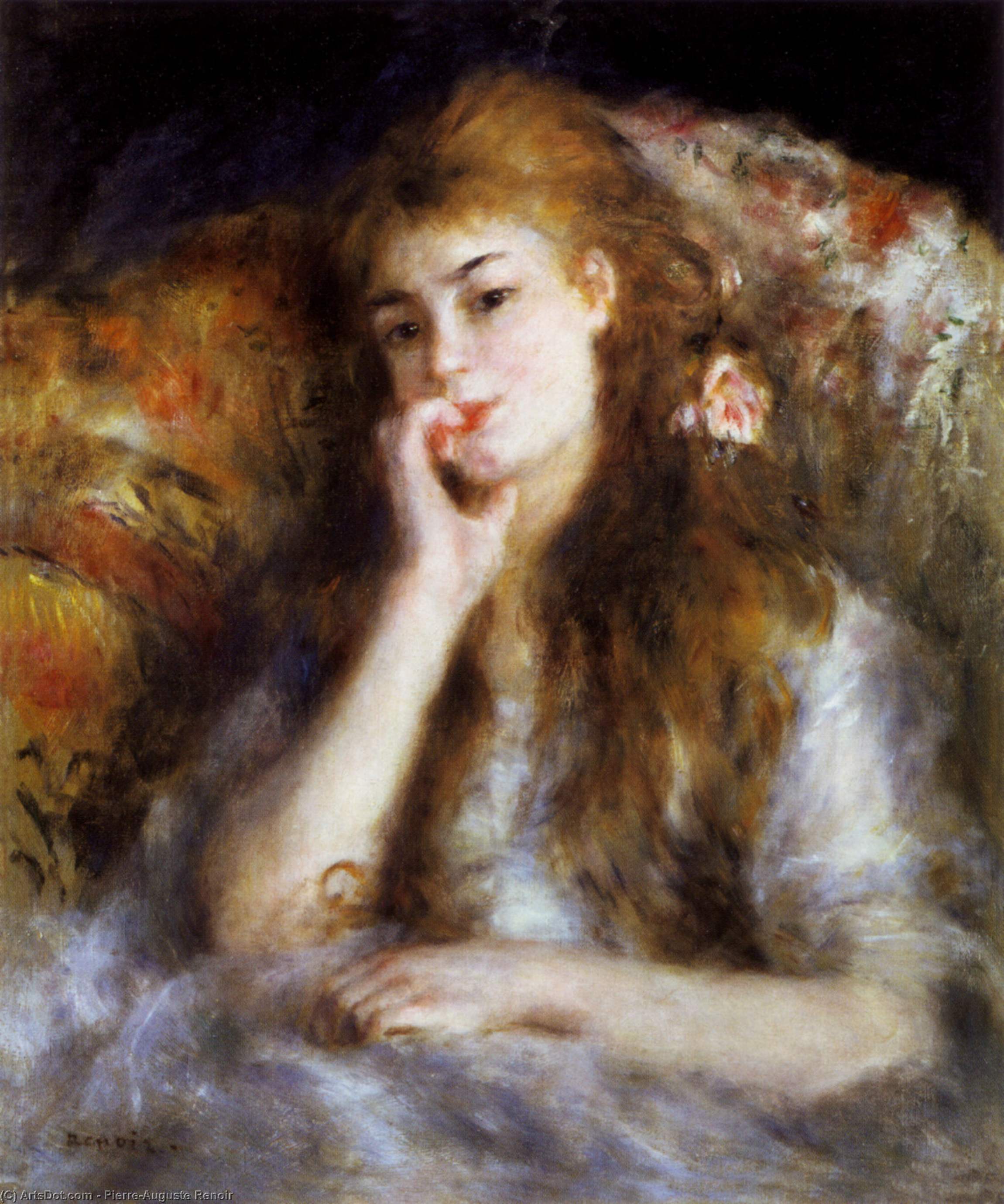
The Enigmatic Contemplation of “The Thinker” by Pierre-Auguste Renoir
Pierre-Auguste Renoir’s "The Thinker," more accurately titled “Seated Young Woman,” is a captivating portrait that transcends mere representation, offering instead a profound glimpse into the realm of human introspection. Completed in 1877 and currently residing within the esteemed Barber Institute of Fine Arts in Birmingham, England, this oil on canvas work stands as a cornerstone of the Impressionist movement, embodying Renoir’s signature ability to capture fleeting moments of emotion and the quiet beauty of everyday life. More than just a depiction of a young woman, it's an invitation—a silent plea to pause, observe, and ponder alongside her lost in thought.
The painting immediately draws the eye with its harmonious composition. A simple chair is strategically positioned on the right side of the canvas, providing a grounding element against which the subject’s pose is dramatically emphasized. A smaller couch nestles discreetly in the background to the left, creating a sense of depth and inviting the viewer into the intimate space she occupies. Two potted plants—one perched delicately at the top-left corner and another nestled below on the right—add subtle touches of natural beauty, anchoring the scene within a domestic setting while simultaneously highlighting the woman’s isolation in her contemplation. Renoir masterfully employs light and color to create a warm, inviting atmosphere; the soft hues of the fabrics and the diffused sunlight suggest a tranquil afternoon, perfectly suited for such a moment of quiet reflection.
An Impressionist Masterpiece: Light, Color, and Emotion
Renoir’s artistic vision was deeply rooted in his commitment to portraying the subtleties of human emotion and the inherent beauty found within ordinary moments. “The Thinker” exemplifies this approach through its masterful use of light and color— hallmarks of the Impressionist style. Rather than striving for photographic realism, Renoir employed loose brushstrokes and vibrant pigments to capture the *impression* of light and atmosphere. Notice how he uses broken colors – small dabs of paint layered upon each other – to create a shimmering effect, particularly in the folds of her dress and the shadows that fall across her face. This technique not only conveys the play of light but also imbues the painting with a sense of movement and vitality.
The woman’s posture is key to understanding the work's emotional core. Her hands clasped firmly in front of her face, partially obscuring her features, immediately convey a sense of intense concentration or perhaps even sorrow. The slight tilt of her head and the downward gaze suggest a deep engagement with an internal world—a private struggle or simply a profound moment of reflection. It’s a pose that resonates deeply with viewers, inviting us to project our own thoughts and feelings onto the subject, making it a universally relatable image of human experience.
Historical Context and Artistic Significance
“The Thinker” was created during a pivotal period in Renoir's career. Following his initial struggles to gain acceptance within the rigid confines of the Salon system, he embraced the Impressionist movement, forging close relationships with artists like Monet and Sisley. This painting represents a culmination of those influences—a departure from traditional academic styles towards a more subjective and emotionally driven approach to art. It’s significant not only for its aesthetic qualities but also for its contribution to the broader artistic landscape of the late 19th century.
Interestingly, “The Thinker” shares a striking resemblance to Auguste Rodin's iconic bronze sculpture of the same name, completed in 1877. While Rodin’s work depicts a heroic figure engaged in physical exertion, Renoir captures a more intimate and vulnerable moment of introspection. This parallel highlights the shared fascination with the human condition—the capacity for both strength and contemplation—that characterized both artists.
A Timeless Reflection: Owning a Piece of Art History
Today, “The Thinker” serves as a poignant reminder of the importance of slowing down in our increasingly fast-paced world. It’s an invitation to embrace moments of quiet reflection and appreciate the beauty that can be found within stillness. ArtsDot.com offers exquisite, hand-painted reproductions of this masterpiece, allowing you to bring a piece of art history into your home or office. These meticulously crafted reproductions capture the essence of Renoir's original work with remarkable fidelity, ensuring that you experience the painting’s beauty and emotional depth in its fullest form.
Beyond “The Thinker,” ArtsDot.com offers a stunning collection of artwork from masters like Giovanni Bellini, Dante Gabriel Rossetti, and Cornelis Dusart – each a testament to the enduring power of art to capture and convey human emotion. Explore our gallery today and discover your next treasured piece.