Experience the luminous detail of a Dutch Golden Age interior by Quiringh van Brekelenkam; discover this masterful study of domestic life today.
Discover Quiringh van Brekelenkam (1622-1669), a Dutch Baroque genre painter known for detailed scenes of everyday life, workshops & peasant interiors. Influenced by Gerard Dou, his 'fijnschilder' style captures exquisite light and human expression.
Rijksmuseum
(Amsterdam, Netherlands)
Explore Dutch art & history at the Rijksmuseum Amsterdam! Marvel at Rembrandt, Vermeer & Van Gogh masterpieces in an iconic landmark – a journey through 800 years of culture.
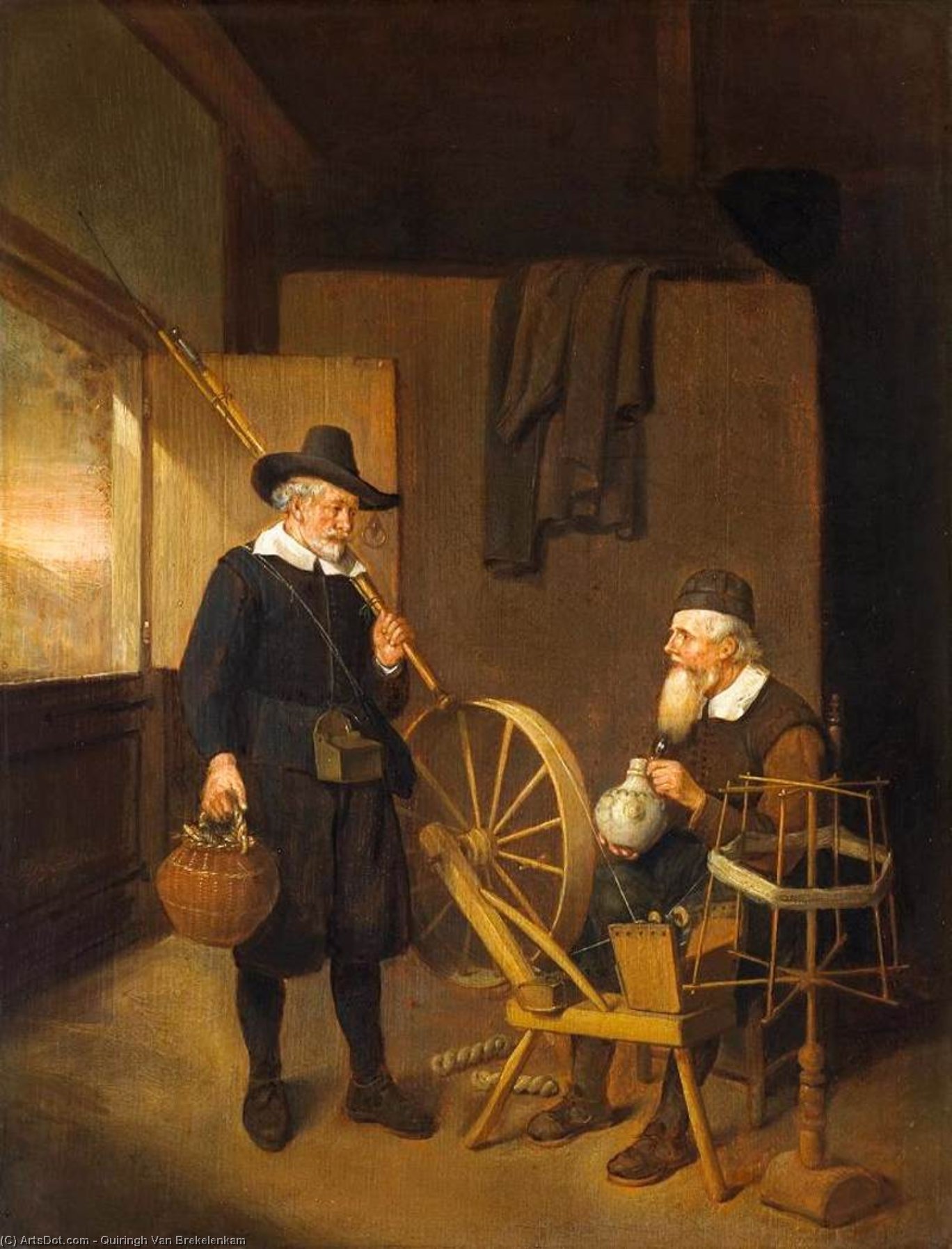
Interior with Fisherman and Man beside a Bobbin and Spool, Quiringh Gerritsz. van Brekelenkam, 1653
Quiringh Gerritsz van Brekelenkam’s “Interior with Fisherman and Man beside a Bobbin and Spool” is more than just a depiction of domestic life; it's a masterful distillation of the Dutch Golden Age’s fascination with capturing fleeting moments of beauty and conveying profound psychological insight. Painted in 1653, this artwork resides within The National Gallery’s collection in London, offering visitors an unparalleled opportunity to immerse themselves in the artistic sensibilities of its era.
### Subject Matter and Composition
The scene unfolds within a modestly furnished kitchen—a space deliberately chosen by Brekelenkam to elevate the commonplace into something extraordinary. At the center stands a woman, bathed in soft natural light filtering through a window, engaged in a contemplative activity: examining a piece of fabric – likely lace – with meticulous attention. Beside her sits a man, calmly tending to a spinning wheel, his gaze directed outwards towards the viewer. The inclusion of a bobbin and spool reinforces the theme of industriousness and domestic harmony—a cornerstone of Dutch artistic ideals during this period. Two chairs flank the figures, creating a balanced composition that draws the eye inwards toward the core narrative.
### Artistic Style: The Leiden Fijnschilders Influence
Brekelenkam’s style aligns seamlessly with that of the Leiden fijnschilders – a group of artists who championed realism combined with an extraordinary sensitivity to light and texture. Like his contemporaries Gerard Dou and Willem van Delft, Brekelenkam employed techniques honed through painstaking observation and meticulous layering of glazes—a hallmark of Baroque painting—to achieve unparalleled luminosity and depth. The artist skillfully renders the subtle nuances of illumination, casting delicate shadows that sculpt the forms of the figures and furnishings alike. This masterful manipulation of light contributes significantly to the artwork’s emotional resonance.
### Technique and Materials
Executed on oak panel, “Interior with Fisherman and Man beside a Bobbin and Spool” exemplifies Brekelenkam's dedication to capturing the essence of his subject matter. The artist utilized oil paint—a medium favored by the fijnschilders—allowing for gradual blending and achieving remarkable tonal gradations. Careful attention was paid to detail, from the folds of fabric to the texture of the wooden furniture, demonstrating a commitment to verisimilitude that distinguishes Brekelenkam’s oeuvre from more stylized approaches. The artist's meticulous brushwork conveys an impression of stillness and tranquility—a deliberate choice intended to convey a sense of idealized domestic serenity.
### Historical Context and Symbolism
“Interior with Fisherman and Man beside a Bobbin and Spool” reflects the broader artistic currents of its time, mirroring the Dutch Republic’s preoccupation with portraying everyday life as imbued with moral virtue and spiritual significance. The depiction of a spinning wheel symbolizes industriousness and family values—important ideals within Dutch society during the mid-17th century. Furthermore, the inclusion of a map hanging on the wall serves as a subtle emblem of patriotism—a testament to the Republic’s aspirations for stability and prosperity amidst turbulent geopolitical circumstances. Brekelenkam's artwork stands as an enduring symbol of Dutch artistic excellence and its ability to elevate the mundane into something sublime.
### Museums Display
The painting is currently housed in The National Gallery, London, where it continues to captivate audiences with its luminous beauty and psychological depth. Visitors can experience this masterpiece firsthand, appreciating Brekelenkam’s unparalleled skill in capturing a moment of domestic tranquility—a testament to the enduring legacy of Dutch Baroque art.