A Royal Encounter: The Fusion of East and West
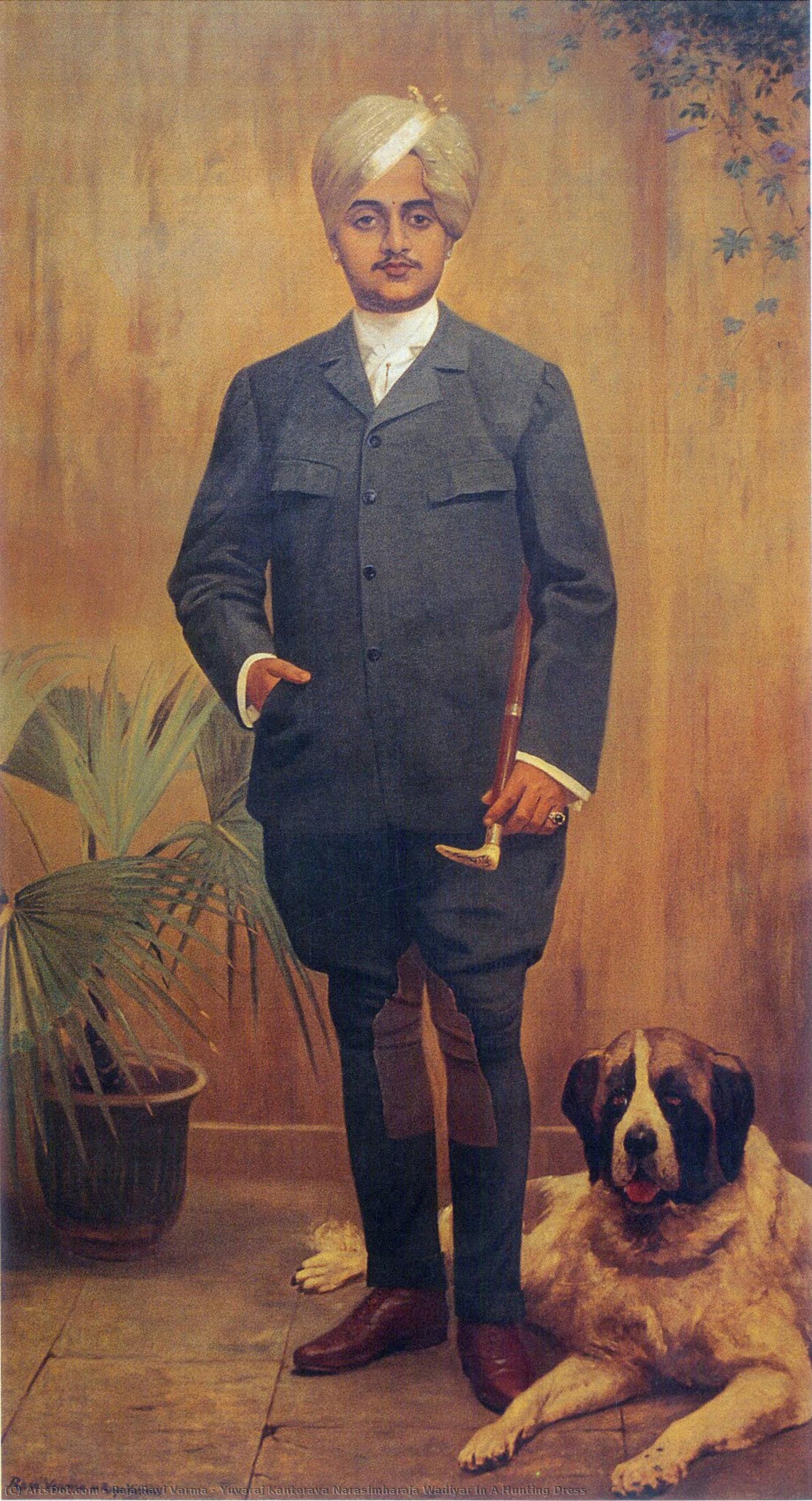
In the quiet, hallowed halls of the Jayachamrajendra Art Gallery in Mysore, there exists a portrait that serves as a profound testament to a transformative era in Indian history. Yuvaraj Kanterava Narasimharaja Wadiyar In A Hunting Dress, painted in 1902 by the legendary Raja Ravi Varma, is far more than a mere likeness of royalty; it is a visual dialogue between two worlds. The painting captures the young prince at a unique cultural crossroads, where the rigid elegance of European formal attire meets the unmistakable sovereign identity of the Mysore lineage. As one gazes upon the canvas, the subject stands with a poised, stately presence, his western suit meticulously rendered to reflect the sophisticated tastes of the turn-of-the-century Indian aristocracy.
Yet, amidst this embrace of Western fashion, Varma subtly weaves in the soul of India. The inclusion of the Mysore Peta—the traditional royal turban—acts as a powerful symbol of continuity and heritage. It is a masterful stroke of iconography that ensures the prince’s royal status remains unassailable, even as he adopts the sartorial language of the British Raj. This delicate balance between tradition and modernity is what makes the piece so captivating for the modern collector; it captures a moment in time when identity was being beautifully renegotiated through art.
The Intimacy of Companionship and Technique
Beyond the regal attire, the painting breathes with an unexpected warmth, courtesy of the prince's loyal companion. Seated beside him is his pet Saint Bernard, a magnificent creature whose presence adds a layer of tender intimacy to the formal composition. Legend suggests this dog was a gift from a British officer, further reinforcing the narrative of cross-cultural exchange and the personal connections that bridged distant empires. The way the dog rests near the prince, its head lowered in a gesture of quiet devotion, softens the grandeur of the portrait, inviting the viewer into a private, domestic moment of affection.
Technically, the work is a triumph of Raja Ravi Varma’s signature style. He employs the principles of European academic realism—mastering the interplay of light and shadow, the precise anatomy of the subjects, and the rich, tactile textures of fabric and fur—to breathe life into the scene. The subtle glint of light on a vase or the soft depth of the potted plants in the background creates a three-dimensional space that feels both reachable and eternal. For interior designers and art enthusiasts, this painting offers an unparalleled sense of depth and prestige, making it a centerpiece capable of anchoring a room with its sophisticated atmosphere and historical weight.
An Enduring Legacy for the Discerning Collector
To possess a reproduction of such a masterpiece is to invite a piece of India's golden age into one's personal sanctuary. The emotional impact of the work lies in its ability to evoke nostalgia for a period of profound transition, offering a sense of stability and grace through its classical execution. Whether placed in a grand library or a contemporary living space, this portrait serves as a conversation starter, reflecting themes of loyalty, heritage, and the seamless blending of disparate cultures.
For those seeking to curate an environment of intellectual depth and aesthetic splendor, Yuvaraj Kanterava Narasimharaja Wadiyar In A Hunting Dress stands as an exquisite choice. It is a work that does not merely decorate a wall; it tells a story of a prince, a pet, and a pivotal moment in the dawn of modern Indian painting, preserved forever through the brush of a master.