A Tender Moment Captured in the Dutch Golden Age
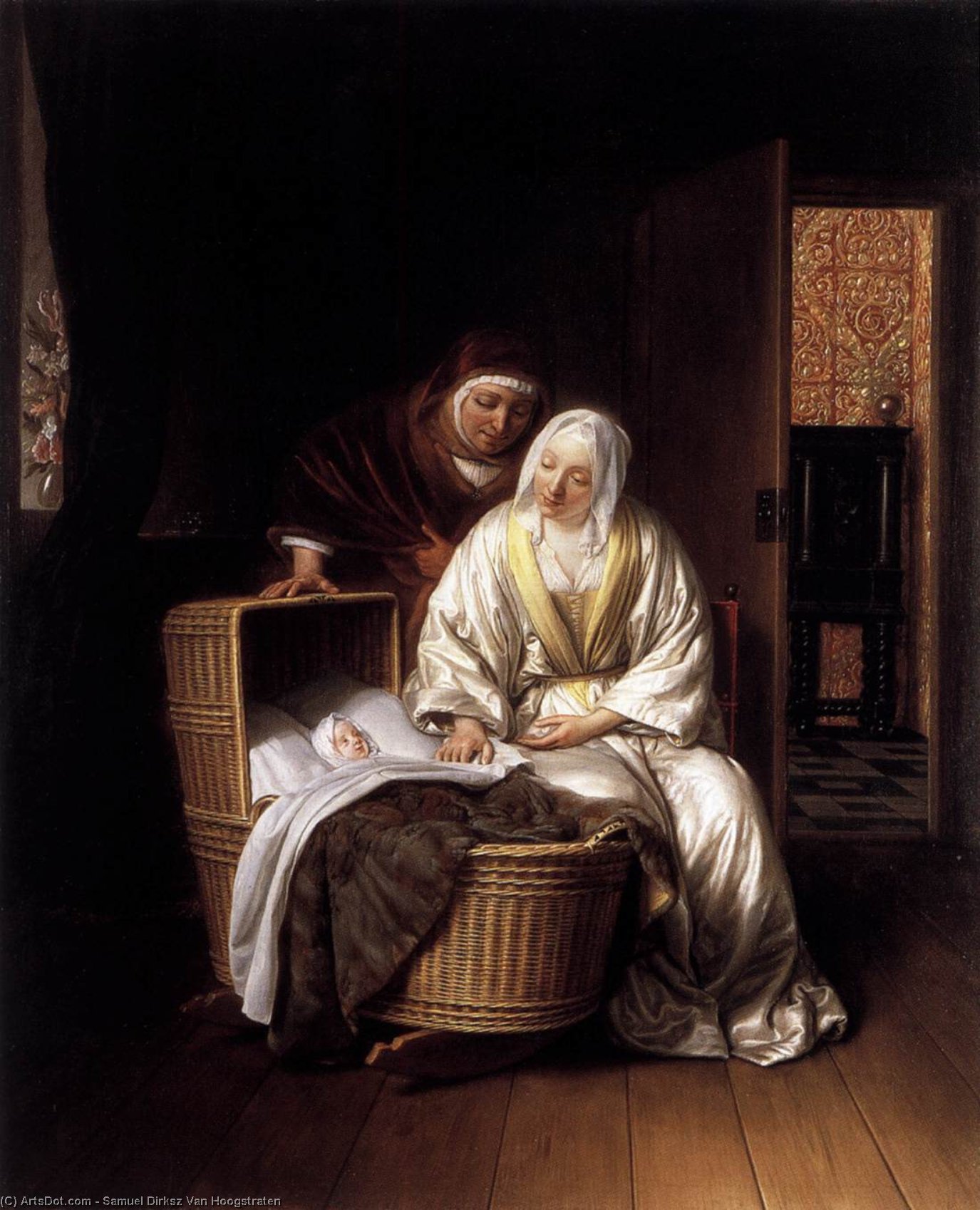
In the quiet intimacy of Two Women by a Cradle, we are invited into a private, domestic sanctuary that feels as though it were frozen in time. Painted around 1670 by the masterful Samuel Dirksz van Hoogstraten, this work transcends mere portraiture to become a profound meditation on care, continuity, and the sanctity of life. The scene unfolds with a gentle grace, presenting two women dressed in luminous white gowns that seem to catch a soft, ambient light. As they gather around a cradle, their focused attention on the unseen infant creates an atmosphere of profound tenderness. One woman cradles the child with a protective instinct, while her companion watches with a gaze filled with quiet contemplation, establishing a rhythmic connection between the figures that draws the viewer into their shared devotion.
The composition is masterfully balanced, utilizing the subtle presence of a chair and a shadowy figure in the background to provide depth and a sense of lived-in reality. This is not a staged theatrical performance, but rather a captured fragment of domestic life, rendered with the precision that defined the Dutch Golden Age. The interplay of light and shadow—a hallmark of the era—softens the edges of the room, casting a warm, nostalgic glow over the white linens and the textures of the clothing. For the discerning collector or interior designer, this piece offers more than just visual beauty; it provides a focal point of serenity, capable of anchoring a room with its calm, historical weight and sophisticated palette.
The Mastery of Illusion and Light
To understand this painting is to understand the intellect of van Hoogstraten. As a student of Rembrandt and a renowned theorist of perspective, van Hoogstraten possessed an unparalleled ability to manipulate perception. In Two Women by a Cradle, his technical prowess is evident in the way he handles the tactile qualities of fabric and the subtle gradations of skin tones. The white gowns are not merely white; they are a complex tapestry of highlights and soft greys that suggest weight, texture, and the way light interacts with folded cloth. His mastery of trompe l'oeil elements—the illusion of three-dimensionality—is subtly woven into the domestic setting, making the space feel tangible and reachable.
The technique employed here serves a higher emotional purpose. By utilizing a controlled light source, the artist directs our eyes toward the heart of the narrative: the bond between the caregivers and the new life. The brushwork, while precise, maintains a softness that prevents the scene from feeling clinical, instead imbuing it with a painterly warmth. This delicate balance between technical rigor and emotional fluidity is what makes a high-quality reproduction of this work so impactful; when rendered with care, the light seems to emanate from within the canvas itself, offering an enduring sense of peace to any space it inhabits.
Symbolism and the Legacy of Care
Beyond its aesthetic brilliance, the painting serves as a poignant symbol of the cycles of life. The cradle, a universal emblem of beginnings, stands at the center of a narrative about protection and the passing of traditions from one generation to the next. The presence of the two women—perhaps mother and nurse, or sisters—suggests a community of care that surrounds the vulnerable new arrival. There is a quiet dignity in their labor, a celebration of the domestic sphere as a place of profound importance and spiritual significance.
For those looking to incorporate fine art into their homes, this work offers a timeless elegance that complements both classical and contemporary interiors. It evokes a sense of heritage and intellectual depth, making it an ideal choice for spaces designed for reflection and comfort. Owning a reproduction of such a significant piece from the Dutch Golden Age is an opportunity to surround oneself with the enduring values of compassion and meticulous beauty, bringing a touch of 17th-century soul into the modern world.