 Preview
 Send
Send Share
Share
 Details

 Download
 Similars
 X-Ray
X-Ray Diaporama
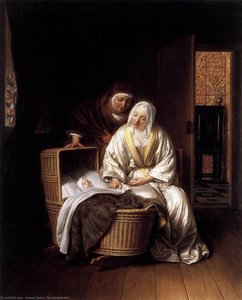
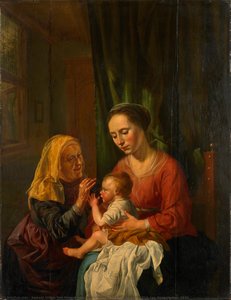
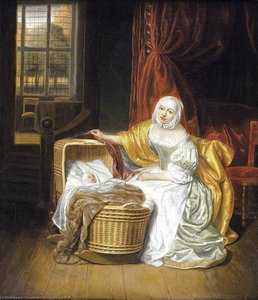
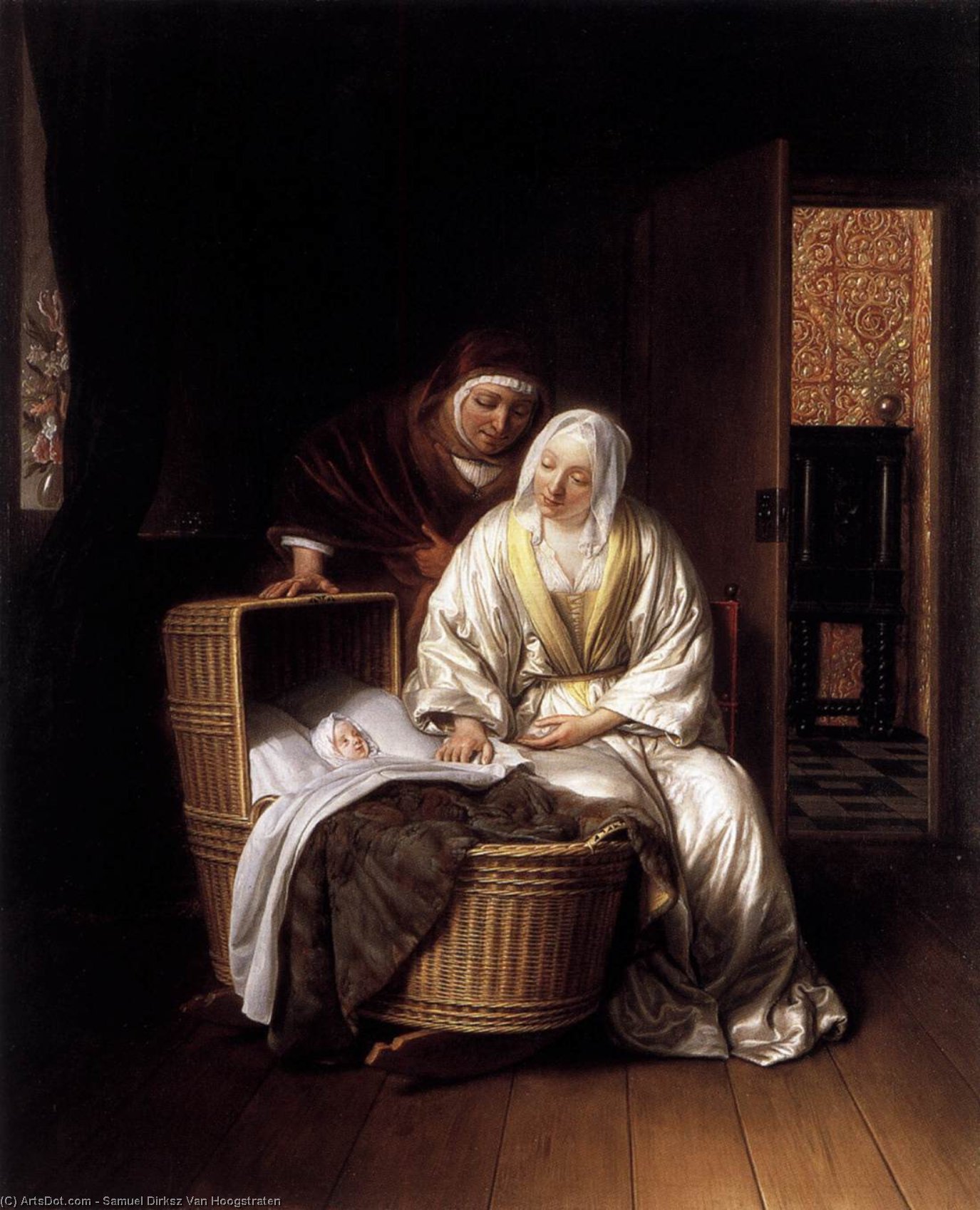
Two Women by a Cradle
 Oil
Oil- WallArt
- Dutch Golden Age
 1670
1670- Early Modern
 66.0 x 55.0 cm
 Museum of Fine Arts
 Read More
Hand Made Oil Reproduction
Hand-painted oil on canvas in your size and frame, made to order by our artists. ( Buy Print Buy Image)




P118B $10

P118H $10

P118W $10

P438Z $10

P508JH $12

P508YH $12

P805H $10

P805Z $10

P919BZ $10

P919G $10

P919XJ $10

P959ZH $10

P968JZ $12

W106C $8

W218G $10

W218JH $8

W218Y $10

W307PJ $10

W316G $10

W316PJ $8

W316Y $10

W398PJ $8

W4111J $10

W500HY $15

W500JH $15

W692G $12

W849H $8

W940BG $15

W953PJ $8




Pick from our preset sizes that match the artwork's original proportions.

You may enter your own dimensions to fit a specific frame or space. If your selected size does not match the original image's proportions, we will either crop the artwork or extend the painting with additional hand-painted elements. A digital mockup will be sent for your approval before production begins.
Please note that the on-screen preview does not reflect the actual cropping or extension. Only the mockup will accurately show the final composition.
While custom sizes are available, we recommend selecting a dimension from the predefined list to preserve the original proportions.
After order, ArtsDot.com team will email client for instructions and provide a mockup preview
Worldwide Delivery () in 3/4 weeks instead of standard 5 weeks. (17 August). No compromise on quality.

Free Worldwide Express Shipping

High-Quality Linen Canvas

Full Shipping Insurance

Customs Tax Refund Guarantee

True Color Matching Guarantee

60-Day Return Policy (Defects Only)

100% Money-Back Guarantee

Bulk Discount Offer
 Glass option is only available in size under 110 CM

Two Women by a Cradle
Reproduction Medium
Reproduction Size
-


Total Price
$ 263
Artwork Description
A Tender Moment Captured in the Dutch Golden Age
In the quiet intimacy of Two Women by a Cradle, we are invited into a private, domestic sanctuary that feels as though it were frozen in time. Painted around 1670 by the masterful Samuel Dirksz van Hoogstraten, this work transcends mere portraiture to become a profound meditation on care, continuity, and the sanctity of life. The scene unfolds with a gentle grace, presenting two women dressed in luminous white gowns that seem to catch a soft, ambient light. As they gather around a cradle, their focused attention on the unseen infant creates an atmosphere of profound tenderness. One woman cradles the child with a protective instinct, while her companion watches with a gaze filled with quiet contemplation, establishing a rhythmic connection between the figures that draws the viewer into their shared devotion.
The composition is masterfully balanced, utilizing the subtle presence of a chair and a shadowy figure in the background to provide depth and a sense of lived-in reality. This is not a staged theatrical performance, but rather a captured fragment of domestic life, rendered with the precision that defined the Dutch Golden Age. The interplay of light and shadow—a hallmark of the era—softens the edges of the room, casting a warm, nostalgic glow over the white linens and the textures of the clothing. For the discerning collector or interior designer, this piece offers more than just visual beauty; it provides a focal point of serenity, capable of anchoring a room with its calm, historical weight and sophisticated palette.
The Mastery of Illusion and Light
To understand this painting is to understand the intellect of van Hoogstraten. As a student of Rembrandt and a renowned theorist of perspective, van Hoogstraten possessed an unparalleled ability to manipulate perception. In Two Women by a Cradle, his technical prowess is evident in the way he handles the tactile qualities of fabric and the subtle gradations of skin tones. The white gowns are not merely white; they are a complex tapestry of highlights and soft greys that suggest weight, texture, and the way light interacts with folded cloth. His mastery of trompe l'oeil elements—the illusion of three-dimensionality—is subtly woven into the domestic setting, making the space feel tangible and reachable.
The technique employed here serves a higher emotional purpose. By utilizing a controlled light source, the artist directs our eyes toward the heart of the narrative: the bond between the caregivers and the new life. The brushwork, while precise, maintains a softness that prevents the scene from feeling clinical, instead imbuing it with a painterly warmth. This delicate balance between technical rigor and emotional fluidity is what makes a high-quality reproduction of this work so impactful; when rendered with care, the light seems to emanate from within the canvas itself, offering an enduring sense of peace to any space it inhabits.
Symbolism and the Legacy of Care
Beyond its aesthetic brilliance, the painting serves as a poignant symbol of the cycles of life. The cradle, a universal emblem of beginnings, stands at the center of a narrative about protection and the passing of traditions from one generation to the next. The presence of the two women—perhaps mother and nurse, or sisters—suggests a community of care that surrounds the vulnerable new arrival. There is a quiet dignity in their labor, a celebration of the domestic sphere as a place of profound importance and spiritual significance.
For those looking to incorporate fine art into their homes, this work offers a timeless elegance that complements both classical and contemporary interiors. It evokes a sense of heritage and intellectual depth, making it an ideal choice for spaces designed for reflection and comfort. Owning a reproduction of such a significant piece from the Dutch Golden Age is an opportunity to surround oneself with the enduring values of compassion and meticulous beauty, bringing a touch of 17th-century soul into the modern world.
Related Artworks
Artist Biography
A Master of Illusion and Intellect: The World of Samuel Dirksz van Hoogstraten
Samuel Dirksz van Hoogstraten, a name resonating with the ingenuity of the Dutch Golden Age, was far more than simply a painter. Born in Dordrecht in 1627 and passing away there in 1678, he embodied the era’s spirit of intellectual curiosity, artistic innovation, and burgeoning mercantile power. He wasn't merely recording reality on canvas; he was dissecting it, playing with perception, and exploring the very nature of representation itself. Van Hoogstraten distinguished himself not only through his skillful brushwork but also as a poet and a profound art theorist, leaving behind a legacy that extends beyond the visual realm into the world of ideas. His journey began within the family workshop of his father, Dirk van Hoogstraten, laying a foundational understanding of artistic principles before venturing to Amsterdam – the beating heart of Dutch artistry in the 17th century. It was there he entered the esteemed studio of Rembrandt van Rijn, an experience that would indelibly shape his early style and approach to light and shadow.From Rembrandt’s Shadow to Independent Vision
The influence of Rembrandt is undeniably present in Van Hoogstraten's initial works. A portrait from 1645, now residing in the Liechtenstein collection in Vienna, serves as a clear testament to this apprenticeship. However, unlike many students who remained tethered to their master’s style, Van Hoogstraten possessed an insatiable desire for experimentation and a restless spirit that propelled him beyond imitation. He wasn't content to simply replicate Rembrandt’s chiaroscuro; he sought to deconstruct it, analyze its effects, and ultimately forge his own unique artistic voice. This pursuit led him on extensive travels throughout Europe – to Vienna, Rome, and London – exposing him to diverse artistic traditions and fueling his intellectual growth. These journeys weren't merely sightseeing expeditions; they were immersive studies in architecture, perspective, and the prevailing aesthetic sensibilities of each locale. Upon returning to Dordrecht, he married in 1656 and assumed a civic role as provost of the mint, demonstrating a multifaceted talent that extended beyond the artistic sphere. This period saw him further refine his skills, moving towards an increasingly sophisticated understanding of illusionism and spatial representation.Trompe-l’œil, Perspective Boxes, and the Art of Deception
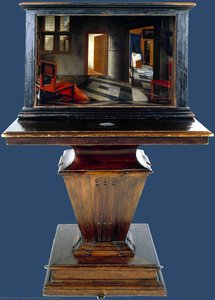
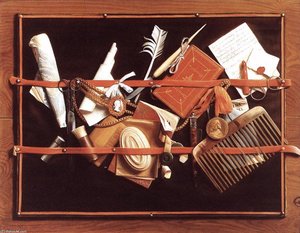
Van Hoogstraten's artistic prowess truly blossomed in his mastery of trompe-l’œil, a technique that translates to “deceive the eye.” His still lifes weren’t simply arrangements of objects; they were meticulously crafted illusions designed to blur the boundaries between reality and representation. He imbued seemingly haphazard collections with deeper symbolic meanings, inviting viewers to contemplate the transient nature of life and the deceptive allure of material possessions. Simultaneously, he became renowned for his creation of “peepshows” or "perspective boxes"—ingenious devices that offered immersive three-dimensional views into miniature worlds. One such box, currently housed at the National Gallery in London, recreates the interior of a typical Dutch house with astonishing realism when viewed through strategically placed peepholes. These weren’t mere novelties; they were sophisticated explorations of perspective and spatial illusion, demonstrating Van Hoogstraten's profound understanding of how the human eye perceives depth and dimension. His architectural paintings, such as his 1652 view of the Vienna Hofburg, further showcased his technical skill and attention to detail.A Theorist’s Legacy: ‘Inleyding tot de hooge schoole der schilderkonst’
However, Samuel van Hoogstraten's contribution extends far beyond his paintings and perspective boxes. He was a dedicated art theorist who sought to codify the principles of painting in his magnum opus, Inleyding tot de hooge schoole der schilderkonst: anders de zichtbaere werelt (Introduction to the Academy of Painting, or The Visible World), published in 1678. This ambitious treatise stands as one of the most comprehensive and intellectually rigorous explorations of art theory produced in the Dutch Republic during the 17th century. Van Hoogstraten delved into issues of pictorial persuasion, illusionism, the moral responsibilities of the artist, and the relationship between painting and philosophy, drawing upon a vast range of ancient and modern sources. He built upon the foundations laid by Karel van Mander in his earlier work, *Het Schilder-Boeck*, seeking to create a systematic framework for understanding and practicing the art of painting. His writings reflect both international influences gleaned from his travels and contemporary debates within Dutch artistic circles. It was this dedication to articulating the principles behind his craft that cemented his place as a pivotal figure in the history of art theory.A Lasting Influence
Van Hoogstraten’s influence resonated through subsequent generations of artists, notably through his pupils – including his brother Jan van Hoogstraten, Aert de Gelder, Cornelis van der Meulen, and Godfried Schalcken. His legacy is further preserved in the writings of Arnold Houbraken, one of his students who penned a biography of the artist that serves as a primary source of information about his life and work. Samuel Dirksz van Hoogstraten was not simply a painter; he was a polymath—an artist, poet, theorist, and administrator—who embodied the intellectual ferment of the Dutch Golden Age. His innovative techniques, profound insights into perception, and dedication to articulating the principles of art continue to captivate and inspire audiences today, solidifying his position as a master of illusion and intellect whose work transcends time.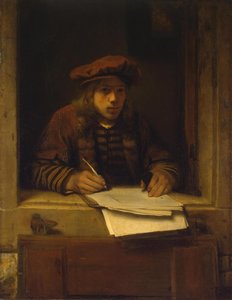
Samuel Dirksz van Hoogstraten
1627 - 1678 , Netherlands
Quick Facts
- Artistic Movement Or Style: Dutch Golden Age, Baroque
- Artists Or Movements Influenced By This Artist:
- Aert de Gelder
- Cornelis van der Meulen
- Godfried Schalcken
- Artists Who Influenced This Artist:
- Rembrandt
- Dirk van Hoogstraten
- Date Of Birth: August 2, 1627
- Date Of Death: October 19, 1678
- Full Name: Samuel Dirksz van Hoogstraten
- Nationality: Dutch
- Notable Artworks:
- Portrait of Mathys van den Brouck
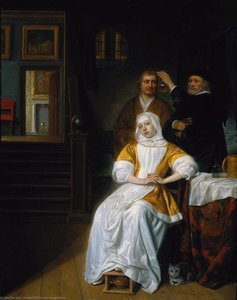
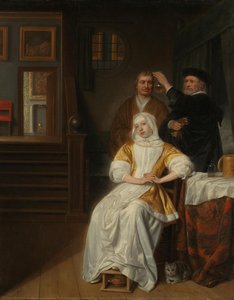
- The Anemic Lady
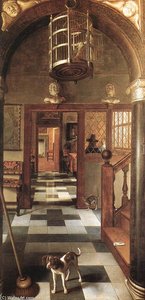
- View of a Corridor
- Man at a Window
- Vanitas
- Place Of Birth: Dordrecht, Netherlands
Related Articles

Dutch Masters: 10 Golden Age Paintings That Still Inspire |
Journey into the Dutch Golden Age! Explore 10 iconic paintings by Rembrandt, Vermeer & Hals. Discover the stories behind these Baroque masterpieces and find museum-quality art reproductions to elevate your home decor on .

White on Canvas: 10 Masterpieces & Timeless Elegance for Your Home Decor
Explore 10 iconic white paintings by Monet, Whistler & Rothko! Discover the stories behind these serene masterpieces and their impact on art history. Find museum-quality reproductions for your home decor at .

Golden Age Reflections: Dutch Baroque Painting & Cultural Innovation
Explore the Dutch Golden Age of painting! Discover key artists like Vermeer & ter Borch, their innovative techniques, and the rich cultural context behind these Baroque masterpieces. Learn about collecting & appreciating this iconic art period.

Illuminating Innovation: Exploring the Dutch Golden Age of Painting
Explore the Dutch Golden Age of painting with ArtsDot. Discover Rembrandt, Vermeer & other Masters. Learn about key characteristics, iconic artworks, and lasting influence. Expert insights for collectors & enthusiasts.

Illuminating Realism: Exploring the Dutch Golden Age of Painting (1600-1700)
Explore the Dutch Golden Age of painting (1600-1700) with ArtsDot. Discover Rembrandt, Vermeer & other masters. Learn about techniques, history & find museum-quality reproductions.