A Tragedy in Crimson: The Dramatic Vision of Sebastiano Ricci
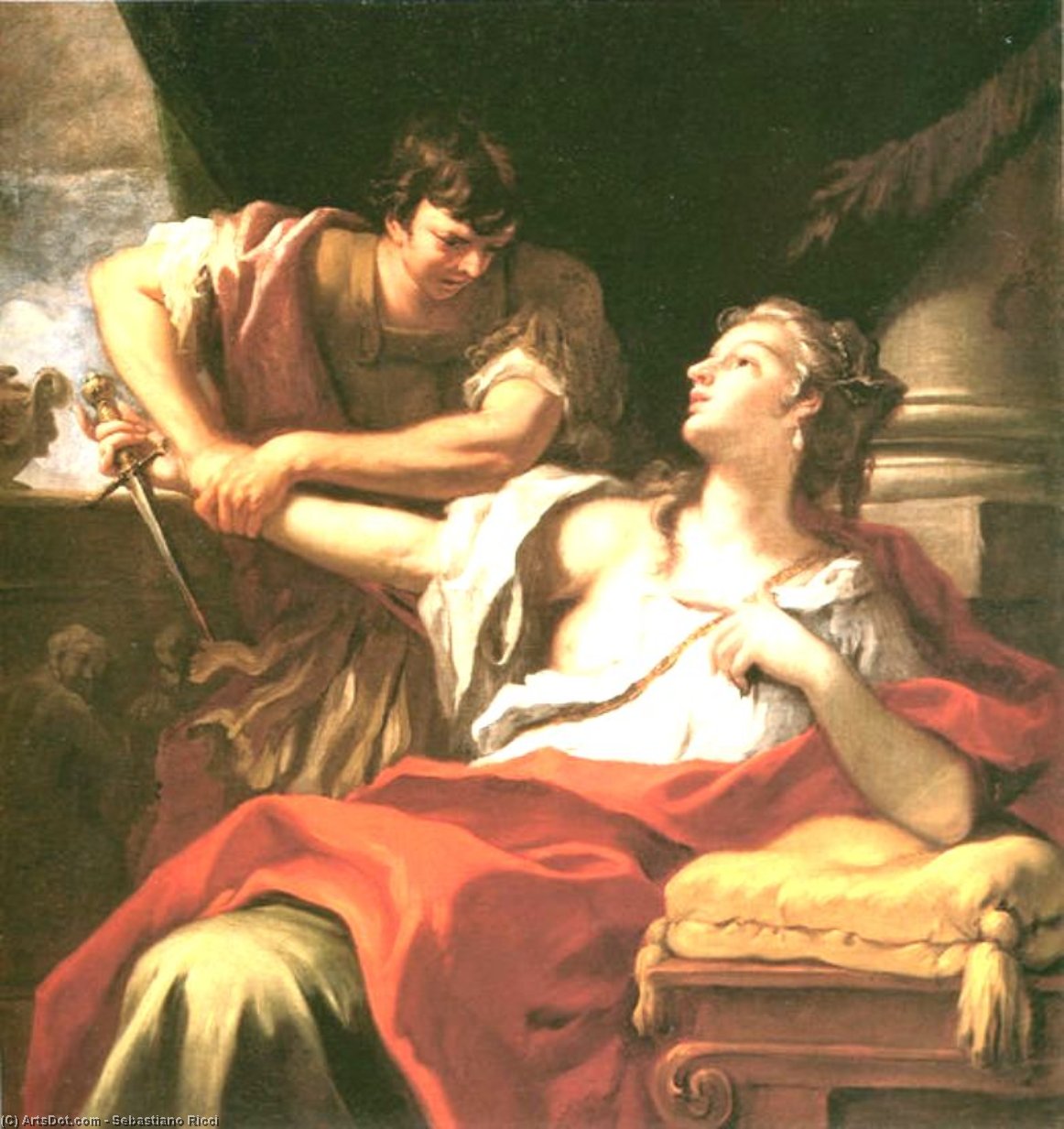
In the grand tradition of the Venetian Baroque, few scenes command the viewer's attention with such visceral intensity as Sebastiano Ricci’s Lucretia. This powerful composition serves as a window into one of ancient Rome’s most harrowing legends, capturing the precise moment where personal tragedy intersects with political upheaval. The painting depicts the aftermath of the violation of Lucretia by Sextus Tarquinius, a scene thick with the scent of betrayal and the weight of impending revolution. As we gaze upon the canvas, we are not merely observers of a historical anecdote; we are witnesses to a profound moment of human suffering and the violent spark that would eventually ignite the downfall of the Roman monarchy.
Ricci, a master of the luminous and vigorous style that defined the late Baroque period, employs a technique that breathes life into the shadows. The artist utilizes a dramatic chiaroscuro to pull the central figures from the darkness, casting a spotlight on the pale, wounded form of Lucretia. Her presence on the bed, marked by the tragic crimson of blood, acts as the emotional anchor of the work. Around her, the composition is charged with movement; the looming figure of her husband, Collatinus, and the menacing presence of men wielding blades create a sense of claustrophobic tension. Every brushstroke seems to vibrate with the urgency of the unfolding drama, guiding the eye through a labyrinth of grief, vengeance, and steel.
Symbolism and the Baroque Grandeur
Beyond its narrative surface, Lucretia is a masterclass in symbolic storytelling. The weapons—the knife and the sword—are more than mere props; they represent the transition from private agony to public justice. The blood flowing from Lucretia’s body symbolizes not only her physical trauma but also the sacrificial nature of her death, which became the catalyst for the establishment of the Roman Republic. Ricci uses these elements to weave a complex tapestry of morality and consequence, where the sanctity of honor is defended through the most extreme of measures.
For the discerning collector or interior designer, this piece offers an unparalleled opportunity to introduce a sense of historical gravity and theatrical elegance into a space. The painting’s large scale—measuring 134 x 127 cm—allows its intricate details and sweeping emotional arcs to dominate a room, making it a profound focal point for any curated collection. Whether placed in a formal study or a grand salon, a high-quality reproduction of this masterpiece brings with it the prestige of the Italian Baroque, inviting conversation through its rich textures, deep pigments, and the timeless, haunting beauty of Ricci’s hand.