Sebastiano Ricci: A Master of Baroque Illusionism & Rococo Grace
Sebastiano Ricci (1659-1734) stands as one of the most prominent figures in the late baroque school of Venice, a painter whose oeuvre embodies the grandeur and luminous spirit of his era. Unlike many of his contemporaries who favored sombre palettes and dramatic chiaroscuro effects, Ricci championed a distinctive style characterized by vibrant colors and masterful illusionism—a technique that captivated audiences and cemented his reputation as an innovator.
Early Life and Training Ricci’s artistic journey began at a young age. In 1671, he was apprenticed to Federico Cervelli of Venice. However, some sources claim that his first master was Sebastiano Mazzoni. Despite initial challenges—including an unplanned pregnancy resulting in imprisonment—Ricci persevered, honing his skills under influential mentors and establishing himself as a respected artist within the Venetian artistic milieu.
Notable Works and Commissions Ricci’s prolific output spanned diverse genres, from monumental frescoes to intimate portraits. Among his most celebrated achievements are ‘Bacchus and Ariadne,’ commissioned by Ferdinando Gonzaga for Palazzo Graziosi in Mantua—a painting showcasing Ricci’s mastery of the baroque style and demonstrating his ability to convey mythological narratives with breathtaking visual splendor. He also undertook significant commissions for ecclesiastical institutions, including the decoration of St Charles of Borromeo Church in Vienna, where he created a stunning altarpiece that exemplifies his meticulous attention to detail and compositional balance.
Artistic Style and Influences Ricci’s artistic style was profoundly shaped by Giovanni Gioseffo dal Sole’s influence—particularly his embrace of luminous color palettes and dynamic brushwork. He skillfully blended elements of Mannerism with Baroque conventions, creating canvases that pulsated with energy and emotion. Ricci's approach to landscape painting was equally innovative, reflecting a desire to capture the beauty of nature in ways that mirrored the grandeur of Venetian art.
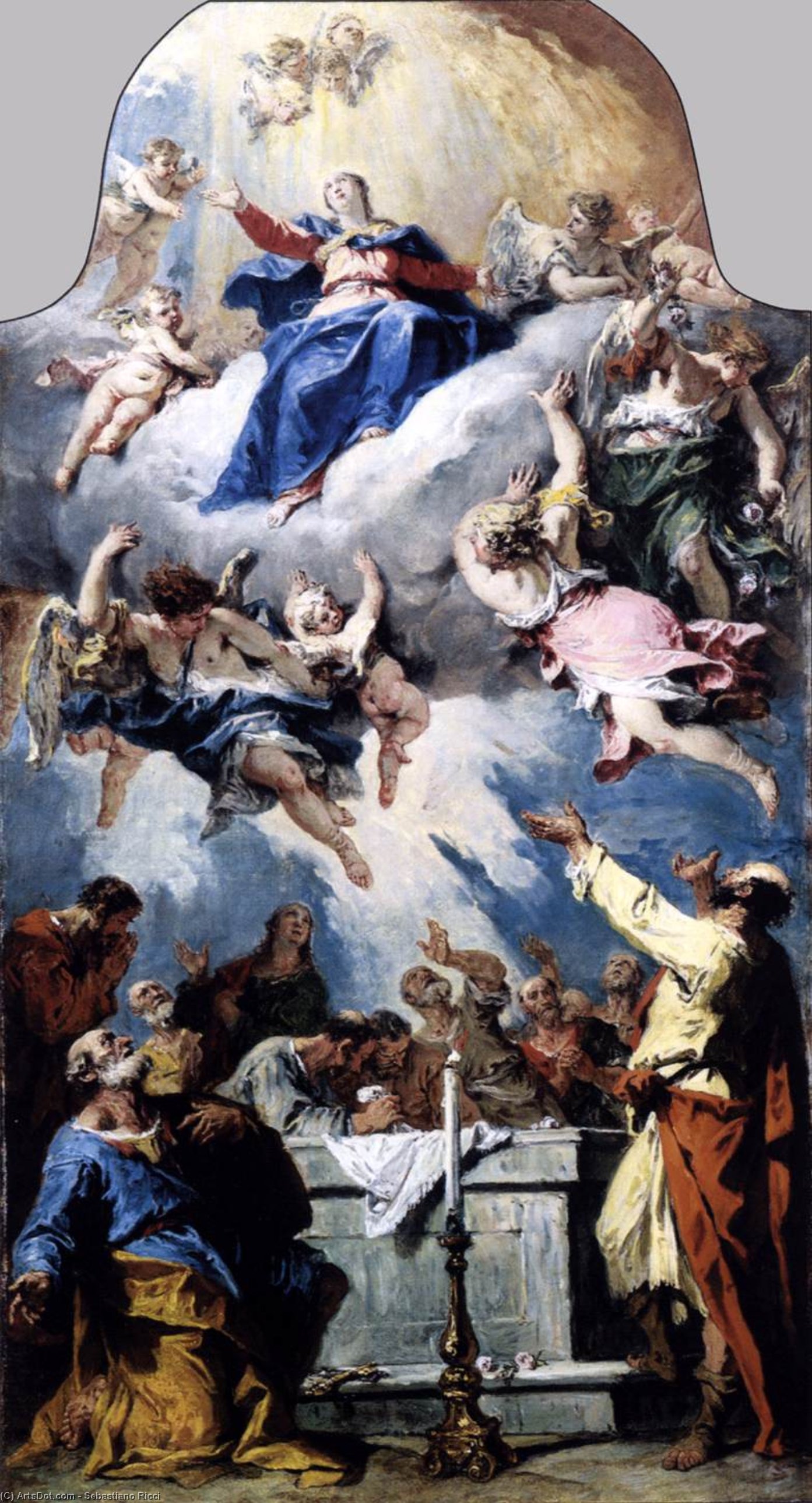
The Assumption: A Symphony of Light and Emotion Ricci’s depiction of The Assumption—painted shortly before his death in 1734 for St Charles of Borromeo Church—represents arguably his finest achievement. This monumental fresco, executed with painstaking precision and imbued with spiritual fervor, exemplifies Ricci's signature style—characterized by a masterful use of light to illuminate the central figure of Mary ascending into heaven. The composition is divided into two distinct sections: the upper portion depicts angels and cherubs engaged in an upward movement, symbolizing divine ascension; while the lower section portrays earthly figures gazing upwards with reverence and awe.
Symbolism and Technique Ricci’s artistic technique—particularly his mastery of illusionistic painting—was unparalleled. He employed techniques such as sfumato (subtle blending of colors) and glazing to create surfaces that appeared to shimmer with light, enhancing the emotional impact of his paintings. The artist's meticulous attention to detail—evident in every brushstroke—served to convey not only visual beauty but also profound spiritual meaning.
Legacy Ricci’s influence extended far beyond his lifetime, inspiring subsequent generations of Venetian artists and establishing him as a cornerstone of baroque art history. His canvases continue to captivate viewers with their luminous colors, dynamic compositions, and evocative emotional resonance—a testament to the enduring power of artistic genius.