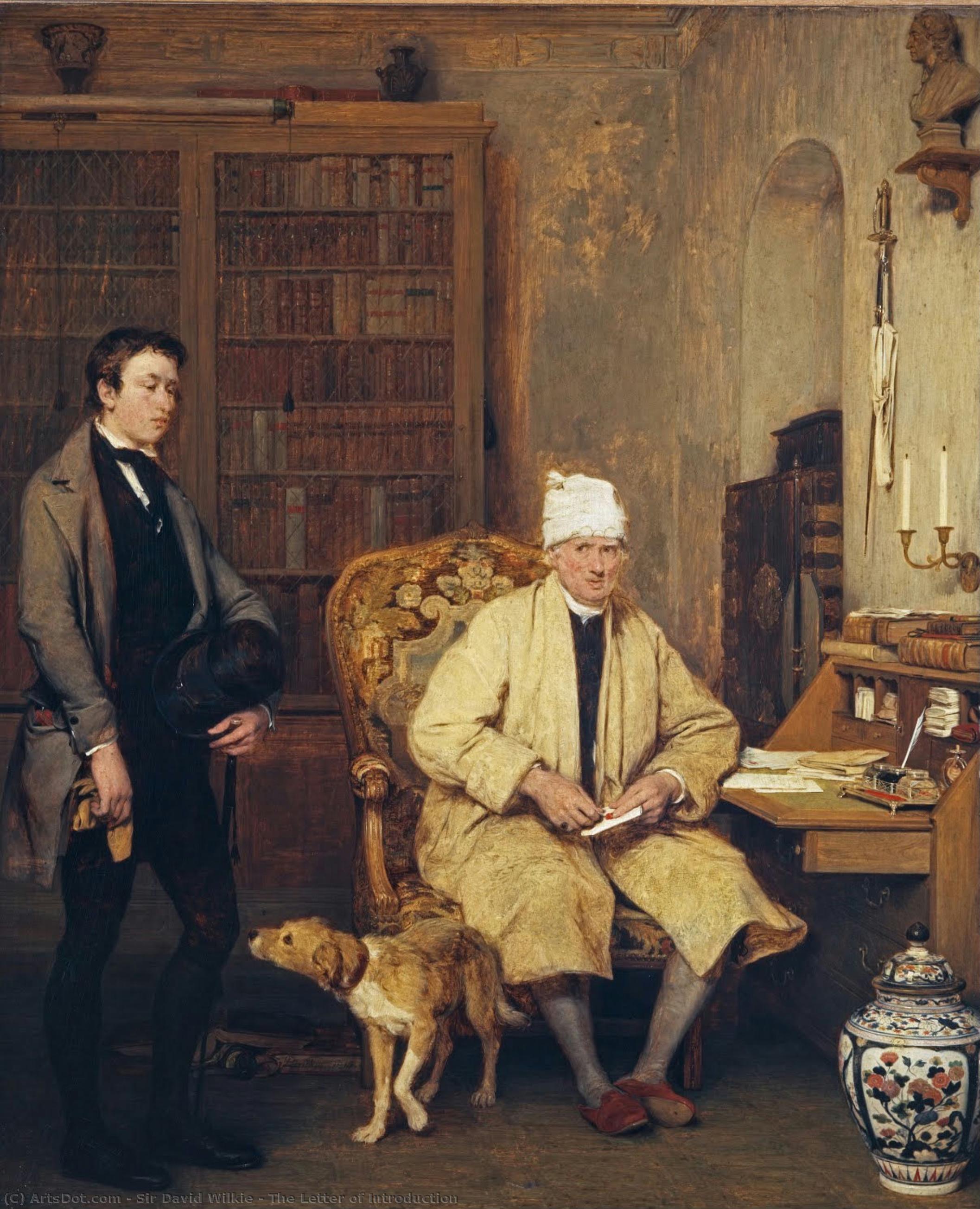
The Letter of Introduction - A Window Into Victorian Domesticity
David Wilkie’s “The Letter of Introduction,” completed in 1813, stands as a quintessential example of Romantic genre painting—a movement that championed the portrayal of everyday life with profound empathy and psychological insight. More than just a depiction of a scene, it's an encapsulation of Victorian values concerning family, social etiquette, and intellectual pursuits.
Painted in oil on panel, Wilkie’s meticulous attention to detail is immediately apparent. The composition centers around two figures: a young man standing formally dressed, accompanied by an older gentleman seated at a desk laden with books—a tableau reflecting the aspirations of the educated upper classes during the Regency era. A dog rests peacefully at their feet, symbolizing loyalty and companionship – elements characteristic of Romantic art’s fascination with animal subjects.
The stylistic hallmarks of Wilkie's work are evident in his use of linear perspective to create depth within the interior space. Geometric shapes dominate—rectangular bookshelves and square windows—contrasting subtly with the rounded forms of objects like a teapot, contributing to a balanced visual harmony. Brushstrokes convey textures convincingly: fabric folds in clothing, wood grain on the bookshelf, and plaster surfaces on the walls.
Lighting plays a crucial role in establishing mood; it emanates from an unseen source, casting soft shadows that sculpt form and volume, enhancing the scene’s atmosphere of quiet contemplation. The muted earth tones—browns, ochres, creams—reflect the prevailing aesthetic sensibilities of the time and evoke a sense of warmth and understated elegance.
Detailed Analysis: Technique and Composition
Wilkie's technique is characterized by painstaking brushwork and an unwavering commitment to realism. He skillfully employs tonal gradation to render light and shadow with remarkable accuracy, capturing nuances that would elevate any artwork. The artist’s mastery of chiaroscuro—the dramatic interplay between light and dark—creates a palpable sense of presence within the depicted space.
The compositional arrangement is carefully considered. Placing the figures centrally reinforces their importance as subjects of observation, while the bookshelf serves as a visual anchor, grounding the scene and directing the viewer’s gaze. The subtle positioning of the dog adds to the overall balance and contributes to the painting's narrative quality.
Symbolism Beyond Appearance
Beyond its formal depiction, “The Letter of Introduction” carries symbolic weight. The books represent knowledge, erudition, and intellectual engagement—values highly esteemed in Victorian society. They underscore the importance of education and cultural refinement as markers of social status.
Furthermore, the dog embodies loyalty and companionship – virtues considered essential for maintaining harmonious relationships within the family unit. These subtle symbolic gestures enrich the artwork’s meaning and invite viewers to contemplate deeper themes concerning human connection and moral responsibility.
Historical Context: Romanticism's Embrace of Domestic Life
“The Letter of Introduction” emerged during the Romantic period, a reaction against Enlightenment rationalism that prioritized emotion and imagination. Artists like Wilkie sought inspiration in everyday life—particularly domestic scenes—capturing fleeting moments of human interaction with sensitivity and psychological depth.
This fascination with the commonplace reflected a broader cultural shift toward valuing sincerity and emotional expression over intellectual abstraction. Wilkie’s painting exemplifies Romantic art's belief that beauty could be found not only in grand landscapes but also in the quiet intimacy of domestic interiors—a legacy that continues to resonate with audiences today.