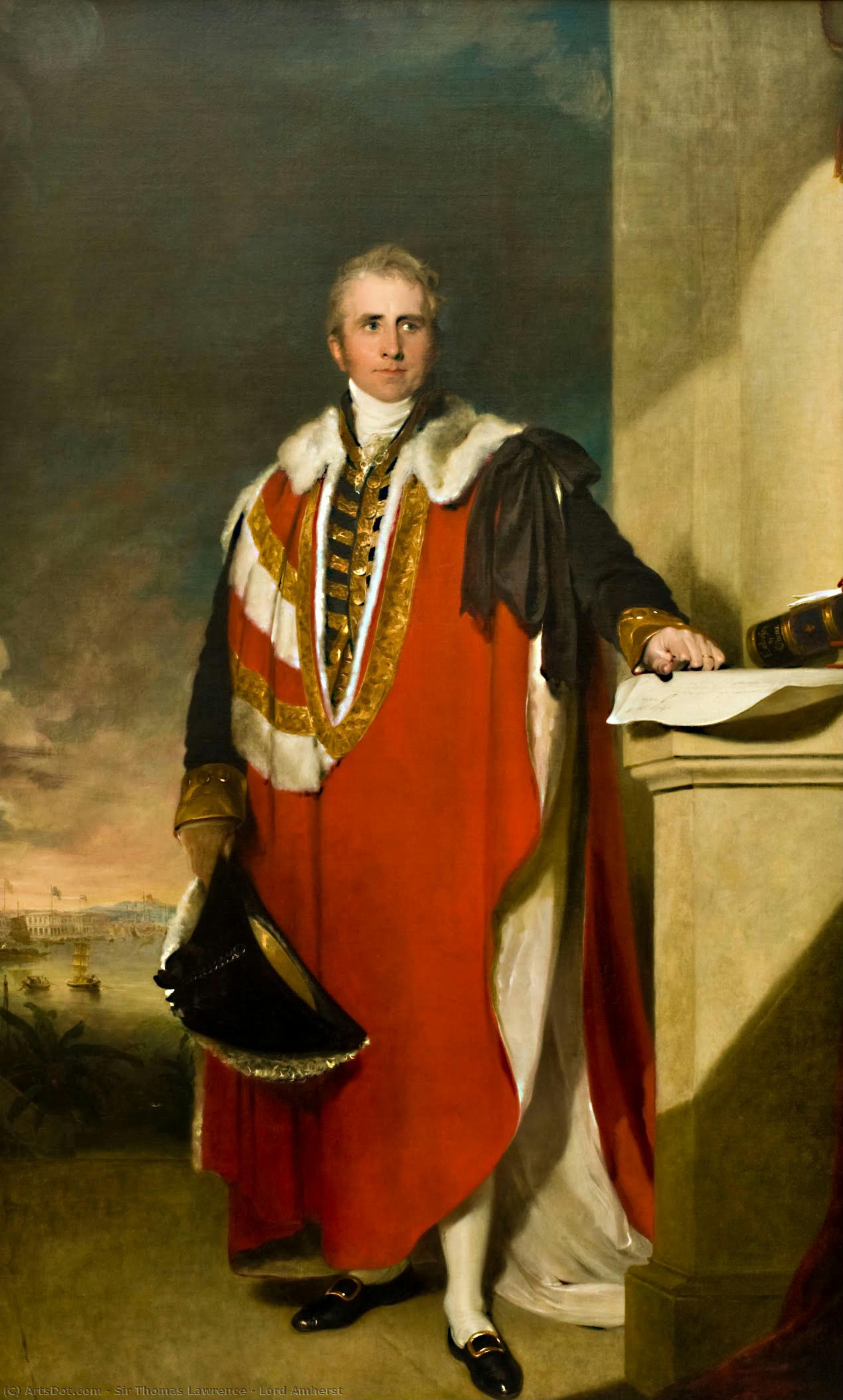
Lord Amherst

Sir Thomas Lawrence’s opulent portrait captures Lord Amherst in regal splendor during the Regency era, showcasing meticulous detail and vibrant colors—a timeless masterpiece inviting collectors to experience its grandeur.


Sir Thomas Lawrence (1769 - 1830)

Sir Thomas Lawrence: A Regency master of portraiture, capturing the elegance and charm of British aristocracy with his distinctive style and virtuoso technique.

Toledo Museum of Art (Toledo, United States of America)

Explore world-class art at the Toledo Museum of Art! Discover stunning glass collections, European masterpieces & modern works – all with free admission. Plan your visit today!

A Portrait of Dignified Distinction: Exploring Lord Amherst by Sir Thomas Lawrence

  • Subject Matter: This monumental portrait depicts Lord Amherst, a prominent figure in British aristocratic society during the Regency era. The subject’s commanding gaze and formal posture convey an aura of authority and refinement – characteristics emblematic of his position within the government.
  • Style: Lawrence's style embodies the Romantic spirit tempered with Neoclassical precision. While acknowledging influences from artists like Ingres, he skillfully blends classical ideals of beauty and proportion with a humanist sensibility, capturing Lord Amherst’s character with remarkable subtlety.

Technique and Materials: Mastering Light and Texture

  • Medium: Executed in oil paint on canvas, the artwork demonstrates Lawrence's mastery of chiaroscuro – the dramatic interplay of light and shadow—a technique favored by artists of his time. This masterful manipulation creates depth and dimensionality, highlighting Lord Amherst’s facial features and clothing with luminous detail.
  • Brushwork: Lawrence employed a loose yet controlled brushstroke, layering pigments to achieve a velvety surface texture that enhances the realism of the portrait. Careful attention was paid to capturing subtle nuances in skin tone and drapery folds, reflecting his meticulous approach to artistic representation.

Historical Context: The Regency Era and Portraiture

  • Era: Painted in 1821, Lord Amherst’s portrait resides firmly within the opulent Regency period (1811-1820), a time characterized by lavish social gatherings and artistic innovation. Portraits served as crucial instruments of status and identity, documenting the lives of influential individuals and reflecting prevailing aesthetic ideals.
  • Social Significance: Commissioned to commemorate Lord Amherst’s achievements in diplomatic service—particularly his role as Governor General of India—the painting underscores the importance of patronage within the British aristocracy. Lawrence's depiction aims to portray Lord Amherst not merely as a man, but as an embodiment of noble virtue and intellect.

Symbolism and Emotional Resonance

  • Composition: The carefully balanced composition—Lord Amherst positioned centrally against a muted backdrop—emphasizes his dignified presence. The inclusion of a book symbolizes Lord Amherst’s erudition and intellectual pursuits, aligning with the broader cultural values of the Regency.
  • Color Palette: Lawrence utilized a restrained color palette dominated by earthy tones – reds, browns, and blacks – reflecting the seriousness of the subject matter. However, flashes of gold trim on Lord Amherst’s robe subtly convey wealth and prestige, reinforcing his social standing.

A Legacy of Elegance: Reproductions for Today's Appreciation

  • Contemporary Relevance: A high-quality reproduction of Lord Amherst allows viewers to experience the grandeur and artistry of Lawrence’s masterpiece firsthand. It serves as a testament to the enduring appeal of classical portraiture and invites contemplation on themes of power, intellect, and social distinction.