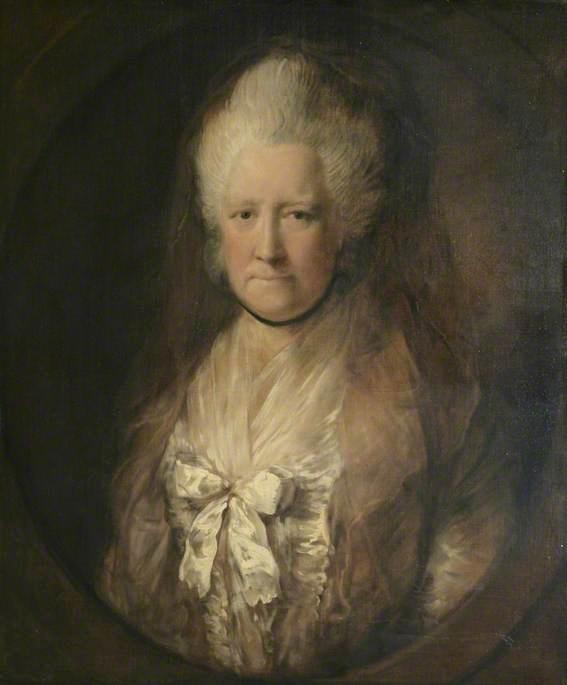
The Honourable Harriott Marsham: A Portrait of Refined Elegance
Thomas Gainsborough's "The Honourable Harriott Marsham" is a captivating portrait from the late 18th century, showcasing an elderly woman of aristocratic standing. This piece exemplifies the formal and dignified style characteristic of British portraiture during that era, offering a glimpse into the life and status of its subject while demonstrating Gainsborough’s mastery of light, color, and composition.
Subject & Historical Context
The painting depicts Harriott Marsham (1721–1796), daughter of the first Baron Romney. Her formal pose and attire immediately convey wealth and social standing within Georgian society. Gainsborough painted this portrait around the late 1770s, a period when he had established himself as one of Britain's leading portraitists, having moved from Bath to London. The era was marked by a growing emphasis on individual identity and status, reflected in the popularity of commissioned portraits like this one. Marsham’s likeness is captured with remarkable detail, providing valuable insight into the fashion and societal norms of the time.
Artistic Style & Technique
Gainsborough's style is readily identifiable by his light palette and effortless brushstrokes. Unlike some of his contemporaries who favored a more rigid approach, Gainsborough imbued his portraits with a sense of naturalism and grace. In "The Honourable Harriott Marsham," he employs soft, blended lines to depict the woman’s face and the delicate folds of her dress, creating a smooth and polished appearance. The use of oil paints on canvas allows for subtle gradations in tone and texture, skillfully suggesting the crispness of lace and the softness of fabric. The composition is centered around Marsham's face and upper torso, positioned slightly off-center to create dynamic balance within the oval format. A dark background serves to emphasize her presence and draw attention to her features.
Symbolism & Emotional Impact
Beyond a mere likeness, Gainsborough sought to convey a sense of dignity and composure in his sitter. Marsham’s somewhat serious expression suggests wisdom and experience, reflecting the societal expectations placed upon women of her standing. The oval format itself was a common convention for portraits during this period, symbolizing completeness and harmony. The muted earth tones – browns, creams, and pale pinks – contribute to an overall feeling of quiet elegance and understated refinement. While the lighting is soft and diffused, it skillfully illuminates Marsham’s face, creating a sense of depth and intimacy.
A Timeless Masterpiece
"The Honourable Harriott Marsham" stands as a testament to Gainsborough's skill in capturing not only physical appearance but also character and social standing. Its enduring appeal lies in its ability to transport viewers back to the elegance of 18th-century England, offering a poignant glimpse into the life of a woman from a privileged background. This portrait remains a valuable historical document and an exquisite example of British portraiture.