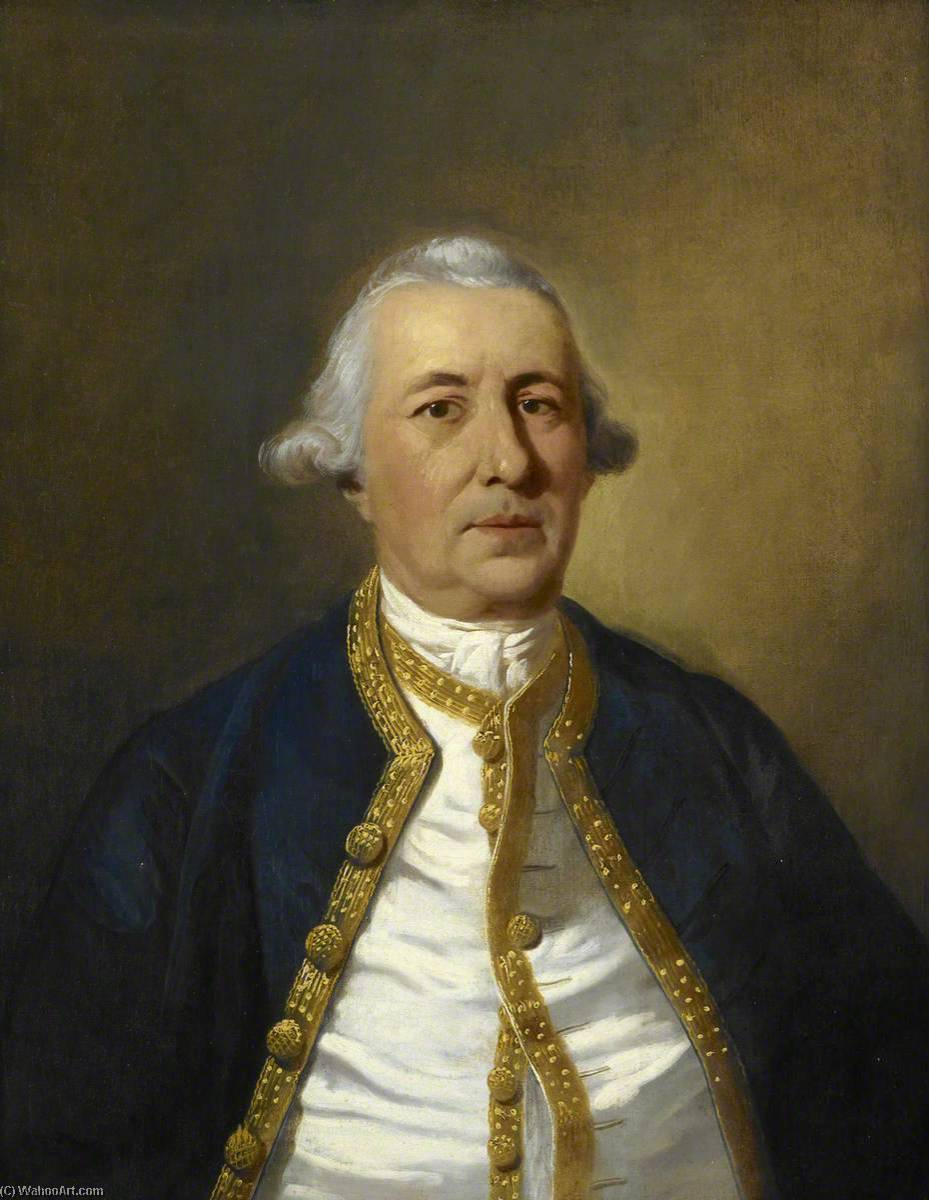
Admire Captain Peter Marriette by Tilly Kettle (1769). A neoclassical portrait of an elderly ship's captain in blues & gold. Explore this refined oil painting’s realism & historical significance.
Discover Tilly Kettle, the pioneering British painter in India! Explore his evocative portraits & unique depictions of Indian life (1735-1786). #arthistory #india #portraiture
Explore the British Library's vast collection of over 170 million items! Discover ancient manuscripts, iconic books & cutting-edge digital resources in London.
Captain Peter Marriette, Ship's Captain – A Neoclassical Portrait of Authority
Tilly Kettle’s “Captain Peter Marriette,” painted in 1769, transcends mere representation; it embodies the spirit of Enlightenment Britain and its burgeoning fascination with the East Indies. This striking oil painting captures the dignified visage of Peter Marriette, a prominent figure within the British East India Company, offering a glimpse into both artistic innovation and societal ambition during a pivotal era.
Subject Matter & Composition
The portrait depicts Marriette as an elderly gentleman seated in profile against a muted backdrop—a deliberate choice that prioritizes clarity and focuses attention squarely on his countenance. Kettle’s masterful composition employs one-point perspective, drawing the viewer's gaze directly towards Marriette’s face, emphasizing his presence and conveying a sense of solemn contemplation. The figure occupies nearly half of the canvas vertically, reinforcing its importance as the central subject of artistic endeavor.
Style & Technique – Embracing Neoclassicism
Kettle adheres rigorously to the principles of Neoclassicism—a movement that championed idealized beauty and rational order in response to Rococo’s frivolity. The painting's style reflects this ethos through its meticulous realism, achieved with painstaking attention to detail—particularly in rendering Marriette’s facial features and hair texture. Kettle skillfully utilizes brushstrokes to sculpt volume and form, creating a palpable sense of solidity and conveying the subject’s age gracefully. The smooth surface finish characteristic of oil paint technique contributes to the artwork's polished aesthetic.
Color Palette & Lighting – Symbolism of Status
Dominating the color scheme is a palette dominated by blues—representing maritime authority and trustworthiness—and whites—symbolizing purity and nobility. Accents of gold trim adorning Marriette’s coat subtly underscore his elevated social standing, aligning perfectly with the opulent attire favored by individuals within positions of power during the eighteenth century. Soft, diffused lighting illuminates Marriette's face evenly, avoiding harsh shadows and fostering an atmosphere of serenity—a deliberate stylistic choice intended to convey respect for the subject and reinforce his dignified demeanor.
Historical Context & Significance
“Captain Peter Marriette” stands as a testament to Tilly Kettle’s pioneering role in establishing British portraiture within India's cultural sphere. At the time, the East India Company held sway over vast territories, shaping commerce, politics, and artistic patronage. Kettle’s success exemplifies the willingness of artists to venture beyond traditional commissions and engage with new intellectual currents—a hallmark of the Enlightenment period. The painting serves as a captivating window into the social values and aesthetic sensibilities of Britain during its imperial expansion.
Emotional Impact & Artistic Legacy
More than just a likeness, Kettle's portrait conveys Marriette’s inner strength and wisdom—a reflection of the ideals championed by Neoclassicism. It invites contemplation on themes of dignity, honor, and responsibility—qualities deemed essential for leadership during an era defined by ambition and exploration. “Captain Peter Marriette” remains a celebrated exemplar of British artistic achievement, securing Tilly Kettle’s place as one of the foremost portrait painters of his time and cementing Neoclassicism's enduring influence on Western art history.