The Majesty of a Statesman: Introducing "Antoine Perrenot de Granvelle"
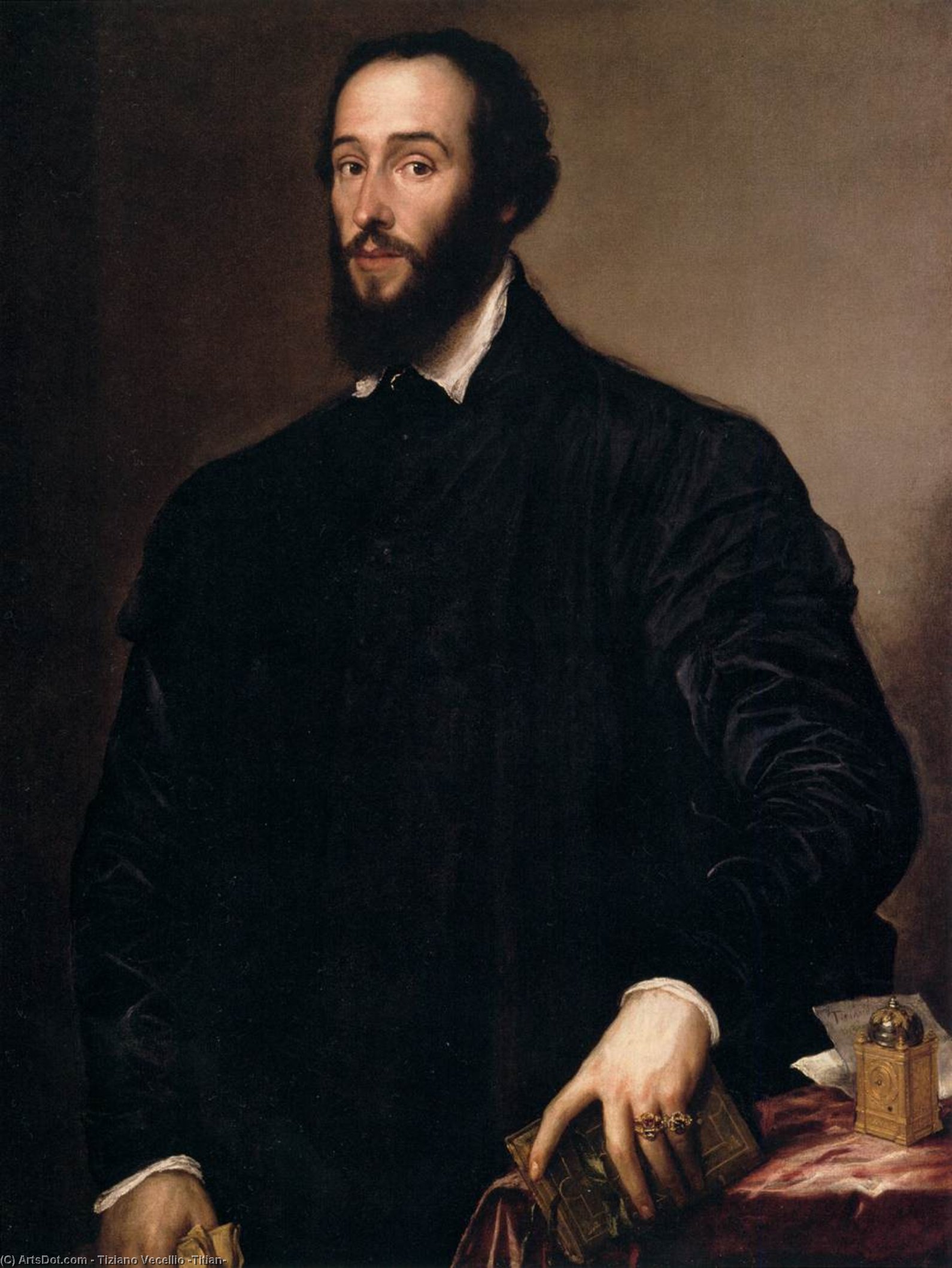
Tiziano Vecellio’s “Antoine Perrenot de Granvelle,” painted in 1548, is more than just a portrait; it's a meticulously crafted window into the heart of 16th-century Venetian society and the political machinations of Europe. This oil on canvas masterpiece, now residing at the Nelson-Atkins Museum of Art in Kansas City, captures not only the likeness of a prominent statesman but also his commanding presence, intellectual depth, and the aura of authority that defined his role as a key advisor to Emperor Charles V. The painting immediately draws the viewer in with its rich palette, masterful use of light and shadow, and the palpable sense of confidence radiating from Granvelle’s gaze.

A Symphony of Color and Texture: Titian’s Technique
Titian, a master colorist renowned for his ability to evoke light and atmosphere, employed his signature technique in “Granvelle” with breathtaking precision. The painting is dominated by deep, luxurious tones – the velvety blacks of his clothing, the burnished browns of his beard and mustache, and the dramatic reds of his drape—creating an immediate sense of gravitas. However, these dark hues are expertly punctuated by subtle highlights that illuminate Granvelle’s face, emphasizing the sharpness of his features and drawing attention to his intelligent eyes. Close examination reveals a layering of thin glazes – a hallmark of Titian's style – which build up color gradually, resulting in an astonishingly luminous quality. The artist’s brushstrokes are not merely decorative; they skillfully suggest texture—the smoothness of the skin, the sheen of the fabrics, and even the rougher surface of the documents he holds.
- Glazing Technique: Titian's use of thin oil glazes creates a remarkable depth and luminosity.
- Color Palette: A masterful blend of dark and rich tones establishes a sense of power and sophistication.
- Brushwork: Subtle brushstrokes convey texture and form, adding to the painting’s realism.
A Portrait of Power and Influence: Historical Context
“Antoine Perrenot de Granvelle” was created during a pivotal period in European history—the mid-16th century—a time when Venice held immense political and economic power, and the Habsburgs were consolidating their control over vast territories. Titian himself was at the height of his career, receiving commissions from some of Europe’s most influential figures, including Charles V and Philip II. The painting reflects this era's fascination with portraiture as a means of asserting status and projecting authority. Granvelle, a key advisor to the Emperor, embodies this ideal—a man of intellect, diplomacy, and unwavering loyalty. Further research reveals that Granvelle was not merely a political figure; he was also a significant art collector, fostering relationships with artists like Titian and Leoni, demonstrating his patronage and appreciation for artistic excellence.
Commissioned by Charles V: The painting reflects the Emperor's desire to showcase his advisors.
Habsburg Influence: The portrait aligns with the Habsburg dynasty’s emphasis on power and prestige.
Symbolism and Emotional Resonance
Beyond its technical brilliance, “Antoine Perrenot de Granvelle” is rich in symbolic meaning. The direct gaze of the subject—a hallmark of Renaissance portraiture—conveys confidence, intelligence, and a certain degree of self-assurance. The documents he holds – often interpreted as legal or diplomatic papers – symbolize his role as a statesman and administrator. The draped curtain adds depth to the composition while subtly hinting at the complexities of political intrigue. Ultimately, the painting transcends its literal depiction, offering a glimpse into the values and aspirations of a bygone era—a testament to human ambition, strategic thinking, and the enduring power of visual representation.