Kiyohime Changing Into A Serpent At Hidaka River – An Exploration Of Myth And Mastery
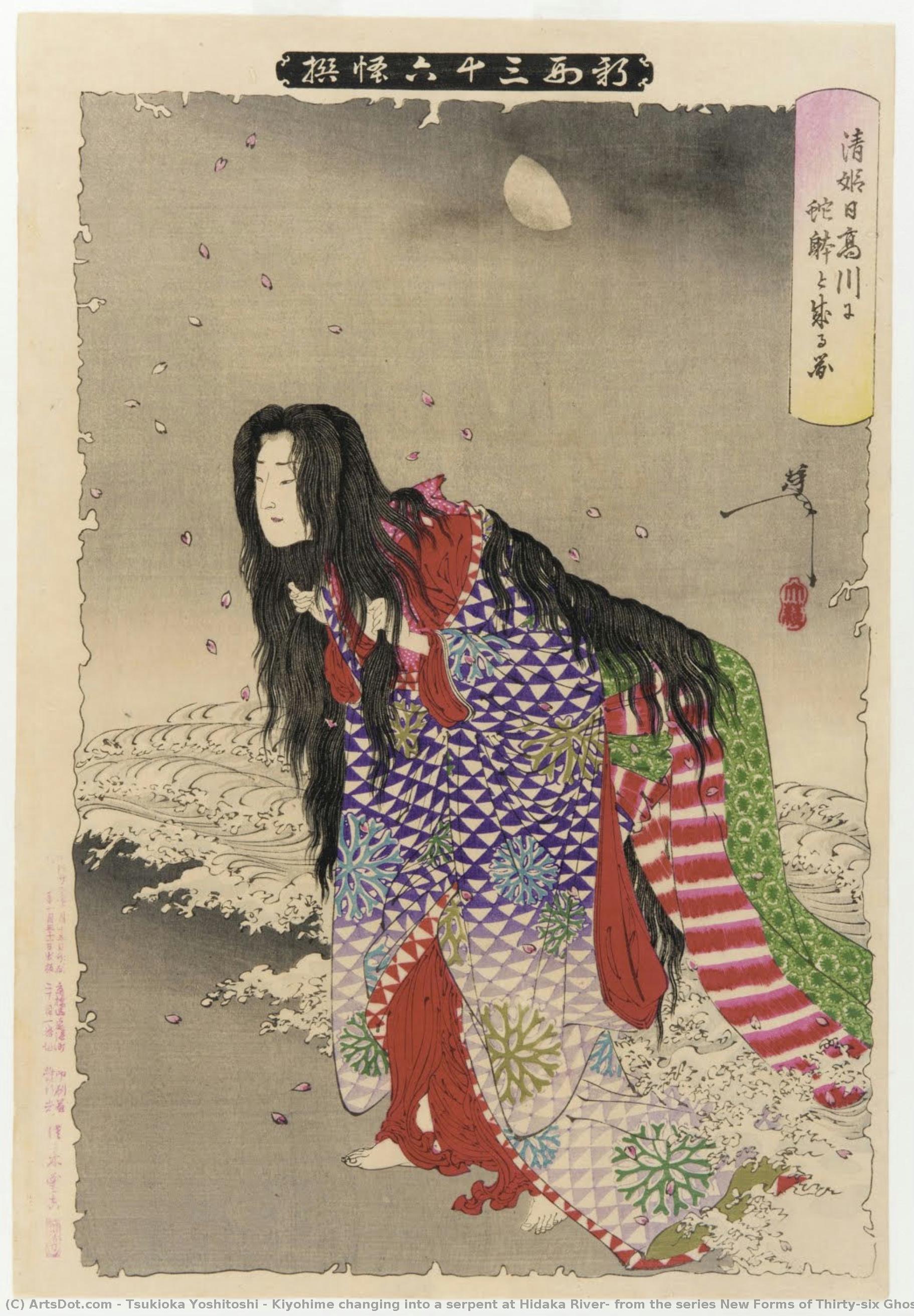
Tsukioka Yoshitoshi’s “Kiyohime Changing Into A Serpent At Hidaka River,” from his celebrated series *New Forms of Thirty-Six Ghosts*, transcends mere visual representation; it embodies the spirit of late Edo Japan and stands as a testament to Yoshitoshi's unparalleled skill in capturing dramatic narratives within the confines of Ukiyo-e printmaking.
The artwork depicts Kiyohime, daughter of an innkeeper, undergoing a transformative metamorphosis into a serpent amidst the turbulent waters of Hidaka River. This scene draws directly from Japanese folklore—specifically, the legend of Kiyohime’s obsessive love for Anchin, a monk who rejected her affections and fled to his temple after she declared her passion.
Yoshitoshi's masterful technique exemplifies the core principles of Ukiyo-e. Bold outlines delineate the figures and landscape with precision, creating a striking visual impact. Flat planes of color dominate the composition, prioritizing expressive tonal qualities over meticulous realism—a deliberate choice that enhances the drama and conveys mood effectively. The artist skillfully employs perspective to generate depth, albeit flattened compared to Western conventions, emphasizing the importance of conveying atmosphere rather than precise spatial accuracy.
The print’s palette is dominated by blues and greens, mirroring the serene yet ominous expanse of Hidaka River and reflecting the unsettling process of transformation itself. Vibrant hues accentuate Kiyohime's attire—a striking blue interwoven with black accents—drawing immediate attention to her central figure. Symbolic elements abound: The serpent represents rebirth and change – a potent motif within Japanese mythology – while the full moon casts an ethereal glow upon the scene, symbolizing femininity and mystery.
Emotionally, “Kiyohime Changing Into A Serpent At Hidaka River” evokes awe and wonder alongside a subtle apprehension. Yoshitoshi’s depiction captures not only the narrative of love and rejection but also the primal force of nature confronting human emotion. It's a piece that invites contemplation on themes of desire, fate, and the inescapable cycle of life and death—a profound reflection of Japan’s cultural heritage rendered with breathtaking artistry.
- Artist: Tsukiyoshi Yoshitoshi (1839-1892)
- Series: New Forms of Thirty-Six Ghosts (*Shinkei sanjurokkaisen*)
- Date: 1890
- Medium: Woodblock Print (Ukiyo-e), Ink and Color on Washi Paper
- Dimensions: Unknown
This stunning reproduction captures the essence of Yoshitoshi’s genius, allowing viewers to appreciate the intricate details and emotive power of this iconic masterpiece.