Umberto Boccioni’s “Factory Foltzer”: A Vision of Industrial Dynamism
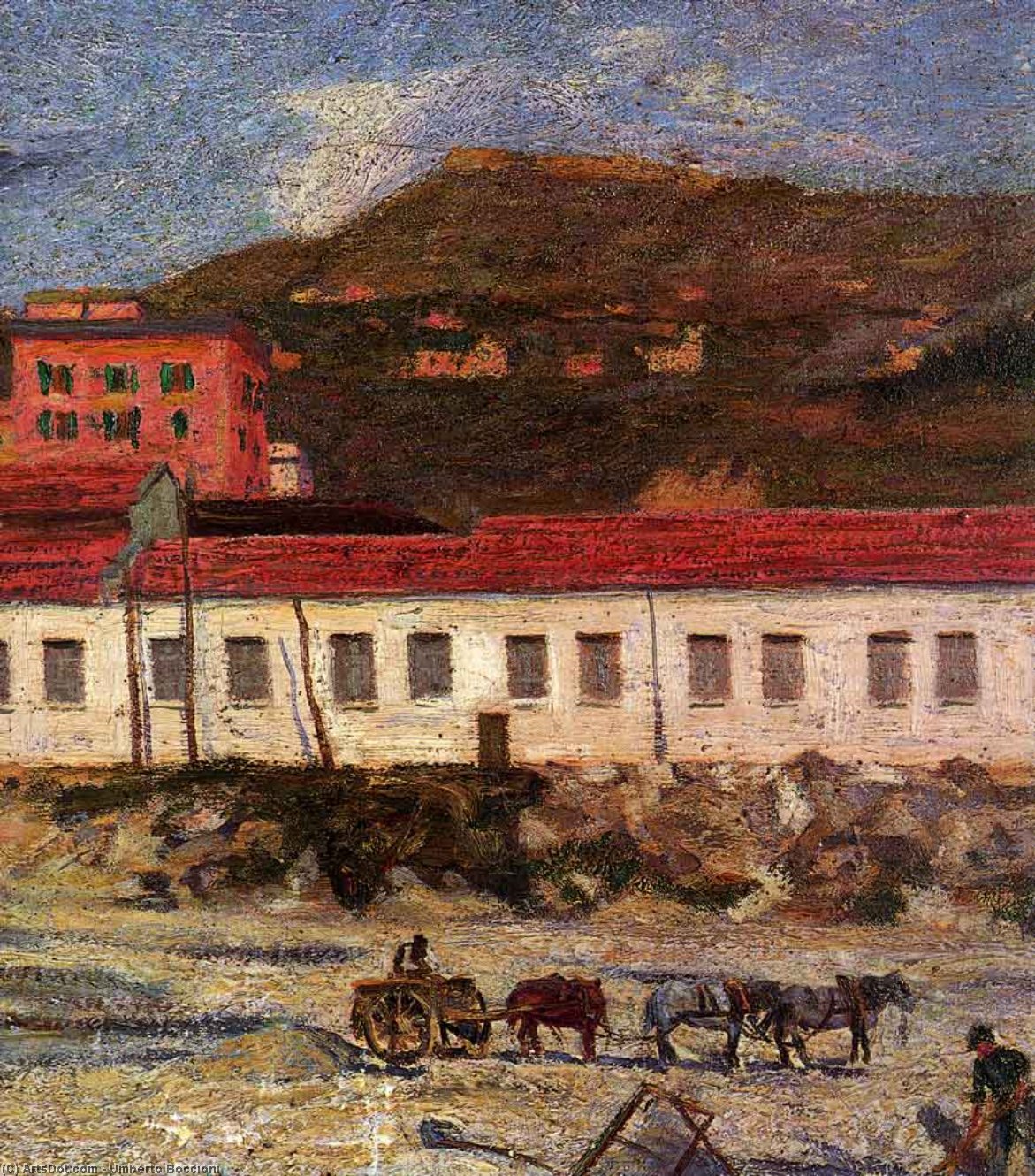
“Factory Foltzer,” painted in 1909 by the pioneering Futurist artist Umberto Boccioni, is a captivating and unsettling glimpse into a potential future – one dominated by industry and propelled by relentless motion. This artwork, depicting a scene of individuals traversing a vast industrial complex on horseback, immediately confronts the viewer with a jarring juxtaposition: the timeless image of equestrian travel colliding with the burgeoning machinery of the early 20th century. The painting’s raw energy and distorted perspective are hallmarks of Boccioni's embrace of Futurism, a movement that sought to capture not just appearances but the very essence of speed, technology, and urban life.
- Subject Matter: The central subject is a bustling factory or industrial facility, rendered with an almost chaotic intensity. Riders on horseback navigate this space alongside a wagon, suggesting a complex system of transport and labor within the facility.
- Style & Technique: Boccioni’s brushwork is deliberately fragmented and dynamic, reflecting the Futurist desire to represent movement and energy. The figures are not depicted with traditional realism but rather as flattened planes of color and form, conveying a sense of acceleration and disruption. Notice the use of bold, contrasting colors – particularly the striking red roofs – which further amplify the painting’s dramatic effect.
Historical Context: Futurism and the Dawn of Modernity
Painted in 1909, “Factory Foltzer” emerged during a period of profound social and technological change in Italy. The rise of industrialization, coupled with the fervor surrounding advancements in transportation – particularly automobiles and airplanes – fueled the Futurist movement’s core tenets. Led by Filippo Tommaso Marinetti, Futurists vehemently rejected traditional artistic values, celebrating speed, violence, technology, and the dynamism of modern life. Boccioni, a key figure within this revolutionary group, sought to translate these ideas onto canvas, creating works that were deliberately provocative and challenging.
- Futurist Ideology: The painting embodies the Futurist belief in embracing the future, rejecting the past’s artistic conventions.
- Industrialization's Influence: It reflects the growing importance of factories and industrial labor in Italian society at the time.
Symbolism and Interpretation
Beyond its depiction of a specific scene, “Factory Foltzer” is laden with symbolic meaning. The horses themselves can be interpreted as representing a stubborn resistance to progress – a nostalgic connection to a simpler past – while the factory signifies the relentless march forward into an industrialized future. The wagon suggests a system of control and organization within this chaotic environment. The overall composition evokes a sense of unease, prompting questions about humanity’s relationship with technology and its potential consequences.
Emotional Impact: The painting's distorted perspective and frenetic energy create a powerful emotional response, conveying a feeling of disorientation, urgency, and perhaps even anxiety. It is a visceral representation of the anxieties and excitement surrounding rapid technological advancement.
Artistic Significance & Reproduction
Umberto Boccioni’s “Factory Foltzer” stands as a pivotal work in the history of modern art, demonstrating the radical experimentation and innovative spirit of the Futurist movement. ArtsDot.com is proud to offer meticulously crafted hand-painted reproductions of this iconic artwork, allowing you to experience its power and beauty firsthand. Our skilled artisans employ traditional techniques to faithfully recreate Boccioni’s original vision, ensuring that each reproduction captures the dynamism, color, and emotional intensity of the piece. Whether for your home, office, or collection, a ArtsDot.com reproduction of “Factory Foltzer” is an investment in art history and a testament to the enduring legacy of Umberto Boccioni.