A Glimpse into the Soul: Wassily Kandinsky’s “The Mirror”
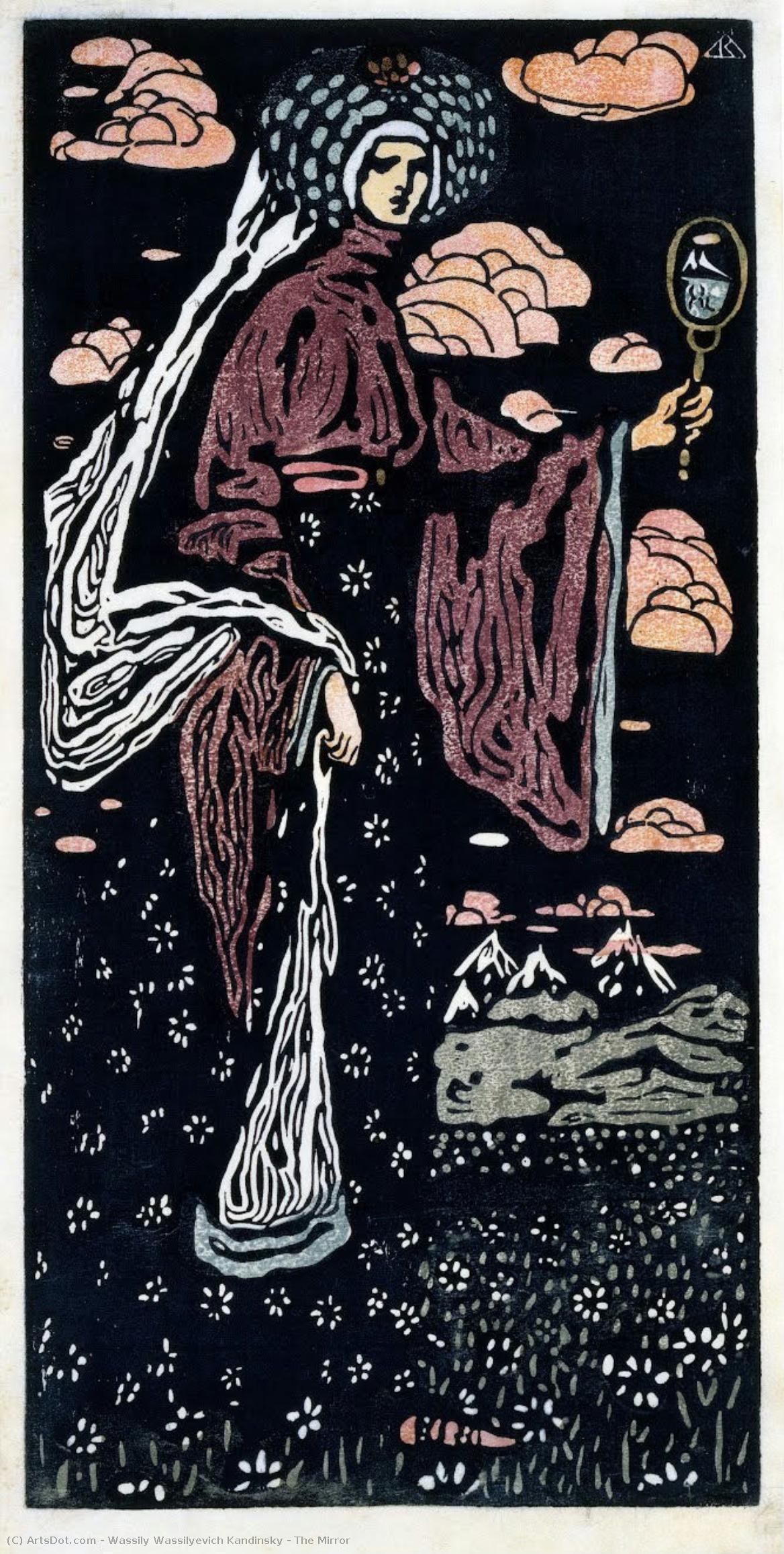
Wassily Kandinsky's "The Mirror," created in 1907, isn’t merely a depiction of a reflective surface; it’s an intensely personal and profoundly symbolic exploration of identity, introspection, and the elusive nature of reality. This color woodblock print, rendered in shades of mauve-red, green, blue, yellow, and black on oriental paper, immediately draws the viewer into a world where visual perception is deliberately challenged. The composition centers around a solitary female figure, poised within a darkened space, her hand outstretched holding a small, ornate mirror – an object laden with layers of meaning that resonate deeply within Kandinsky’s artistic vision.
Kandinsky's early work was profoundly influenced by his experiences as a young man in Moscow, particularly his encounter with Claude Monet’s “Haystacks.” This initial exposure to Impressionism sparked a fascination with color and its ability to evoke emotion independently of recognizable objects. “The Mirror” embodies this principle; the colors themselves – the deep blues and greens suggesting mystery and contemplation, contrasted against the warmer hues – aren't simply decorative but actively contribute to the artwork’s emotional atmosphere. The figure’s posture, a subtle blend of stillness and anticipation, invites us to share in her quiet gaze into the mirror.
The Language of Abstraction: Technique and Process
Crafted using the meticulous technique of color woodblock printing, “The Mirror” showcases Kandinsky's mastery of layering and registration. The crisp lines and distinct color blocks are a testament to the painstaking process involved in creating this artwork – each layer carefully carved into a wooden block and then meticulously printed onto the paper. This method, characteristic of early 20th-century printmaking, allowed for precise control over color and texture, contributing significantly to the work’s visual impact. The slight variations in tone and pressure during printing create subtle nuances that add depth and complexity to the image, hinting at the artist's deliberate manipulation of the medium.
The choice of oriental paper further enhances the artwork’s aesthetic qualities. Its slightly textured surface provides a beautiful backdrop for the vibrant colors, while its delicate weight contributes to the overall sense of elegance and refinement. The print’s dimensions – 15 x 31 cm – are carefully considered, ensuring that the composition is both visually engaging and appropriately scaled for display.
Symbolism and Inner Vision
The mirror itself is a potent symbol within Kandinsky's oeuvre, representing not just physical reflection but also introspection, illusion, and the complexities of identity. The solitary figure gazing into it suggests a deep engagement with her own self-image – a questioning of who she is and how she perceives herself. Furthermore, the small size of the mirror emphasizes the intimacy of this internal dialogue, suggesting that true understanding comes not from external appearances but from within.
The starry night backdrop adds another layer of symbolic richness. Stars have long been associated with guidance, destiny, and the unknown – elements that resonate powerfully with Kandinsky’s exploration of spirituality and the subconscious. The swirling clouds further contribute to a sense of mystery and movement, creating an atmosphere that is both captivating and slightly unsettling.
A Timeless Reflection: Emotional Impact
“The Mirror” transcends its purely visual qualities to evoke a profound emotional response. There’s a quiet melancholy woven into the composition, stemming from the figure's solitary contemplation and the vastness of the surrounding nightscape. Yet, it is not a despairing mood; rather, it suggests a sense of resilience, an acceptance of the complexities of existence, and a willingness to confront one’s own inner world. This artwork invites viewers to pause, reflect, and consider their own relationship with self-perception and the mysteries that lie beneath the surface of our conscious awareness. It remains a powerful testament to Kandinsky's pioneering role in shaping modern art and his enduring ability to capture the essence of human experience through color and form.