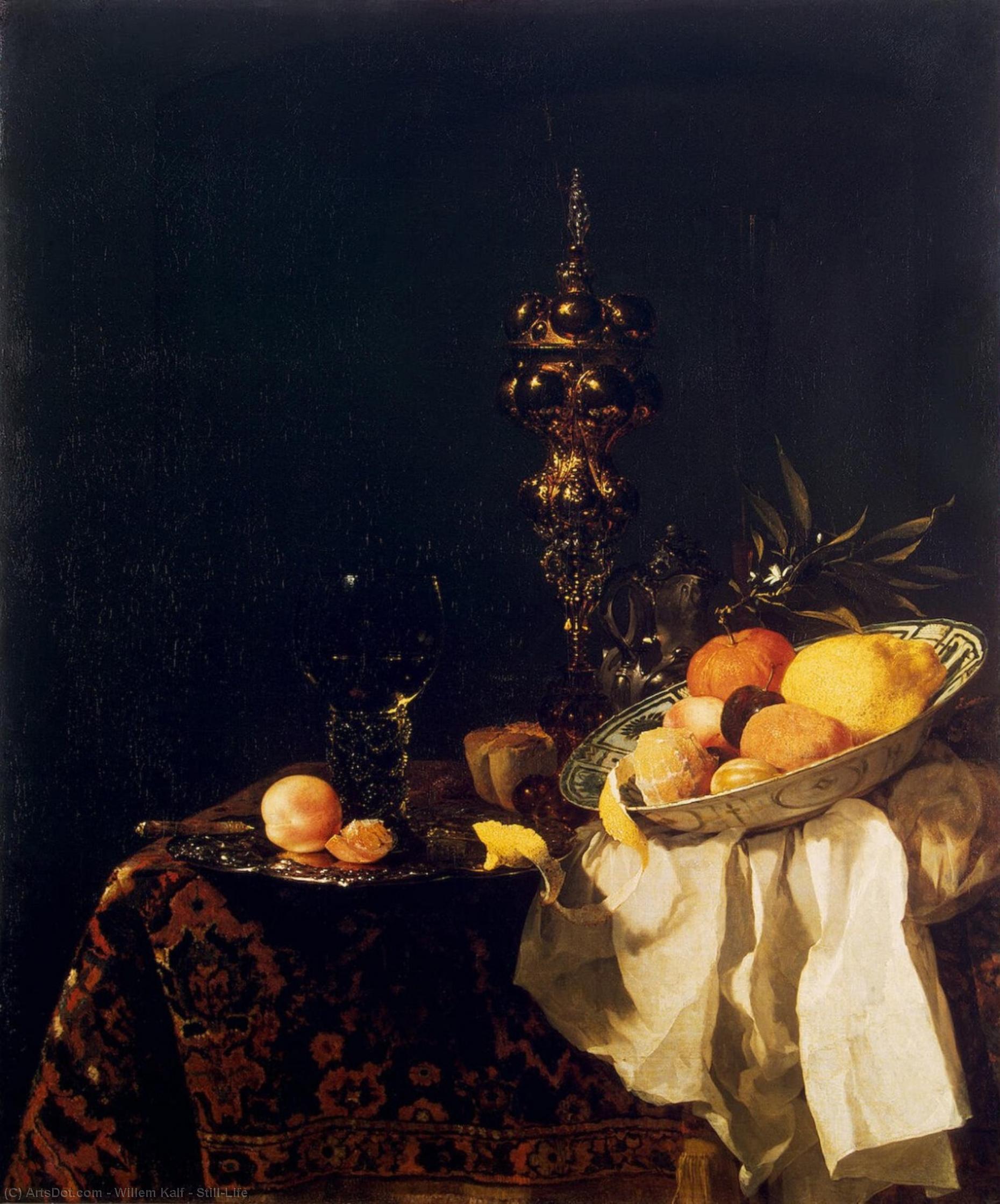
Exquisite 1653 Still-Life by Willem Kalf! Opulent fruit & tableware in dramatic chiaroscuro. Baroque realism, detailed texture, & luxurious dark palette. A Dutch Golden Age masterpiece.
Discover Willem Kalf (1619-1693), Dutch Golden Age master of luxurious still lifes ('pronkstilleven'). Explore his opulent compositions & masterful light on ArtsDot!
Explore the Hermitage Museum in St. Petersburg! Discover masterpieces from Renaissance to modern times within stunning historic palaces – a cultural journey awaits.
A Window into Dutch Opulence: Willem Kalf’s Still Life with Lobster, Drinking Horn and Glasses
Willem Kalf’s “Still Life with Lobster, Drinking Horn and Glasses,” painted in 1653, stands as a quintessential emblem of the Dutch Golden Age—a period characterized by unprecedented artistic flourishing and economic prosperity. More than just a depiction of fruit and tableware, this artwork embodies the intellectual currents of its time, reflecting a fascination with scientific observation alongside an appreciation for sensory experience. The painting’s masterful execution showcases Kalf's command of chiaroscuro, employing dramatic contrasts between light and dark to sculpt the forms of meticulously rendered objects—a lobster nestled amongst peaches and pears, accompanied by a gleaming silver goblet and a bronze candlestick—creating a palpable illusion of depth and texture that draws the viewer into its opulent world.
The Baroque Influence: Light, Texture, and Symbolism
Kalf’s style firmly anchors itself within the Baroque tradition, diverging from the more restrained Mannerist aesthetic that preceded it. Unlike his contemporaries who often prioritized stylized representations, Kalf sought to capture reality with remarkable accuracy, prioritizing detailed observation of surface qualities—the velvety sheen of the tablecloth, the glossy skin of the fruit, and the burnished patina of the silver vessels. This commitment to realism is heightened by the pervasive use of chiaroscuro, a technique perfected during this era that elevates the artwork beyond mere visual representation. Furthermore, the composition isn’t accidental; it's laden with symbolic significance. The lobster, for instance, represented wealth and abundance—a common motif in Baroque still lifes—while the drinking horn alluded to conviviality and social status. Even the placement of objects contributes to a narrative unfolding within the frame, inviting contemplation on themes of mortality and beauty.
Technical Mastery: Oil Paint and Canvas
The artwork’s impressive visual impact stems directly from Kalf's masterful technique – oil paint applied onto canvas—a method favored by artists throughout Europe during this period. This medium allowed for unparalleled blending capabilities and tonal gradations, enabling Kalf to achieve the luminous effects characteristic of Baroque painting. The artist painstakingly built up layers of pigment, meticulously capturing minute details and subtle variations in color. Examination under magnification reveals an astonishing level of textural fidelity—one can almost feel the coolness of the marble pedestal supporting the candlestick and the delicate fuzziness of the peach skin. This dedication to craft speaks volumes about Kalf’s artistic vision and underscores his position as one of the foremost practitioners of Baroque realism.
Historical Context: A Reflection of Dutch Society
“Still Life with Lobster, Drinking Horn and Glasses” emerged during a period of remarkable economic expansion in Holland—the Dutch Republic was at the forefront of global trade and maritime exploration. This prosperity fueled an artistic climate where patrons commissioned works that celebrated success and displayed refined taste. The painting’s lavish presentation reflects this societal ethos, mirroring the opulent interiors favored by wealthy merchants and aristocrats. It serves as a visual testament to the era's fascination with materiality—the shimmering silver, the rich fabrics—and its preoccupation with capturing fleeting beauty amidst the inevitable passage of time.
Emotional Resonance: Beauty Amidst Darkness
Despite its dark background, which contributes to the dramatic chiaroscuro effect, “Still Life” exudes an undeniable sense of serenity and contemplation. The carefully arranged fruit and tableware evoke a feeling of abundance and indulgence, yet simultaneously convey a subtle melancholy—a poignant awareness of mortality underscored by the stillness of the scene. Kalf’s artwork transcends mere visual spectacle; it invites viewers to engage in a dialogue with ideas about beauty, wealth, and the human condition—a legacy that continues to inspire admiration centuries later.