 Preview
 Send
Send Share
Share
 Details

 Download
 Similars
 X-Ray
X-Ray Diaporama
Still-Life
 Oil On Canvas
- WallArt
- Baroque
 1653
1653 105.0 x 88.0 cm
 Hermitage Museum
 Read More
Hand Made Oil Reproduction
Hand-painted oil on canvas in your size and frame, made to order by our artists. ( Buy Print Buy Image)




P118B $10

P118H $10

P118W $10

P438Z $10

P508JH $12

P508YH $12

P805H $10

P805Z $10

P919BZ $10

P919G $10

P919XJ $10

P959ZH $10

P968JZ $12

W106C $8

W218G $10

W218JH $8

W218Y $10

W307PJ $10

W316G $10

W316PJ $8

W316Y $10

W398PJ $8

W4111J $10

W500HY $15

W500JH $15

W692G $12

W849H $8

W940BG $15

W953PJ $8




Pick from our preset sizes that match the artwork's original proportions.

You may enter your own dimensions to fit a specific frame or space. If your selected size does not match the original image's proportions, we will either crop the artwork or extend the painting with additional hand-painted elements. A digital mockup will be sent for your approval before production begins.
Please note that the on-screen preview does not reflect the actual cropping or extension. Only the mockup will accurately show the final composition.
While custom sizes are available, we recommend selecting a dimension from the predefined list to preserve the original proportions.
After order, ArtsDot.com team will email client for instructions and provide a mockup preview
Worldwide Delivery () in 3/4 weeks instead of standard 5 weeks. (16 August). No compromise on quality.

Free Worldwide Express Shipping

High-Quality Linen Canvas

Full Shipping Insurance

Customs Tax Refund Guarantee

True Color Matching Guarantee

60-Day Return Policy (Defects Only)

100% Money-Back Guarantee

Bulk Discount Offer
 Glass option is only available in size under 110 CM

Still-Life
Reproduction Medium
Reproduction Size
-


Total Price
$ 263
Artwork Description
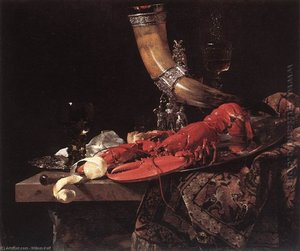
A Window into Dutch Opulence: Willem Kalf’s Still Life with Lobster, Drinking Horn and Glasses
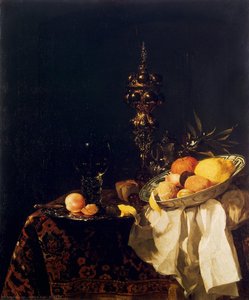
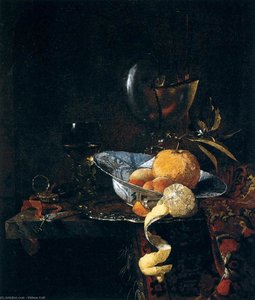
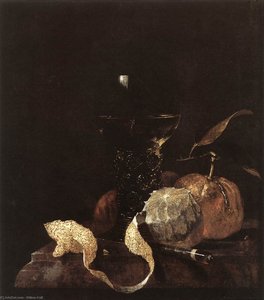
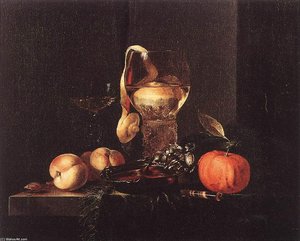
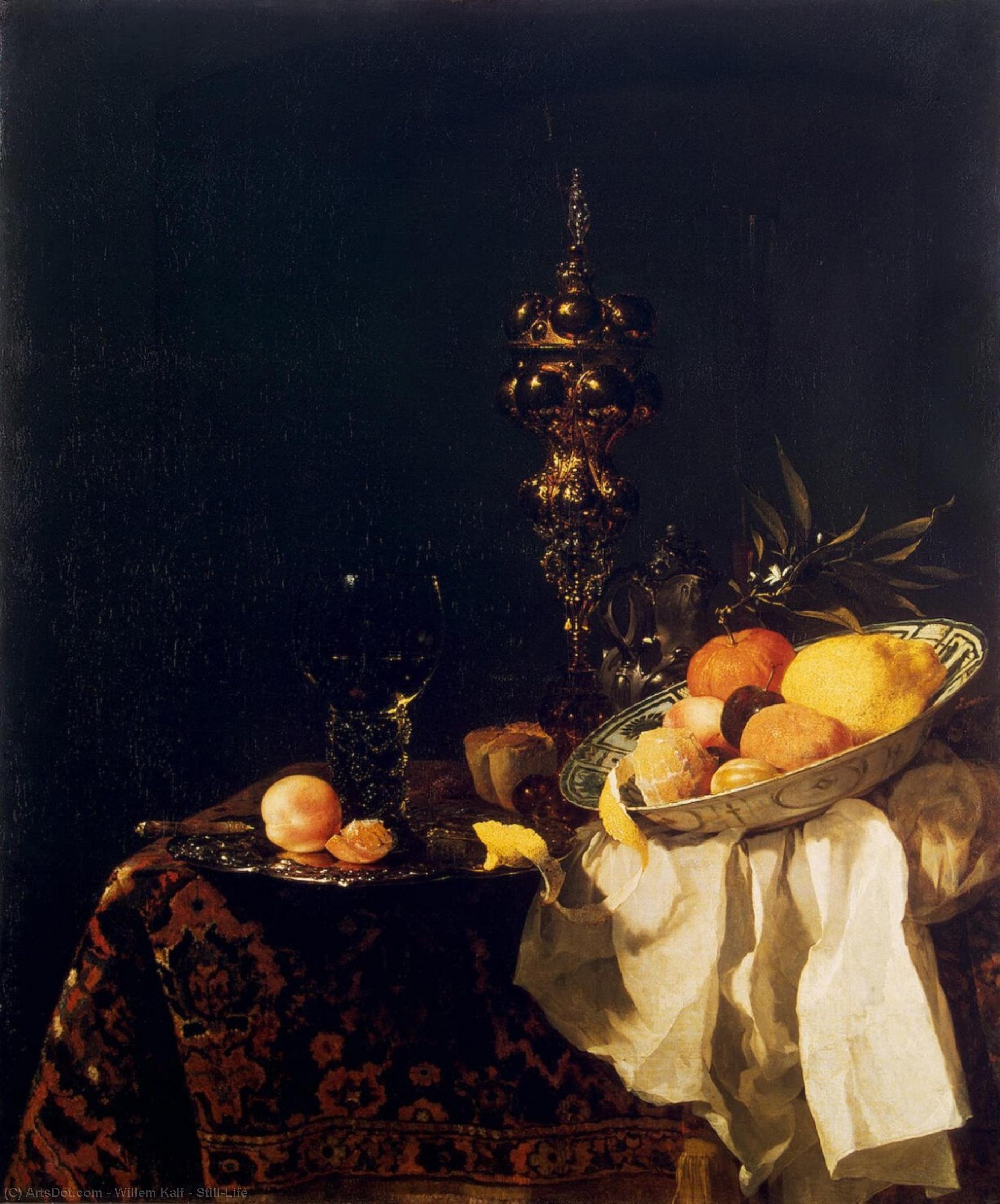
Willem Kalf’s “Still Life with Lobster, Drinking Horn and Glasses,” painted in 1653, stands as a quintessential emblem of the Dutch Golden Age—a period characterized by unprecedented artistic flourishing and economic prosperity. More than just a depiction of fruit and tableware, this artwork embodies the intellectual currents of its time, reflecting a fascination with scientific observation alongside an appreciation for sensory experience. The painting’s masterful execution showcases Kalf's command of chiaroscuro, employing dramatic contrasts between light and dark to sculpt the forms of meticulously rendered objects—a lobster nestled amongst peaches and pears, accompanied by a gleaming silver goblet and a bronze candlestick—creating a palpable illusion of depth and texture that draws the viewer into its opulent world.The Baroque Influence: Light, Texture, and Symbolism
Kalf’s style firmly anchors itself within the Baroque tradition, diverging from the more restrained Mannerist aesthetic that preceded it. Unlike his contemporaries who often prioritized stylized representations, Kalf sought to capture reality with remarkable accuracy, prioritizing detailed observation of surface qualities—the velvety sheen of the tablecloth, the glossy skin of the fruit, and the burnished patina of the silver vessels. This commitment to realism is heightened by the pervasive use of chiaroscuro, a technique perfected during this era that elevates the artwork beyond mere visual representation. Furthermore, the composition isn’t accidental; it's laden with symbolic significance. The lobster, for instance, represented wealth and abundance—a common motif in Baroque still lifes—while the drinking horn alluded to conviviality and social status. Even the placement of objects contributes to a narrative unfolding within the frame, inviting contemplation on themes of mortality and beauty.Technical Mastery: Oil Paint and Canvas
The artwork’s impressive visual impact stems directly from Kalf's masterful technique – oil paint applied onto canvas—a method favored by artists throughout Europe during this period. This medium allowed for unparalleled blending capabilities and tonal gradations, enabling Kalf to achieve the luminous effects characteristic of Baroque painting. The artist painstakingly built up layers of pigment, meticulously capturing minute details and subtle variations in color. Examination under magnification reveals an astonishing level of textural fidelity—one can almost feel the coolness of the marble pedestal supporting the candlestick and the delicate fuzziness of the peach skin. This dedication to craft speaks volumes about Kalf’s artistic vision and underscores his position as one of the foremost practitioners of Baroque realism.Historical Context: A Reflection of Dutch Society
“Still Life with Lobster, Drinking Horn and Glasses” emerged during a period of remarkable economic expansion in Holland—the Dutch Republic was at the forefront of global trade and maritime exploration. This prosperity fueled an artistic climate where patrons commissioned works that celebrated success and displayed refined taste. The painting’s lavish presentation reflects this societal ethos, mirroring the opulent interiors favored by wealthy merchants and aristocrats. It serves as a visual testament to the era's fascination with materiality—the shimmering silver, the rich fabrics—and its preoccupation with capturing fleeting beauty amidst the inevitable passage of time.Emotional Resonance: Beauty Amidst Darkness
Despite its dark background, which contributes to the dramatic chiaroscuro effect, “Still Life” exudes an undeniable sense of serenity and contemplation. The carefully arranged fruit and tableware evoke a feeling of abundance and indulgence, yet simultaneously convey a subtle melancholy—a poignant awareness of mortality underscored by the stillness of the scene. Kalf’s artwork transcends mere visual spectacle; it invites viewers to engage in a dialogue with ideas about beauty, wealth, and the human condition—a legacy that continues to inspire admiration centuries later.Related Artworks
Artist Biography
A Life Immersed in Opulence: The World of Willem Kalf
Willem Kalf, a name synonymous with the lavish still lifes of the Dutch Golden Age, was born in Rotterdam in 1619 into a family of comfortable means. His father, Jan Jansz Calff, held positions within the municipal government, providing young Willem with an upbringing that fostered both security and exposure to the burgeoning mercantile world that would later so profoundly influence his art. Though details surrounding Kalf’s early training remain somewhat elusive, it is known he experienced a period of artistic development in Paris during the 1630s, immersing himself within the vibrant community of Flemish artists working in Saint-Germain-des-Prés. This formative experience initially steered him towards smaller-scale rustic interiors and still lifes—modest beginnings that would eventually blossom into the grand pronkstilleven for which he is celebrated today. The loss of both parents by 1638 prompted a return to the Netherlands, setting the stage for his mature artistic period.From Humble Beginnings to Masterful Display
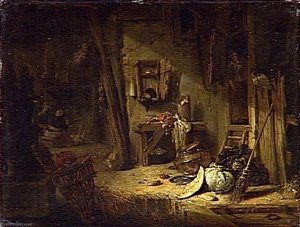
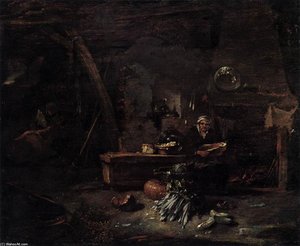
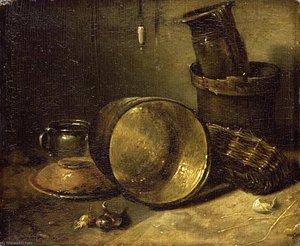
Kalf’s early Parisian works reveal an artist finding his footing. These paintings often depicted simple arrangements—vegetables, commonplace kitchen utensils like buckets and pans—set against dimly lit backgrounds where figures were suggested rather than fully realized. This style echoed the pictorial traditions prevalent in Flanders during the early 17th century, particularly the work of artists such as David Teniers the Younger. However, Kalf’s ambition soon outgrew these modest compositions. Upon his return to the Netherlands, he began a remarkable evolution towards what would become his signature style: the pronkstilleven, or “ostentatious still life.” These were not merely depictions of objects; they were carefully constructed displays of wealth and sophistication, showcasing luxurious items like silver vessels, delicate porcelain, exotic fruits, and shimmering glassware.The Art of Illusion and Symbolic Resonance
What truly distinguished Kalf’s pronkstilleven was his unparalleled mastery of light and texture. He possessed an extraordinary ability to render the reflective qualities of silver, the translucence of glass, and the velvety surfaces of fruit with breathtaking realism. His compositions weren't haphazard arrangements; they were meticulously planned orchestrations designed to capture the interplay of light and shadow, creating a sense of depth and drama. While the basic structure of his paintings—the arrangement of objects—remained relatively consistent, each work was a testament to Kalf’s skill in varying textures and capturing nuanced lighting effects. Beyond mere technical brilliance, however, lay a subtle symbolic dimension. The opulent objects he depicted weren't simply beautiful; they alluded to themes of transience, wealth, and the fleeting nature of earthly pleasures—a nod to the vanitas tradition prevalent in Dutch painting.Legacy and Influence
Willem Kalf’s impact extended beyond his own prolific output. His semi-monochrome still lifes exerted a notable influence on French art, particularly within the circle of the Le Nain brothers, who admired his sophisticated use of light and shadow. Though individual works may not be as widely recognized as those of some of his contemporaries, Kalf's contribution to the genre is undeniable. He helped define the pronkstilleven, capturing the spirit of 17th-century Dutch society—a period marked by unprecedented economic prosperity and a burgeoning merchant class eager to display their wealth and refinement. Today, his paintings grace prestigious museum collections worldwide, including the Museum Boijmans Van Beuningen in Rotterdam, the National Gallery of Art in Washington D.C., and the Getty Museum, ensuring that his legacy as a master of Dutch still life continues to inspire awe and admiration. His meticulous attention to detail and masterful use of light remain hallmarks of artistic excellence.Exploring Further
- Wikipedia: https://en.wikipedia.org/wiki/Willem_Kalf
- National Gallery of Art: https://www.nga.gov/artists/1430-willem-kalf
- Getty Museum: https://www.getty.edu/art/collection/person/103JR3
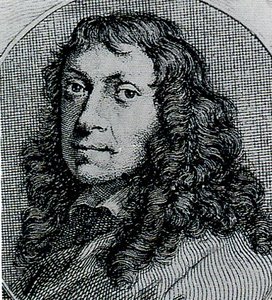
Willem Kalf
1619 - 1693 , Netherlands
Quick Facts
- Artistic Movement Or Style: Dutch Golden Age, Still Life
- Artists Or Movements Influenced By This Artist:
- French art
- Le Nain brothers
- Artists Who Influenced This Artist:
- Simon Luttichuys
- Pieter Claesz
- Willem Claeszoon Heda
- Date Of Birth: 1619
- Date Of Death: 1693
- Full Name: Willem Kalf
- Nationality: Dutch
- Notable Artworks:
- Still-Life with a Nautilus Cup
- Le vieux puits
- Silver Jug & Porcelain Bowl
- Place Of Birth: Rotterdam, Netherlands
Related Articles

Dutch Masters: 10 Golden Age Paintings That Still Inspire |
Journey into the Dutch Golden Age! Explore 10 iconic paintings by Rembrandt, Vermeer & Hals. Discover the stories behind these Baroque masterpieces and find museum-quality art reproductions to elevate your home decor on .

Golden Age Reflections: Dutch Baroque Painting & Cultural Innovation
Explore the Dutch Golden Age of painting! Discover key artists like Vermeer & ter Borch, their innovative techniques, and the rich cultural context behind these Baroque masterpieces. Learn about collecting & appreciating this iconic art period.
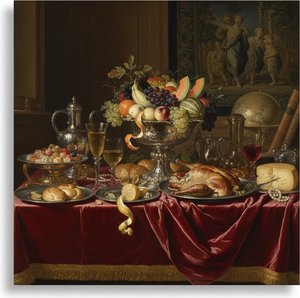
Abraham Hendricksz van Beyeren: Pioneering Dutch Still Life & the Banquet Tradition
Explore the captivating world of Dutch Golden Age still life with Abraham van Beyeren. Discover his innovative techniques, symbolic banquet scenes & lasting influence on art history. Learn about collecting these masterpieces.

Illuminating Innovation: Exploring the Dutch Golden Age of Painting
Explore the Dutch Golden Age of painting with ArtsDot. Discover Rembrandt, Vermeer & other Masters. Learn about key characteristics, iconic artworks, and lasting influence. Expert insights for collectors & enthusiasts.

Illuminating Realism: Exploring the Dutch Golden Age of Painting (1600-1700)
Explore the Dutch Golden Age of painting (1600-1700) with ArtsDot. Discover Rembrandt, Vermeer & other masters. Learn about techniques, history & find museum-quality reproductions.