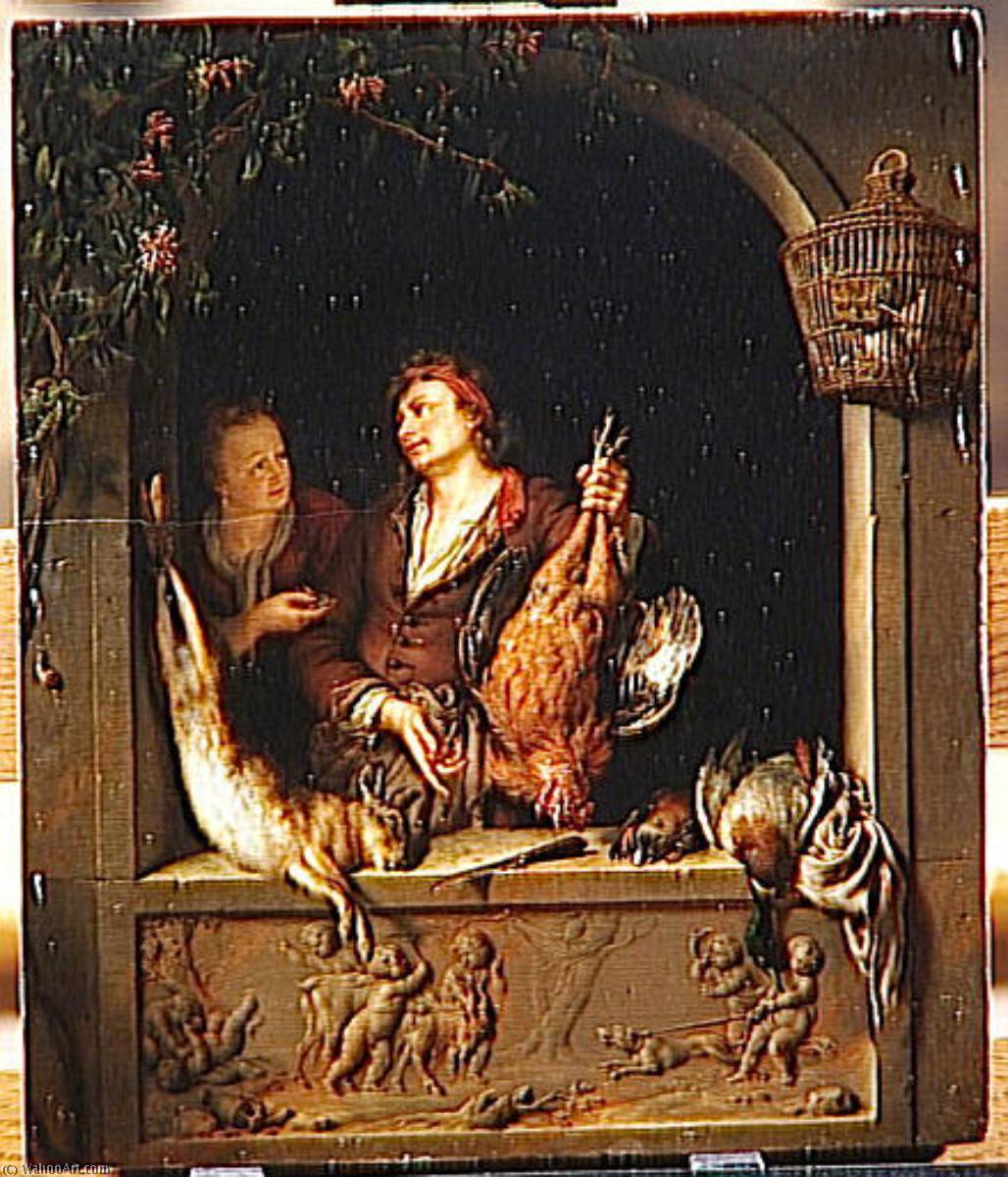
A Masterpiece of Meticulous Detail
In the quiet, luminous world of Willem van Mieris’s “Le Marchand de Gibier,” we are invited into an intimate corner of the Dutch Golden Age, where every brushstroke serves as a testament to the extraordinary skill of the Leiden fijnschilders. Painted during the early eighteenth century, this work is far more than a mere depiction of a game merchant; it is a breathtaking window into an era defined by prosperity, refinement, and an almost obsessive devotion to realism. As the eye wanders through the composition, one is immediately struck by the sense of profound stillness and the palpable textures that seem to leap from the canvas, inviting the viewer to linger within this exquisitely rendered niche.
The scene unfolds within a shallow, arched space, a compositional choice that creates an intense feeling of intimacy, as if we are peering through a portal into a private moment of commerce. At the heart of this drama are two figures: a merchant engaged in his trade and a companion observing the bounty of the hunt. The arrangement of the subject matter—the plucked chicken, the soft plumage of pheasants, and the sleek form of a hare—serves as a celebration of nature’s abundance. Through the masterful use of natural light, Van Mieris illuminates these elements with a gentle clarity, casting subtle shadows that lend weight and three-dimensionality to the organic forms, making the scene feel both grounded in reality and elevated by artistry.
The Alchemy of Light and Texture
To behold this painting is to witness the pinnacle of Dutch Baroque technique. Van Mieris employs the painstaking method of glazing, layering thin, translucent films of oil paint to achieve a luminous depth that is truly hypnotic. This technical prowess is most evident in the tactile variety presented to the viewer; one can almost feel the velvety softness of the bird feathers, the coarse grain of the stone carvings, and the heavy, woven texture of the figures' garments. The artist’s ability to manipulate light to highlight these contrasting surfaces creates a sensory experience that transcends the visual, making the artwork a triumph of material representation.
The color palette is a sophisticated symphony of warm, earthy tones. Deep browns, rich reds, burnished golds, and muted greens dominate the scene, creating an atmosphere of warmth and stability. These colors do more than just provide realism; they evoke the opulent interiors of the Dutch upper class, where such paintings were prized as symbols of status and cultural sophistication. The interplay between the darker, recessed areas of the niche and the brightly lit subjects creates a dramatic tension, a hallmark of the Baroque style that directs the viewer's gaze with unerring precision toward the central narrative.
A Legacy of Elegance for the Modern Collector
Beyond its technical brilliance, “Le Marchand de Gibier” carries a profound symbolic weight. In the context of the seventeenth and eighteenth centuries, the depiction of game and hunting motifs often served as metaphors for wealth, mastery over the natural world, and the bountiful rewards of a well-ordered society. For the contemporary collector or interior designer, this piece offers much more than historical interest; it provides a focal point of timeless elegance. Its rich textures and warm tones possess a unique ability to anchor a room, adding a layer of historical depth and quiet luxury to any sophisticated space.
Whether displayed in a sunlit gallery or as a centerpiece in a curated study, a high-quality reproduction of this masterpiece brings with it the spirit of the Leiden masters. It is an investment in atmosphere—a way to surround oneself with the enduring beauty of the Dutch Golden Age and the unparalleled craftsmanship of Willem van Mieris. This artwork remains a captivating dialogue between the past and the present, offering an eternal sense of wonder to all who pause to observe its intricate details.