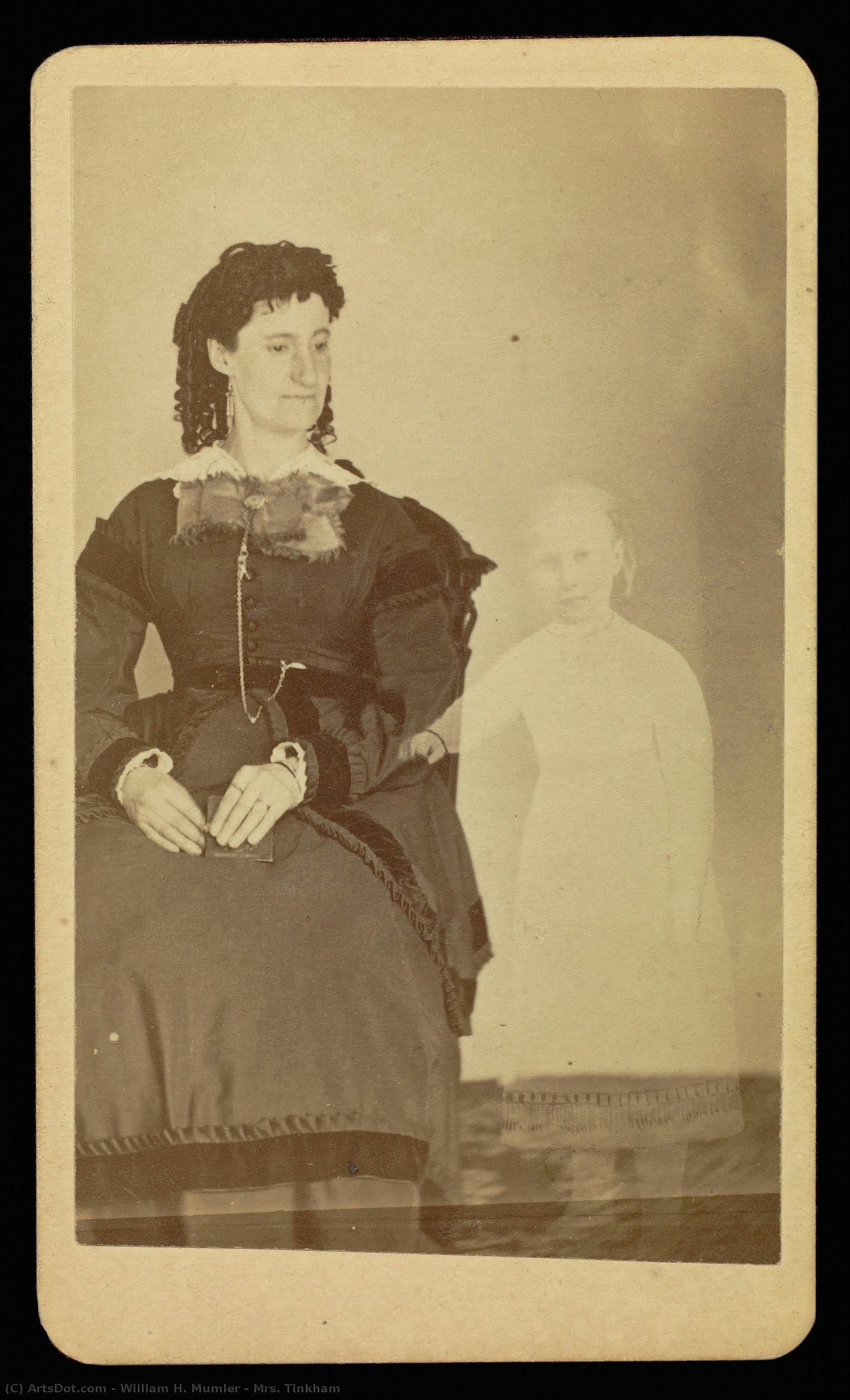
The Spectral Portrait: Mrs. Tinkham by William H. Mumler
William H. Mumler’s “Mrs. Tinkham” isn't merely a photograph; it’s a carefully constructed artifact of Victorian grief and burgeoning spiritualism, a testament to the era’s fascination with the afterlife and the nascent power of photography. Created in 1875, this remarkable image transcends its technical execution to become a poignant meditation on loss, belief, and the blurred boundaries between the living and the departed. The photograph captures a domestic scene—a woman seated with her child—but overlaid upon it is an ethereal presence: a ghostly reflection beside Mrs. Tinkham, suggesting the spectral visitation of a loved one lost too soon.
Mumler’s process, dubbed the “Mumler Process,” was revolutionary for its time. He skillfully employed double exposure techniques – a method still relatively new to photography – layering an existing image of the deceased onto a fresh print. This wasn't simply a matter of accidental overlap; Mumler meticulously manipulated the photographic plate and developed the image with painstaking care, creating a deliberate illusion of transparency and ghostly luminescence. The resulting effect is remarkably convincing, lending an uncanny realism to the spectral figure. The composition itself—the seated figures bathed in soft light, the child’s innocent gaze—heightens the emotional impact, drawing the viewer into a scene ripe with unspoken sorrow and yearning.
A Window into Victorian Spiritualism
“Mrs. Tinkham” emerged during a pivotal moment in American history: the aftermath of the Civil War. The nation was grappling with immense loss, and the concept of an afterlife—and the possibility of communicating with deceased loved ones—became increasingly prevalent. Spiritualism, with its claims of séances, mediums, and spirit photography, offered solace and a tangible connection to those who had passed on. Mumler’s work perfectly captured this zeitgeist, providing a visual representation of the widespread belief in ghostly apparitions and the desire to maintain a connection with departed souls.
The photograph's popularity stemmed not only from its aesthetic appeal but also from its ability to tap into deeply felt emotions. Families who had lost members sought out Mumler’s services, hoping to capture an image of their beloved relative—a tangible reminder of their presence. The resulting photographs became treasured possessions, imbued with sentimental value and serving as a focal point for remembrance rituals. It's important to note that while the photographic techniques were innovative, the emotional resonance was profoundly rooted in the anxieties and hopes surrounding death and mourning during this era.
Symbolism and the Ethereal Presence
The ghostly figure beside Mrs. Tinkham is laden with symbolic weight. It’s not a sharply defined apparition; rather, it's a hazy, almost translucent form—a representation of memory, longing, and the enduring power of love. The child’s presence further amplifies this symbolism, suggesting the continuation of family lineage beyond earthly existence. The act of capturing a “ghost” through photography wasn’t simply about documenting the deceased; it was about preserving their essence, ensuring that they would not be entirely forgotten.
Furthermore, the photographic process itself can be interpreted as symbolic. The layering of images—the merging of the living and the dead—represents the blurring of boundaries between worlds, a metaphor for the spiritual realm and the possibility of communication across the divide. The careful manipulation of light and shadow further enhances this effect, creating an atmosphere of mystery and reverence.
A Legacy of Illusion and Belief
Despite being exposed as a clever hoax by skeptics like P.T. Barnum, “Mrs. Tinkham” retains its power to evoke emotion and intrigue. The photograph’s enduring appeal lies not in its authenticity but in its ability to tap into our deepest fears and desires—our longing for connection with the departed and our fascination with the unknown. It stands as a remarkable example of Victorian ingenuity, artistic skill, and the profound human need to grapple with mortality.
Today, reproductions of “Mrs. Tinkham” continue to captivate audiences, offering a glimpse into a bygone era and prompting reflection on the nature of belief, memory, and the enduring power of images to shape our understanding of the world—and beyond.