 Ver en contexto
 Enviar
 Compartir
 Detalles

 Descargar
 Similares
 Radiografía
 Presentación de diapositivas
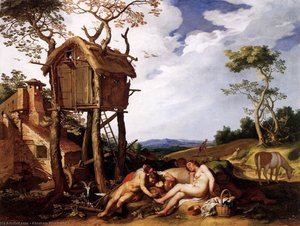
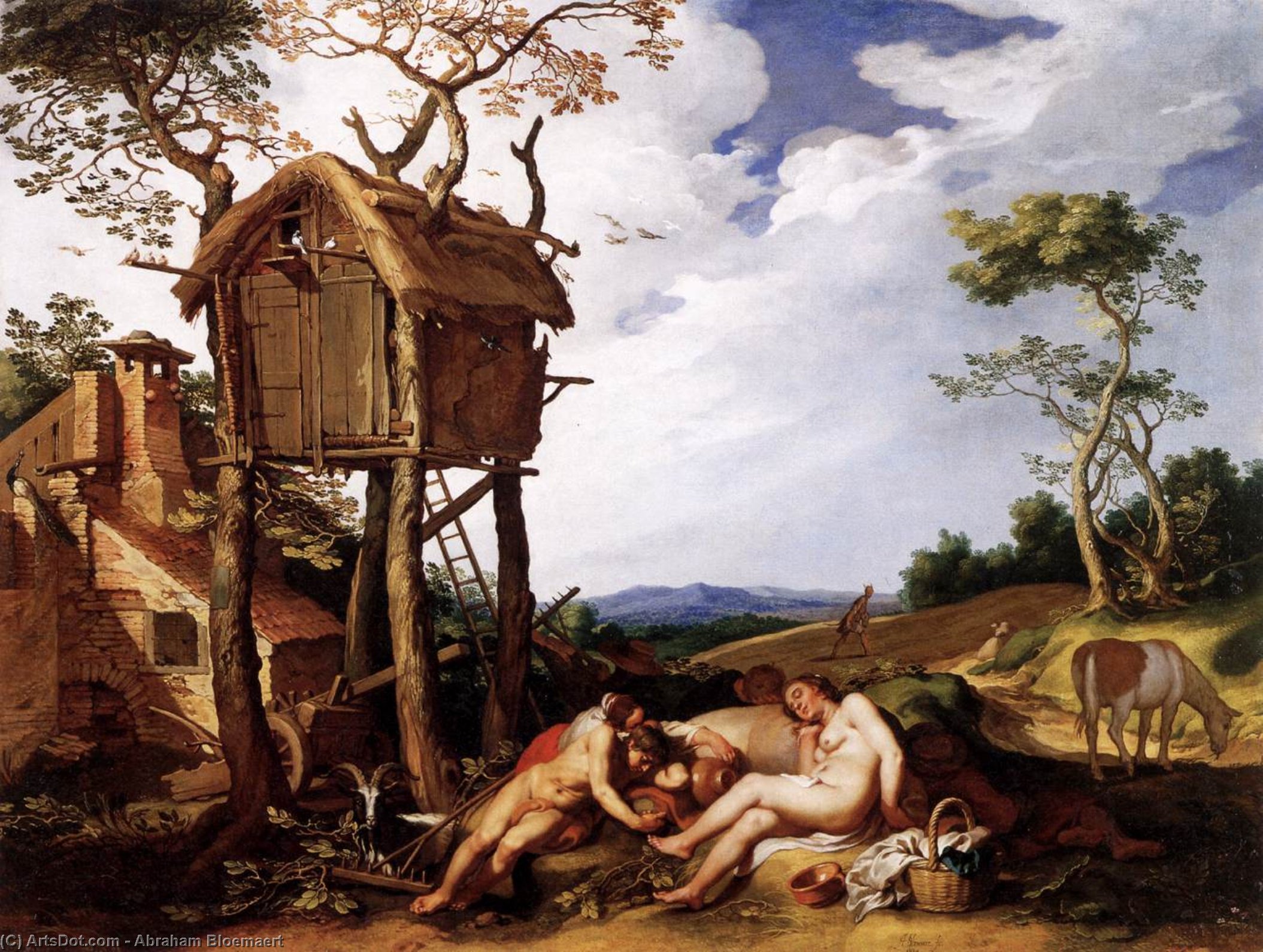
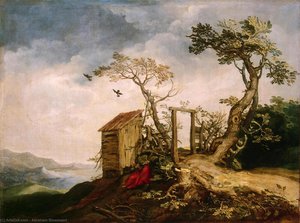
Paisaje con la Parábola de los Zorros entre el Trigo
 Acrílico sobre lienzo
- Arte de pared
- Baroque Dramatic Landscape
 1624
1624 100.0 x 133.0 cm
 Walters Art Museum
 Ver más
Giclée / Impresión de arte
Impresiones giclée o en lienzo de calidad de museo con producción rápida y opciones de acabado flexibles. ( Comprar pintura hecha a mano Comprar imagen)




P118B $10

P118H $10

P118W $10

P438Z $10

P508JH $12

P508YH $12

P805H $10

P805Z $10

P919BZ $10

P919G $10

P919XJ $10

P959ZH $10

P968JZ $12

W106C $8

W218G $10

W218JH $8

W218Y $10

W307PJ $10

W316G $10

W316PJ $8

W316Y $10

W398PJ $8

W4111J $10

W500HY $15

W500JH $15

W692G $12

W849H $8

W940BG $15

W953PJ $8




Elija entre nuestros tamaños predefinidos que respetan las proporciones originales de la obra.

Puede introducir sus propias dimensiones para adaptarse a un marco o espacio específico. Si el tamaño seleccionado no coincide con las proporciones de la imagen original, recortaremos la obra de arte o extenderemos la imagen con un borde con efecto espejo o de color sólido. Se enviará una maqueta digital para su aprobación antes de que comience la producción.
Tenga en cuenta que la vista previa en pantalla no refleja el recorte o la extensión real. Solo la maqueta mostrará con precisión la composición final.
Aunque existen tamaños personalizados, recomendamos seleccionar una dimensión de la lista predefinida para preservar las proporciones originales.
Envío a todo el mundo () en 2 semanas en lugar de las 4/5 semanas estándar. (29 agosto)

Envío exprés gratuito a todo el mundo

Lienzo de lino de alta calidad

Seguro de envío total

Garantía de reembolso de impuestos aduaneros

Garantía de fidelidad cromática exacta

Política de devolución de 60 días (solo por defectos)

Garantía de devolución del 100% del dinero

Descuento por cantidad
 La opción de vidrio solo está disponible en tamaños inferiores a 110 cm.

Paisaje con la Parábola de los Zorros entre el Trigo
Giclée / Impresión de arte
Dimensiones de la reproducción
-


Precio total final
$ 62
Paisaje con la Parábola de las Zarzamoras entre el Trigo: Una Obra Maestrosa de Abraham Bloemaert
La pintura de Abraham Bloemaert, creada en 1624 bajo el influjo del movimiento barroco holandés, representa un paisaje impresionante donde se despliega una escena cargada de simbolismo religioso y emocional profundidad. Esta obra maestra captura la esencia de la época, reflejando las preocupaciones espirituales y culturales que caracterizaron el siglo XVII.
- Título: Paisaje con la Parábola de las Zarzamoras entre el Trigo
- Artista: Abraham Bloemaert
- Año: 1624
- Ciudad Natal: Gorinchem
- País Natal: Países Bajos
Bloemaert, hijo de Cornelis Bloemaert I, arquitecto reconocido por su dominio de la composición y el diseño, recibió una formación inicial excepcional que marcó el inicio de su trayectoria artística. Posteriormente, estudió con Gerrit Splinter y Joos de Beer en Utrecht, donde adquirió conocimientos técnicos avanzados y desarrolló un estilo propio caracterizado por la precisión anatómica y la representación realista.
El paisaje dominado por árboles majestuosos y una estructura arquitectónica discreta sirve como escenario para una composición innovadora que integra figuras humanas desnudos. Estos personajes representan una interpretación alegórica de la lucha entre el bien y el mal, simbolizada por las zarzamoras (mal) dispersas entre el trigo (bien). Esta imagen directa del Evangelio refleja la preocupación por cuestiones morales y religiosas que eran comunes en la sociedad barroca.
La habilidad técnica de Bloemaert se manifiesta en la utilización de colores ricos y vibrantes, aplicados con una maestría que aporta luminosidad y profundidad a la escena. Además, el artista emplea efectos atmosféricos como la niebla y el reflejo del agua para crear una sensación de espacio infinito y transmitir una atmósfera contemplativa.
Más allá de su valor estético, esta pintura posee un impacto emocional significativo debido a la representación expresiva de los cuerpos humanos desnudos y al mensaje religioso que transmite. Bloemaert logra capturar la esencia del espíritu barroco, ofreciendo una obra que sigue inspirando admiración y fascinación en artistas y amantes del arte contemporáneo.
- Estilo: Barroco Holandés
- Técnica: Óleo sobre lienzo
- Temática: Religiosa (Parábola de las Zarzamoras)
- Simbolismo: Lucha entre el bien y el mal, representación alegórica del Evangelio
Obras relacionadas


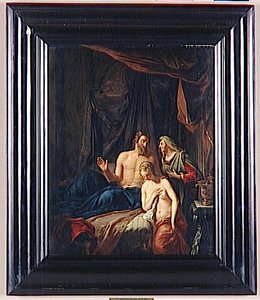
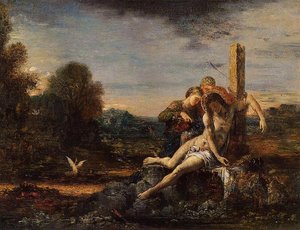
Biografía del artista
A Life Immersed in Art: The World of Abraham Bloemaert
Abraham Bloemaert, born in Gorinchem in 1564 and passing away in Utrecht in 1651, stands as a pivotal figure bridging the Mannerist and Baroque periods in Dutch painting. His long and prolific career unfolded against a backdrop of religious and political upheaval, yet he consistently produced works imbued with both dramatic intensity and subtle beauty. Bloemaert’s journey began under the tutelage of his father, Cornelis Bloemaert I, an architect who instilled in him a foundational understanding of form and composition. This early training was further refined through studies with Gerrit Splinter and Joos de Beer in Utrecht, laying the groundwork for his artistic explorations. A crucial period followed – three years spent in Paris from 1581 to 1583. There, he absorbed influences from Jehan Bassot and Maistre Herry, while also encountering the works of Hieronymus Francken, a fellow Dutch artist who broadened his stylistic horizons. This Parisian sojourn proved formative, exposing him to the refined elegance of the French School and setting the stage for his later innovations.From Mannerism to Baroque: A Shifting Aesthetic
Initially, Bloemaert’s style aligned with the prevailing Haarlem Mannerism – characterized by elongated figures, elegant poses, and often complex allegorical narratives. Artists like Hendrick Ter Brugghen and Jacob Saam practiced similar techniques during this time. However, he was not content to remain solely within this framework. As the 17th century dawned, Bloemaert began to embrace the emerging Baroque aesthetic, a shift marked by increased dynamism, emotional intensity, and a heightened sense of realism. This transition wasn’t abrupt; rather, it represented a gradual evolution, blending elements of both styles into a uniquely personal artistic language. He skillfully incorporated dramatic lighting effects, rich color palettes, and expressive gestures to convey powerful narratives and evoke profound emotions in his viewers. His paintings began to resonate with a new energy, reflecting the changing cultural landscape of the Dutch Republic. The Utrecht Caravaggisti – artists like Gerrit van Honthorst and Bartholomeus Breenbergh – were particularly influenced by Bloemaert’s embrace of Baroque principles.A Master of Diverse Subjects and Techniques
Bloemaert's artistic output was remarkably diverse. He excelled in history painting, bringing biblical stories and classical myths to life with compelling detail and emotional depth. Notable examples include “The Expulsion of Hagar and Ishmael” and “Venus and Adonis,” which demonstrate his masterful command of composition and color. Beyond painting, Bloemaert was a highly skilled printmaker, proficient in both etching and engraving. These prints served to disseminate his artistic vision more widely, contributing significantly to his reputation and influence. His technical mastery extended to still lifes and animal paintings as well, demonstrating an exceptional versatility that set him apart from many of his contemporaries. He meticulously studied the works of artists like Peter Paul Rubens and Caravaggio, adapting their techniques to suit his own distinctive style.A Prolific Teacher and Lasting Legacy
Abraham Bloemaert was not only a gifted artist but also an influential teacher. He established a thriving workshop in Utrecht, attracting numerous students who would go on to become prominent artists themselves. Remarkably, his four sons – Hendrick, Frederick, Cornelis, and Adriaan – all followed in his footsteps, achieving considerable success as painters and engravers. His influence extended beyond his immediate family, mentoring a generation of Dutch artists, including Jan Aerntsz de Hel and Nicolaes van Bercheyck. Bloemaert’s teachings helped to shape their distinctive style, solidifying his position as a central figure in the development of Dutch Baroque painting. His legacy continues to resonate today, with his works admired for their technical brilliance, emotional power, and historical significance—a testament to a life dedicated to artistic exploration and innovation.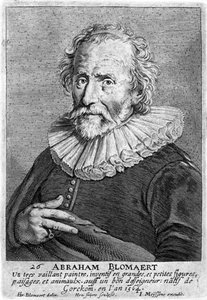
Abraham Bloemaert
1564 - 1651 , Países Bajos
Datos clave
- Artistic Movement Or Style: Barroco, Maneirismo
- Artists Or Movements Influenced By This Artist: ['Utrecht Caravaggisti']
- Artists Who Influenced This Artist: ['Hieronymus Francken']
- Date Of Birth: 1564
- Date Of Death: 1651
- Full Name: Abraham Bloemaert
- Nationality: Holandés
- Notable Artworks:
- Expulsión de Hagar y Ismael
- Venus y Adonis
- Paisaje con campesinos
- Place Of Birth: Gorinchem, Países Bajos
Artículos relacionados
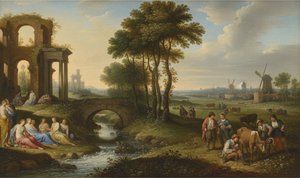
Cornelis van Poelenburch: Bridging Mannerism & the Dutch Baroque Landscape
Discover Cornelis van Poelenburch, a pivotal Dutch Baroque landscape painter bridging Mannerism & Italianate styles. Explore his life, key works, and lasting influence on 17th-century art with ArtsDot.

Los 10 Maestros del Barroco Holandés: Obras que Definen una Época | ArtsDot
Descubre los 10 imprescindibles del Barroco holandés: Rembrandt, Vermeer y más. Explora la historia, técnica y belleza de estas obras maestras. Reproducciones de arte en ArtsDot.com para decorar tu hogar con elegancia.

Reflejos de una Época Dorada: La Pintura Barroca Holandesa y la Innovación Cultural
Descubra la riqueza y el detalle de la pintura barroca holandesa del Siglo de Oro. Explore las obras maestras de Rembrandt, Vermeer y otros artistas clave. Análisis experto e historia cultural.
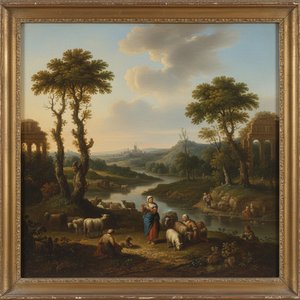
Nicolaes Berchem: Dutch Golden Age Pastoralism & the Evolution of Landscape Painting
Explore the captivating world of Nicolaes Berchem, a leading Dutch Golden Age painter. Discover his idyllic landscapes, masterful technique & lasting influence on art history. Learn more at ArtsDot.
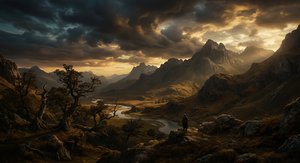
The Dramatic Vista: Exploring Emotion, Power & Technique in Baroque Landscape Painting
Explore the dramatic power of Baroque landscape painting! Discover Rembrandt, Vermeer & Caravaggio's techniques, symbolism & lasting influence. Expert insights for art lovers & collectors at ArtsDot.