 Ver en contexto
 Enviar
 Compartir
 Detalles

 Descargar
 Similares
 Radiografía
 Presentación de diapositivas
Jupiter and Mercury in the House of Philemon and Baucis


 Ver más
Reproducción al óleo hecha a mano
Óleo sobre lienzo pintado a mano en el tamaño y marco de su elección, realizado por encargo por nuestros artistas. ( Comprar impresión Comprar imagen)




P118B $10

P118H $10

P118W $10

P438Z $10

P508JH $12

P508YH $12

P805H $10

P805Z $10

P919BZ $10

P919G $10

P919XJ $10

P959ZH $10

P968JZ $12

W106C $8

W218G $10

W218JH $8

W218Y $10

W307PJ $10

W316G $10

W316PJ $8

W316Y $10

W398PJ $8

W4111J $10

W500HY $15

W500JH $15

W692G $12

W849H $8

W940BG $15

W953PJ $8




Elija entre nuestros tamaños predefinidos que respetan las proporciones originales de la obra.

Puede ingresar sus propias dimensiones para adaptarse a un marco o espacio específico. Si el tamaño seleccionado no coincide con las proporciones de la imagen original, recortaremos la obra o extenderemos la pintura con elementos adicionales pintados a mano. Se le enviará una maqueta digital para su aprobación antes de comenzar la producción.
Tenga en cuenta que la vista previa en pantalla no refleja el recorte o la extensión reales. Solo la maqueta mostrará con precisión la composición final.
Si bien existen tamaños personalizados, recomendamos seleccionar una dimensión de la lista predefinida para preservar las proporciones originales.
Tras realizar el pedido, el equipo de ArtsDot.com enviará un correo electrónico al cliente para solicitar instrucciones y proporcionarle una vista previa del boceto.
Envío a todo el mundo () en 3-4 semanas en lugar de las 5 semanas estándar. (31 agosto). Sin comprometer la calidad.

Envío exprés gratuito a todo el mundo

Lienzo de lino de alta calidad

Seguro de envío total

Garantía de reembolso de impuestos aduaneros

Garantía de fidelidad cromática exacta

Política de devolución de 60 días (solo por defectos)

Garantía de devolución del 100% del dinero

Descuento por cantidad
 La opción de vidrio solo está disponible en tamaños inferiores a 110 cm.

Jupiter and Mercury in the House of Philemon and Baucis
Técnica de reproducción
Dimensiones de la reproducción
-


Precio total final
$ 388
A Glimpse into Myth and Hospitality: Adam Elsheimer’s “Jupiter and Mercury”
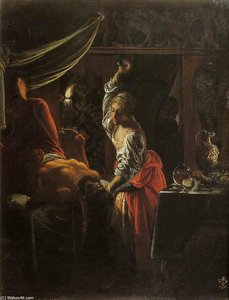
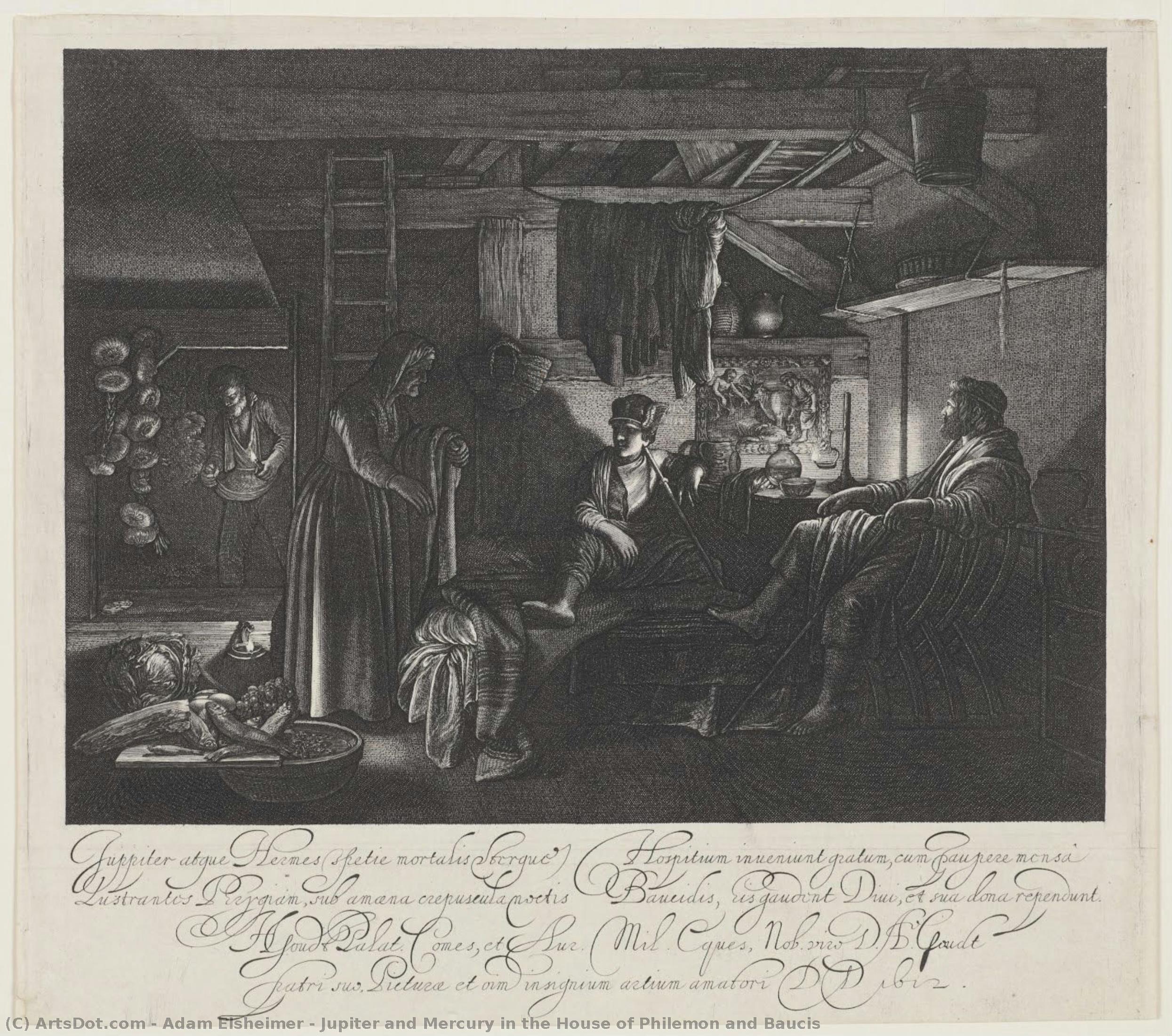
Adam Elsheimer's "Jupiter and Mercury in the House of Philemon and Baucis," created around 1612, isn’t merely a depiction of a classical myth; it’s a profound meditation on generosity, divine favor, and the quiet dignity of humble existence. Born in Frankfurt during a period of artistic transition – bridging the High Renaissance with the burgeoning Baroque – Elsheimer was a master of miniature paintings executed on copper, a medium that allowed him an unprecedented level of detail and luminosity. This particular engraving, part of a limited series based on Ovid’s “Metamorphoses,” captures a pivotal moment from the myth: the arrival of Jupiter and Mercury disguised as travelers in the modest home of Philemon and Baucis. The scene unfolds within a dimly lit interior, dominated by rich, dark wood furnishings and illuminated by flickering candlelight – an atmosphere that immediately evokes both intimacy and a sense of impending drama.
- The Mythic Core: The story itself is deceptively simple. Jupiter and Mercury, seeking respite, arrive at the home of Philemon and Baucis, an elderly couple known for their kindness and hospitality. Despite being turned away by wealthier neighbors, they offer the gods warmth, food, and wine – acts that ultimately earn them a miraculous reward: the transformation of their humble dwelling into a temple and a life of prosperity.
- Baroque Drama: Elsheimer’s masterful use of chiaroscuro—the dramatic contrast between light and shadow—is central to the engraving's power. The deep blacks of the interior walls, punctuated by the warm glow of the oil lamps and candlelight, create a palpable sense of mystery and heighten the emotional impact of the scene.
- A Testament to Skill: The intricate detail with which Elsheimer renders every object – from the texture of the wooden beams to the folds in Philemon’s cloak – speaks volumes about his technical skill and dedication to his craft. The precision of the cross-hatching technique, particularly evident in the rendering of shadows, is a hallmark of Baroque engraving.
Technique and Materials: A Window into Elsheimer's Process
Elsheimer’s “Jupiter and Mercury” exemplifies the meticulous process of copperplate engraving. The artist began by drawing the image onto a prepared copper plate using a needle, creating a series of incised lines that would later be transferred to paper. These lines were then inked – typically with a rich black ink – and carefully wiped away from the areas intended to remain white, leaving behind the final image. The use of laid paper, known for its textured surface, further enhanced the engraving’s visual appeal, adding depth and richness to the details. The limited edition nature of this work—only seven engravings were produced—underscores Elsheimer's commitment to quality and his desire to create a truly exceptional piece of art.
Key Techniques:- Cross-Hatching: Used extensively to build up tonal values and create the illusion of depth and texture.
- Chiaroscuro: The dramatic interplay of light and shadow, a defining characteristic of Baroque art.
- Line Weight Variation: Employed to emphasize certain elements and create a sense of spatial recession.
Symbolism and Emotional Resonance
Beyond the literal depiction of the myth, “Jupiter and Mercury” is rich in symbolic meaning. The elderly couple, Philemon and Baucis, represent humility, generosity, and the virtues that are rewarded by divine grace. Their simple dwelling contrasts sharply with the opulent lifestyle enjoyed by those who have rejected their hospitality, highlighting the importance of kindness and compassion. Jupiter and Mercury, disguised as travelers, embody the unpredictable nature of the gods—capable of both rewarding virtue and punishing arrogance. The scene evokes a profound sense of reverence for the sacred and a reminder that true wealth lies not in material possessions but in the capacity to offer hospitality and embrace those in need.
The engraving’s enduring appeal stems from its ability to tap into universal themes of human nature, divine justice, and the rewards of virtuous behavior. It is a poignant meditation on the power of small acts of kindness and the transformative potential of grace.A Legacy of Light: Elsheimer's Influence
Adam Elsheimer’s work profoundly influenced generations of artists, particularly Rembrandt van Rijn, who admired his use of dramatic lighting and dark shadows. Hendrik Goudt, a contemporary of Elsheimer, translated several of his paintings into engravings, further disseminating the artist's vision to a wider audience. The legacy of “Jupiter and Mercury” continues to resonate today, serving as a testament to Elsheimer’s artistic genius and his enduring contribution to the history of art.
Obras relacionadas
Biografía del artista
Vida Temprana y Formación
- Nacimiento: Frankfurt am Main, Alemania, 18 de marzo de 1578
- Fallecimiento: Roma, 11 de diciembre de 1610 (a los 32 años)
- Adam Elsheimer nació en una familia de artesanos en Frankfurt. Su padre era un maestro sastre.
- Mostró talento artístico desde temprana edad y fue aprendiz de Philipp Uffenbach, un artista local.
- Alrededor de 1596, probablemente visitó Estrasburgo, exponiéndose a diferentes estilos artísticos.
- En 1598, a la edad de veinte años, Elsheimer viajó a Italia vía Múnich, marcando el comienzo de su significativo desarrollo artístico.
Período Italiano y Desarrollo Artístico
- Pasó una cantidad considerable de tiempo en Venecia, donde fue influenciado por maestros venecianos como Tintoretto y Paolo Veronese.
- Alrededor de 1600, Elsheimer se estableció en Roma, convirtiéndose en parte de la comunidad artística allí.
- Trabajó como asistente de Johann Rottenhammer, un pintor alemán especializado en pinturas de gabinete, aprendiendo técnicas valiosas.
- Su estilo evolucionó desde influencias manieristas tempranas hacia un enfoque más naturalista caracterizado por innovadoras representaciones del paisaje y efectos dramáticos de iluminación.
- Se formaron amistades clave con Giovanni Faber, un doctor papal y botánico, y Paul Bril, un pintor paisajista flamenco, ambos conectados a la Accademia dei Lincei.
Obras Principales y Estilo Artístico
- Elsheimer es reconocido por sus pinturas a pequeña escala sobre placas de cobre, a menudo referidas como pinturas de gabinete.
- Sus obras representaban con frecuencia escenas mitológicas y bíblicas, mostrando un temperamento lírico y meticuloso detalle.
- Pinturas Notables: Tobías y el Ángel (c. 1602–1603), La Quema de Troya, Apolo y Coronis, Ceres y Stellio, El Apedreamiento de San Esteban.
- Se le atribuye ser uno de los primeros artistas en representar con precisión las constelaciones en escenas del cielo nocturno.
- Sus paisajes fueron innovadores para su época, integrando figuras armoniosamente dentro de entornos naturales.
- El uso de la luz y la sombra (claroscuro) por parte de Elsheimer creó efectos dramáticos y realzó el impacto emocional de sus pinturas.
Influencia y Significado Histórico
- A pesar de una carrera relativamente corta, Elsheimer ejerció considerable influencia en generaciones posteriores de artistas.
- Fue muy apreciado por sus contemporáneos, incluyendo a Peter Paul Rubens, quien lamentó su temprana muerte y elogió su excepcional talento.
- Influencias Clave: Albrecht Dürer (exposición temprana), Johann Rottenhammer (formación técnica), pintores venecianos (Tintoretto, Paolo Veronese - inspiración estilística).
- Artistas Influenciados: Rembrandt, Peter Paul Rubens y numerosos otros artistas del siglo XVII.
- Sus innovadoras representaciones del paisaje y sus técnicas de iluminación dramática allanaron el camino para posteriores desarrollos en la pintura barroca.
- Los grabados realizados por Hendrick Goudt ayudaron a diseminar la obra de Elsheimer por toda Europa, amplificando aún más su influencia.
Vida Posterior y Legado
- Elsheimer enfrentó dificultades financieras a lo largo de su vida, lo que llevó a períodos de deuda e incluso encarcelamiento.
- Se casó con Carola Antonia Stuarda da Francoforte en 1606, y tuvieron un hijo que trágicamente murió joven.
- Se convirtió al catolicismo alrededor de 1608.
- Elsheimer falleció en Roma en 1610 a la edad de 32 años, dejando atrás una obra relativamente pequeña pero muy influyente.
- Su legado se basa en su enfoque pionero de la pintura de paisajes, su dominio de la luz y la sombra, y su impacto duradero en el arte barroco.
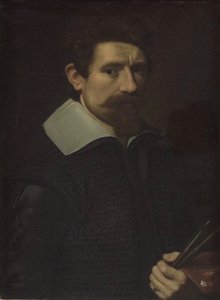
Adam Elsheimer
1578 - 1610 , Alemania
Datos clave
- Artistas Influenciados:
- Rembrandt
- Peter Paul Rubens
- Artistas Que Influyeron:
- Albrecht Dürer
- Johann Rottenhammer
- Tintoretto
- Paolo Veronese
- Fecha De Fallecimiento: 11 de diciembre de 1610
- Fecha De Nacimiento: 18 de marzo de 1578
- Lugar De Nacimiento: Frankfurt am Main, Alemania
- Movimiento Artístico: Barroco
- Nacionalidad: Alemán
- Nombre Completo: Adam Elsheimer
- Obras Notables:
- Tobías y el ángel
- La quema de Troya
- Apolo y Coronis
- Ceres y Stelio
- El martirio de Esteban
Artículos relacionados
Hendrick Goltzius: Master Engraver & the Flourishing of Dutch Mannerism
Explore the life & art of Hendrick Goltzius, a master engraver of Dutch Mannerism. Discover his innovative techniques, iconic engravings like 'Jahel', and lasting influence on Baroque art. Learn about collecting Goltzius today.
Los 10 Grabados Legendarios que Transformaron la Historia del Arte | ArtsDot
Descubre los 10 grabados legendarios de Dürer, Rembrandt y Goya que revolucionaron el arte. Explora la historia, técnicas y belleza atemporal de estas obras maestras. Reproducciones de alta calidad en ArtsDot.com para decorar tu hogar con arte clásico.
Engraving: A Historical Survey of Technique, Artistic Expression & Enduring Legacy
Explore the rich history of engraving with ArtsDot. Discover techniques, iconic artists like Dürer & Callot, collecting tips, and expert guidance for preserving your art investment. Learn about intaglio printing & more!

Drama Barroca: Llevando la Grandeza y la Emoción a los Interiores Contemporáneos
Descubre cómo el drama y la grandeza del arte barroco pueden transformar tus interiores. Guía experta, inspiración y reproducciones de alta calidad en .
El Intricado Mundo del Grabado: Técnica, Expresión y Legado Histórico
Descubre la fascinante historia del grabado calcográfico: técnicas ancestrales, maestros como Goya y su impacto en el arte y la ciencia. Guía experta para coleccionistas y amantes del arte.