

 Ver en contexto
 Enviar
 Compartir
 Detalles

 Descargar
 Similares
 Radiografía
 Presentación de diapositivas
 Stats
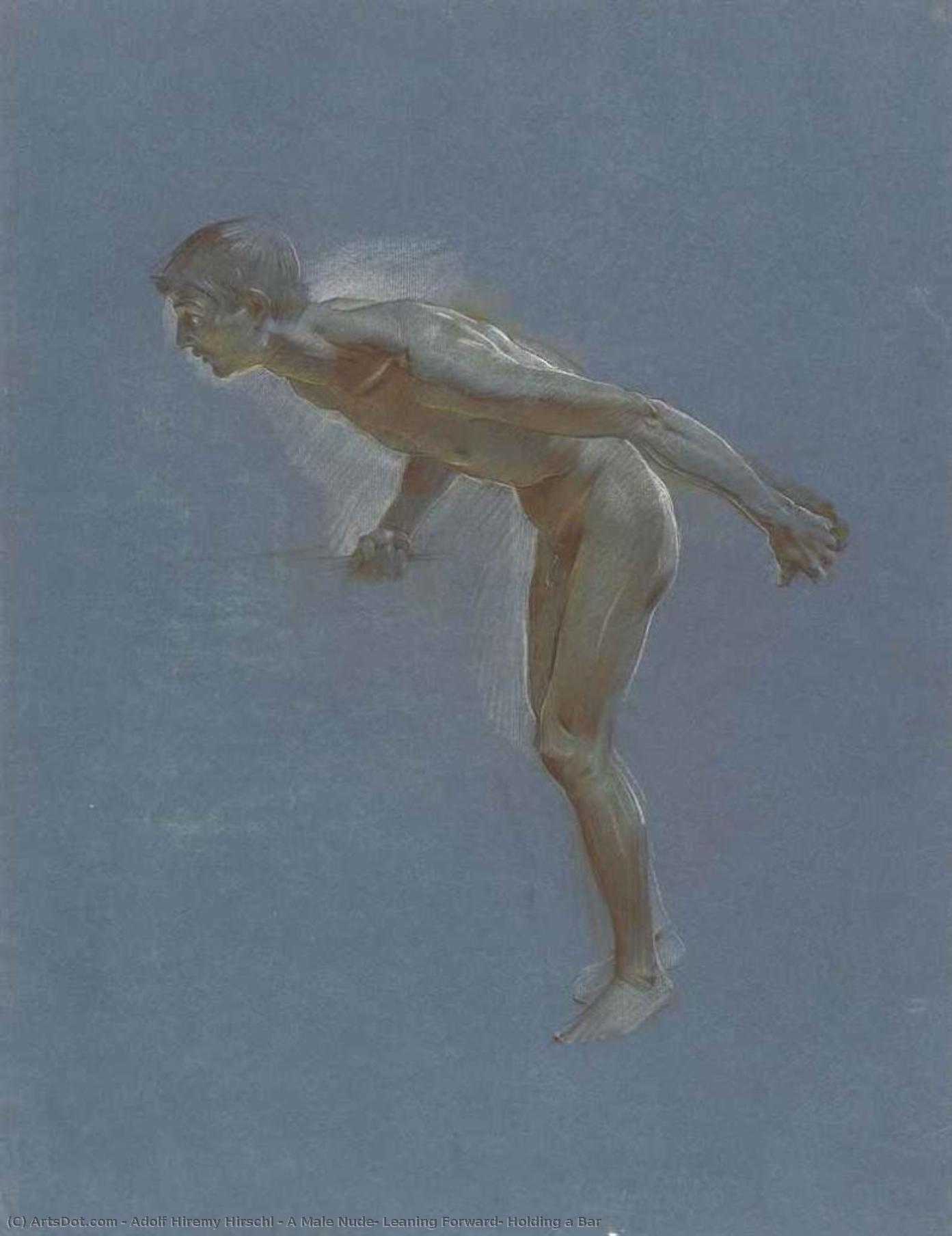
StatsA Male Nude, Leaning Forward, Holding a Bar
 Realism
 62.0 x 50.0 cm
 Ver más
Adquiera una imagen digital de alta resolución y optimizada, muy superior a la vista previa en línea.
Cada archivo es preparado meticulosamente por nuestros especialistas internos mediante el uso de herramientas avanzadas y un experto retoque manual. Nos aseguramos de que cada imagen posea una claridad excepcional, una precisión cromática impecable y un detalle minucioso.
El archivo final se entrega por correo electrónico en un plazo de 72 horas, optimizado para su uso inmediato en entornos profesionales, editoriales y de impresión. Esta es la misma calidad en la que confían los estudios de diseño, las editoriales y las galerías de primer nivel.
Imagen Digital
Descarga un archivo de alta resolución para exhibición personal, impresión y proyectos creativos. ( Switch to Print Comprar pintura hecha a mano)
Incluido en cada pedido de imágenes digitales
Entrega digital experta, garantizada.
Al elegir ArtsDot.com, no solo está adquiriendo una imagen; está recibiendo una obra de arte digital mejorada profesionalmente, elaborada con precisión y respaldada por una garantía de satisfacción. Esto es todo lo que incluye su pedido, automáticamente:

Entrega rápida por email
Recibirá su archivo de imagen digital en alta resolución por correo electrónico en un plazo de 72 horas tras realizar su pedido, listo para su uso inmediato.

Archivo digital optimizado por IA
Su obra de arte se optimiza profesionalmente mediante herramientas avanzadas de IA y edición manual, garantizando el máximo detalle, claridad y precisión cromática.

Reenvío gratuito de por vida
¿Has borrado o perdido tu archivo por error? No te preocupes: te lo volveremos a enviar en cualquier momento, sin coste adicional.

Sin gastos de importación, siempre
Disfrute de su obra de arte al instante sin aduanas, aranceles ni gastos de envío; las descargas digitales siempre están libres de impuestos.

Garantía de fidelidad de color
Garantizamos que su imagen digital refleje los colores originales con la mayor fidelidad posible, mediante el uso de herramientas profesionales y gestión del color.

Garantía de satisfacción de 100 días
Si no está satisfecho con su imagen digital, la revisaremos o le reembolsaremos el 100% en un plazo de 100 días, sin preguntas.

100% Garantía de devolución de dinero
¿No está satisfecho? Obtenga un reembolso completo dentro de los 100 días posteriores a la recepción de su archivo digital, sin preguntas.

Descuentos por pedidos grandes
Compra 3 imágenes, ahorra 10% - Compra 5, ahorra 15% - Compra 10+, ahorra 20%. Ideal para proyectos creativos, galerías y agencias.
Obras relacionadas
Biografía del artista
Adolf Hirémy-Hirschl: A Viennese Visionary Lost in Time
The story of Adolf Hirémy-Hirschl is one of profound brilliance momentarily eclipsed by the shifting tides of art history. Born on January 31, 1860, in Temesvár, Hungary, this Jewish artist would eventually become a central, if tragic, figure in the late nineteenth and early twentieth-century Viennese art world. His journey began with a move to Vienna, where he immersed himself in the rigorous academic traditions of the Akademie der bildenden Künste. Under the guidance of masters like Anton Hansekampf, Hirémy-Hirschl developed a technical precision that would become his hallmark, a skill first brought to international attention through his early success with works such as “Farewell: Scene from Hannibal Crossing the Alps.” This early triumph signaled the arrival of a painter capable of handling monumental scale and deep emotional resonance.
The trajectory of his soul and brush changed forever in 1882, when a transformative pilgrimage to Rome introduced him to the timeless grandeur of classical antiquity. This period was not merely an educational excursion but a spiritual awakening; the humanist ideals of ancient Rome seeped into his very marrow, inspiring a lifelong obsession with historical and mythological narratives. It was during this era that he produced some of his most ambitious, though often tragically lost, works. His “The Plague in Rome” (1884) stands as a testament to this period—a sprawling, visceral canvas that captured the harrowing reality of the Black Death with a psychological depth that moved even his most skeptical critics. Through his eyes, the ancient world was not a static relic but a living, breathing stage for human suffering and triumph.
The Struggle Between Tradition and Modernity
As the fin de siècle approached, Vienna became a crucible of artistic revolution. The rise of the Vienna Secession, led by the provocative Gustav Klimt, presented a formidable challenge to artists like Hirémy-Hirschl who remained anchored in academic realism and historical grandeur. While the Secessionists embraced decorative abstraction and new symbolic languages, Hirémy-Hirschl found himself navigating a complex middle ground. He sought to embrace the expressive, often haunting fervor of Symbolism without abandoning the meticulous draughtsmanship and anatomical accuracy he had mastered. This tension between the old world and the new defined much of his later output, as he wrestled with how to represent the allegorical weight of human experience in an increasingly fragmented modern age.
His career was marked by significant accolades, including the prestigious Imperial Prize in 1891, yet the very success that brought him acclaim also contributed to his eventual obscurity. As stylistic preferences shifted toward the avant-garde, much of his work—particularly his large-scale history paintings—fell out of the public eye. In a move that reflected both personal and professional transitions, he eventually moved to Rome in 1904, becoming an eminent member of the expatriate art community. There, he continued to produce works of immense scale, such as the monumental polyptych “Sic Transit…” (1912), which explored the fall of the Roman Empire and the rise of Christianity with a breathtaking, epic scope.
A Legacy Reclaimed from the Shadows
The true depth of Hirémy-Hirschl’s contribution to art remained hidden for decades following his death in Rome in 1933. Because many of his heirs retained possession of his studio and smaller works until the early 1980s, a significant portion of his oeuvre was effectively lost to history. However, the rediscovery of his drawings, watercolors, and oil sketches has allowed modern scholars to appreciate the full breadth of his talent. Beyond his famous historical canvases, he was a master of light and shadow in landscapes and a gifted draughtsman capable of rendering classical drapery with almost tactile realism.
Today, we look back at Adolf Hirémy-Hirschl not merely as a relic of the academic tradition, but as a vital bridge between the classical past and the symbolic future. His work serves as a poignant reminder of the power of historical narrative and the enduring impact of the Roman spirit on the European imagination. To study his art is to witness:
- The mastery of academic realism applied to the most dramatic human tragedies.
- A profound connection to antiquity that breathed life into mythological subjects.
- The technical brilliance of a painter who could navigate both the monumental and the intimate.
- A resilient artistic spirit that sought meaning in the intersection of history, myth, and symbolism.
Breves datos
- Artistic Movement Or Style: Symbolist Art
- Artists Or Movements Influenced By This Artist: ['Romantic Art']
- Artists Who Influenced This Artist:
- Gustav Klimt
- Vienna Secessionists
- Date Of Death: 1933
- Full Name: Adolf Hirémy-Hirschl
- Nationality: Hungarian
- Notable Artworks:
- Souls on the Banks of the Acheron
- Hermes Psychopomps
- A Standing Draped Figure
- Place Of Birth: Temesvár, Hungary