

 Ver en contexto
 Enviar
 Compartir
 Detalles

 Descargar
 Similares
 Radiografía
 Presentación de diapositivas
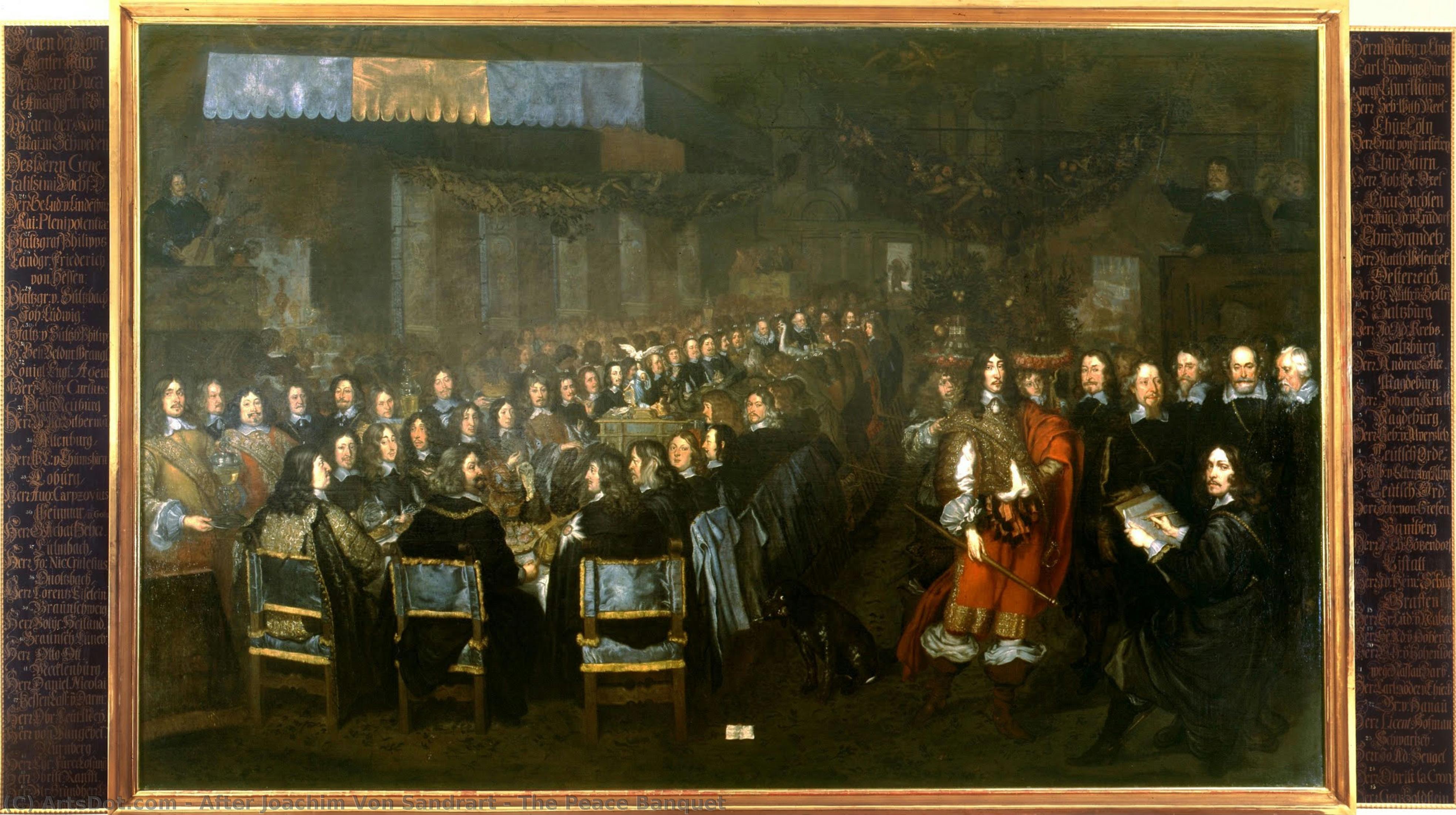
The Peace Banquet


 Ver más
Adquiera una imagen digital de alta resolución y optimizada, muy superior a la vista previa en línea.
Cada archivo es preparado meticulosamente por nuestros especialistas internos mediante el uso de herramientas avanzadas y un experto retoque manual. Nos aseguramos de que cada imagen posea una claridad excepcional, una precisión cromática impecable y un detalle minucioso.
El archivo final se entrega por correo electrónico en un plazo de 72 horas, optimizado para su uso inmediato en entornos profesionales, editoriales y de impresión. Esta es la misma calidad en la que confían los estudios de diseño, las editoriales y las galerías de primer nivel.
Imagen Digital
Descarga un archivo de alta resolución para exhibición personal, impresión y proyectos creativos. ( Comprar impresión Comprar pintura hecha a mano)
Incluido en cada pedido de imágenes digitales
Entrega digital experta, garantizada.
Al elegir ArtsDot.com, no solo está adquiriendo una imagen; está recibiendo una obra de arte digital mejorada profesionalmente, elaborada con precisión y respaldada por una garantía de satisfacción. Esto es todo lo que incluye su pedido, automáticamente:

Entrega rápida por email
Recibirá su archivo de imagen digital en alta resolución por correo electrónico en un plazo de 72 horas tras realizar su pedido, listo para su uso inmediato.

Archivo digital optimizado por IA
Su obra de arte se optimiza profesionalmente mediante herramientas avanzadas de IA y edición manual, garantizando el máximo detalle, claridad y precisión cromática.

Reenvío gratuito de por vida
¿Has borrado o perdido tu archivo por error? No te preocupes: te lo volveremos a enviar en cualquier momento, sin coste adicional.

Sin gastos de importación, siempre
Disfrute de su obra de arte al instante sin aduanas, aranceles ni gastos de envío; las descargas digitales siempre están libres de impuestos.

Garantía de fidelidad de color
Garantizamos que su imagen digital refleje los colores originales con la mayor fidelidad posible, mediante el uso de herramientas profesionales y gestión del color.

Garantía de satisfacción de 60 días
Si no está satisfecho con su imagen digital, la revisaremos o le reembolsaremos el 100% en un plazo de 60 días, sin preguntas.

100% Garantía de devolución de dinero
¿No está satisfecho? Obtenga un reembolso completo dentro de los 60 días posteriores a la recepción de su archivo digital, sin necesidad de explicaciones.

Descuentos por pedidos grandes
Compra 3 imágenes, ahorra 10% - Compra 5, ahorra 15% - Compra 10+, ahorra 20%. Ideal para proyectos creativos, galerías y agencias.
Descripción del coleccionable
A Grand Celebration Captured in Oil
Step into the vibrant, bustling atmosphere of the seventeenth century with The Peace Banquet, a magnificent oil on canvas that serves as both a historical document and a masterclass in Baroque storytelling. Created after the hand of the esteemed German painter and art historian Joachim von Sandrart, this piece transports the viewer to a moment of profound social and political significance. The scene unfolds around a sprawling, opulent dining table, where the air seems thick with the clinking of glassware, the murmur of diplomatic negotiations, and the warmth of shared triumph. It is not merely a painting of a meal; it is a window into an era defined by grand gestures and the delicate dance of international relations.
The composition is a marvel of organized chaos, characteristic of the Baroque period's love for movement and depth. As your eyes wander across the canvas, you encounter at least fourteen distinct figures, each contributing to the tapestry of life within the hall. Some guests are deeply immersed in scholarly debate, clutching books as if the weight of knowledge is as essential to the feast as the food itself, while others engage in the lighthearted social graces of the age. The artist’s clever inclusion of himself at the front right of the painting adds a layer of intimate meta-narrative, inviting us to feel as though we are standing just behind his shoulder, witnessing the creation of history in real-time.
Mastery of Light and Baroque Splendor
Technically, the work excels in its ability to direct the viewer's gaze through a sophisticated use of light and shadow. The illumination focuses on the central gathering, casting a glow upon the fine attire and the textures of the feast, while allowing the periphery of the grand hall to recede into a mysterious, atmospheric depth. This technique creates a sense of immense scale, making the room feel as vast as the historical events it commemorates. For the discerning collector or interior designer, this painting offers a profound sense of architectural weight and classical elegance.
The symbolic resonance of the piece is deeply tied to its historical context, specifically the commission related to the Swedish generalissimo Gustavus Adolphus. The banquet serves as a metaphor for stability and the restorative power of peace following conflict. Every element—from the dignified posture of the seated leaders to the lively interactions of the standing guests—reinforces the theme of unity and the celebration of a hard-won era of tranquility. It is a piece that commands attention, offering an emotional impact that oscillates between the solemnity of statecraft and the joyous exuberance of human connection.
An Elegant Addition to Sophisticated Interiors
For those looking to infuse their living spaces with character and historical gravity, a high-quality reproduction of The Peace Banquet provides an unparalleled focal point. Its rich palette and complex narrative make it an ideal centerpiece for a formal dining room, a stately library, or a sophisticated study. The painting does more than decorate a wall; it initiates a conversation, inviting guests to linger over its details and contemplate the enduring human desire for harmony and celebration.
Whether you are an art enthusiast drawn to the legacy of Joachim von Sandrart or a designer seeking to evoke the grandeur of the Dutch Golden Age, this artwork stands as a testament to the timeless beauty of the Baroque tradition. It brings with it a sense of prestige and a storied past, making any interior feel like a curated gallery of historical importance.
Obras relacionadas





Biografía del artista
The Wanderlust of a Baroque Polymath
The life of Joachim von Sandrart was defined by an insatiable curiosity and a restless spirit that mirrored the expansive, transformative energy of the Baroque era. Born in Frankfurt am Main in 1606, Sandrart’s early years were marked by a profound thirst for knowledge that transcended the boundaries of his upbringing. While his family roots traced back to Mons and Bergen, it was his personal journey—a literal and metaphorical pilgrimage through the heart of Europe—that would shape him into one of the most significant figures of the seventeenth century. Driven by an adolescent passion for the intricacies of engraving, he famously walked from Frankfurt to Prague to study under the master Aegidius Sadeler. This early determination set the stage for a life spent traversing the great artistic hubs of Europe, from the bustling streets of Amsterdam to the sun-drenched landscapes of Italy.
His development as an artist was a tapestry woven from the influences of the greatest masters of his age. After honing his skills in Prague, Sandrart moved to Utrecht in 1625, where he entered the studio of Gerrit van Honthorst. It was through this prestigious mentorship that Sandrart’s world expanded even further; he found himself in the presence of none other than Peter Paul Rubens during the master's visit to Honthorst in 1627. This encounter, occurring while Rubens was recruiting talent for his monumental Marie de' Medici cycle, likely left an indelible mark on Sandrart’s understanding of scale, drama, and the grand narrative style of the Flemish Baroque. His subsequent travels took him to London, where he worked alongside Honthorst, meticulously copying Holbein portraits for the Earl of Arundel—a task that deepened his technical precision and fueled his burgeoning interest in the lives and legacies of the artists he encountered.
A Journey Through the Italian Renaissance and Beyond
The true metamorphosis of Sandrart’s intellect occurred during his grand tour of Italy, a period of profound discovery that would provide the raw material for his greatest literary achievement. Setting sail from London to Venice in 1627, he entered a vibrant community of expatriate artists, finding kinship with figures such as Jan Lis and Nicolao Renier. His travels were not merely academic but deeply experiential; he moved through Bologna, meeting his cousin Michael Le Blond, and ventured into the heart of Florence and Rome. In the shadow of the masters, Sandrart absorbed the classical ideals and the dramatic chiaroscuro that defined the Italian tradition. His explorations even led him to Naples, where he captured studies of Mount Vesuvius, imbuing his work with a sense of the sublime and the elemental power of nature.
As an artist, Sandrart gained renown primarily as a portrait painter, a genre that allowed him to capture the psychological depth and social prestige of his subjects. His ability to render the textures of fabric, the warmth of skin, and the character of the sitter reflected the sophisticated techniques he had gathered from the Dutch and Italian schools. However, his legacy is not confined solely to the canvas. He possessed a rare ability to look backward through history even as he lived through a period of rapid artistic evolution.
The Architect of Art History
While his paintings remain significant, Sandrart’s most enduring contribution to the world of art is his monumental work as an art historian. His magnum opus, Teutsche Academie, published between 1675 and 1680, stands as a cornerstone of European art historiography. In this ambitious collection of biographies, Sandrart meticulously documented the lives and contributions of Dutch and German artists, providing a vital record of the Golden Age. This work was more than a mere directory; it was an attempt to codify the artistic identity of Northern Europe, elevating the status of local masters to the level of the great Italian legends.
The historical significance of Sandrart cannot be overstated. He acted as a bridge between the era of the great masters like Rubens and the subsequent generations of scholars and painters. Through his writings, he preserved the oral traditions, studio practices, and personal anecdotes that might otherwise have been lost to time. His life remains a testament to the interconnectedness of the Baroque world—a period where an artist could be a student in Prague, a collaborator in London, a traveler in Naples, and ultimately, the definitive voice of his nation's artistic heritage.
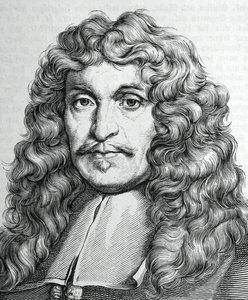
after joachim von sandrart
1606 - 1688

