

 Ver en contexto
 Enviar
 Compartir
 Detalles

 Descargar
 Similares
 Radiografía
 Presentación de diapositivas
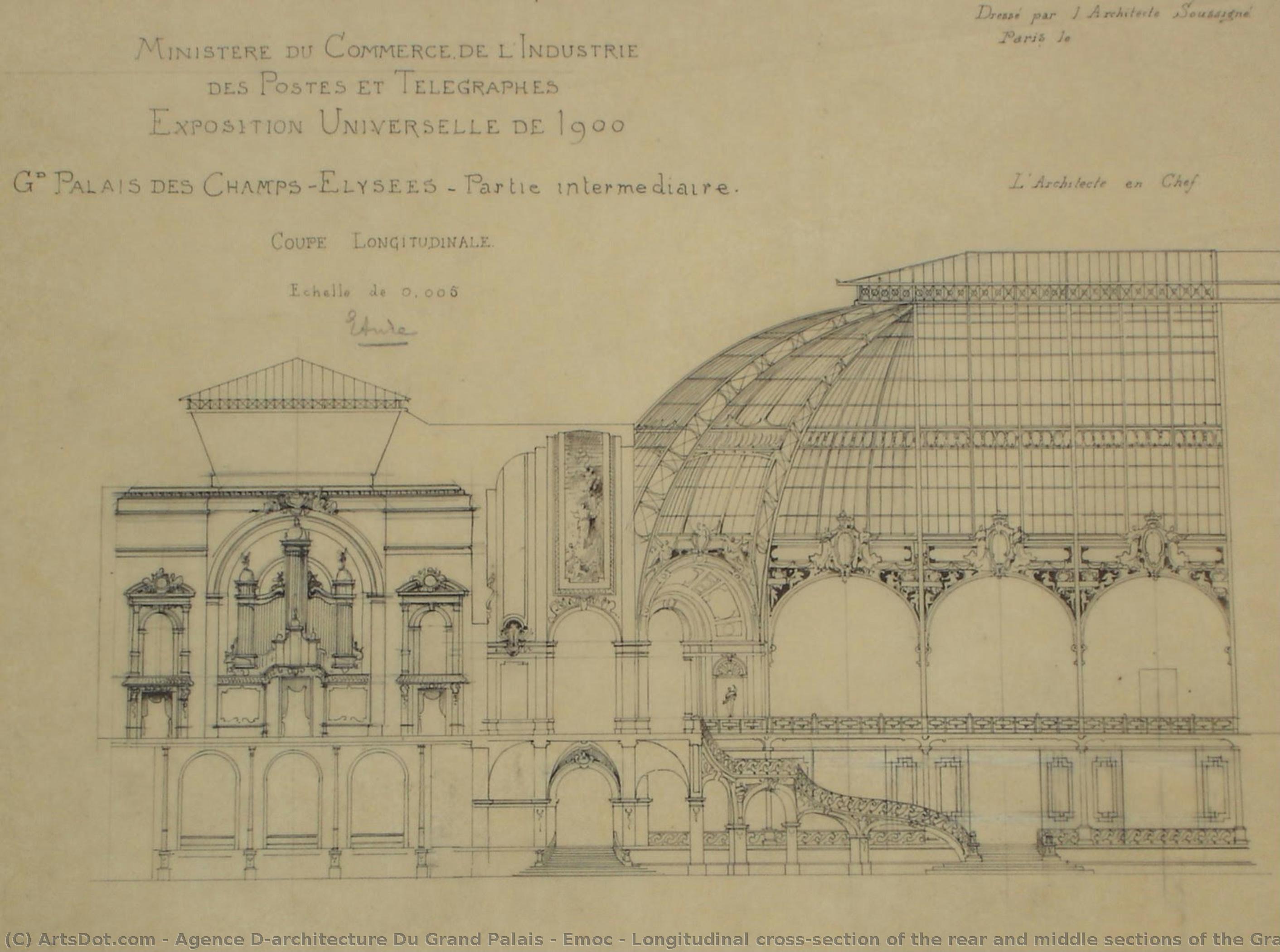
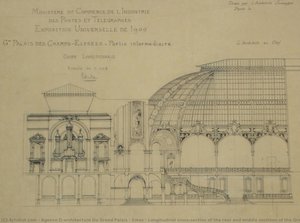
Longitudinal cross-section of the rear and middle sections of the Grand Palais, Paris.


 Ver más
Adquiera una imagen digital de alta resolución y optimizada, muy superior a la vista previa en línea.
Cada archivo es preparado meticulosamente por nuestros especialistas internos mediante el uso de herramientas avanzadas y un experto retoque manual. Nos aseguramos de que cada imagen posea una claridad excepcional, una precisión cromática impecable y un detalle minucioso.
El archivo final se entrega por correo electrónico en un plazo de 72 horas, optimizado para su uso inmediato en entornos profesionales, editoriales y de impresión. Esta es la misma calidad en la que confían los estudios de diseño, las editoriales y las galerías de primer nivel.
Imagen Digital
Descarga un archivo de alta resolución para exhibición personal, impresión y proyectos creativos. ( Comprar impresión Comprar pintura hecha a mano)
Incluido en cada pedido de imágenes digitales
Entrega digital experta, garantizada.
Al elegir ArtsDot.com, no solo está adquiriendo una imagen; está recibiendo una obra de arte digital mejorada profesionalmente, elaborada con precisión y respaldada por una garantía de satisfacción. Esto es todo lo que incluye su pedido, automáticamente:

Entrega rápida por email
Recibirá su archivo de imagen digital en alta resolución por correo electrónico en un plazo de 72 horas tras realizar su pedido, listo para su uso inmediato.

Archivo digital optimizado por IA
Su obra de arte se optimiza profesionalmente mediante herramientas avanzadas de IA y edición manual, garantizando el máximo detalle, claridad y precisión cromática.

Reenvío gratuito de por vida
¿Has borrado o perdido tu archivo por error? No te preocupes: te lo volveremos a enviar en cualquier momento, sin coste adicional.

Sin gastos de importación, siempre
Disfrute de su obra de arte al instante sin aduanas, aranceles ni gastos de envío; las descargas digitales siempre están libres de impuestos.

Garantía de fidelidad de color
Garantizamos que su imagen digital refleje los colores originales con la mayor fidelidad posible, mediante el uso de herramientas profesionales y gestión del color.

Garantía de satisfacción de 60 días
Si no está satisfecho con su imagen digital, la revisaremos o le reembolsaremos el 100% en un plazo de 60 días, sin preguntas.

100% Garantía de devolución de dinero
¿No está satisfecho? Obtenga un reembolso completo dentro de los 60 días posteriores a la recepción de su archivo digital, sin necesidad de explicaciones.

Descuentos por pedidos grandes
Compra 3 imágenes, ahorra 10% - Compra 5, ahorra 15% - Compra 10+, ahorra 20%. Ideal para proyectos creativos, galerías y agencias.
The Blueprint of an Era: A Glimpse into the Grand Palais
To gaze upon this longitudinal cross-section of the Grand Palais is to step back into the feverish, ambitious heart of 1897 Paris. This is not merely a technical drawing; it is a skeletal map of a dream being realized. At the dawn of the twentieth century, France was poised on the precipice of modernity, and this architectural rendering captures the very moment that structural engineering met high art. The drawing serves as a window into the meticulous planning required for the 1900 Exposition Universelle, revealing the intricate dance between iron, glass, and stone that would eventually define the Belle Époque skyline.
The composition is a masterclass in precision, presented as a series of vertical panels that dissect the building’s anatomy. Through the use of fine, black ink linework on paper, the artist—a collective of the Agence D'architecture Du Grand Palais—reveals the hidden majesty of the structure. One can trace the rhythmic progression of arches and the heavy, supporting ribs of the roof, each line weight carefully chosen to suggest depth and structural integrity. There is a profound sense of order here; the linear perspective guides the eye through a labyrinth of walls and supports, creating a layered effect that transforms a flat document into a three-dimensional exploration of space.
The Artistry of Engineering and Technical Mastery
While the primary purpose of this work was informational and functional, its aesthetic value is undeniable for the discerning collector. The technique relies on the subtle interplay of hatching and varying line thicknesses to simulate light and shadow, suggesting a soft illumination descending from the great glass vaults above. The presence of handwritten French annotations adds an intimate, human element to the cold precision of the engineering, reminding us that behind every calculated measurement was a hand guided by vision and necessity.
For the interior designer or art enthusiast, this piece offers a sophisticated way to introduce historical gravity into a contemporary space. The monochromatic palette makes it an incredibly versatile choice for various decor styles, from the minimalist industrial loft to the classic, ornate study. It functions as a conversation piece that celebrates the beauty of logic and the elegance of structural design. Owning a reproduction of such a significant document is akin to possessing a fragment of Paris's architectural soul, bringing a sense of timelessness and intellectual depth to any room.
A Legacy Written in Ink
Beyond its technical brilliance, this drawing carries the emotional weight of an era defined by progress. It represents the collective spirit of the Agence D'architecture Du Grand Palais, a group of minds working in unison to create a monument that would stand as a testament to French industrial prowess. There is no overt symbolism here—no hidden allegories or mythological figures—yet the sheer scale and complexity of the drawing evoke a sense of awe. It captures the tension between the heavy permanence of masonry and the light, airy potential of the new age of iron.
In an age of digital fleetingness, there is something deeply grounding about this hand-drawn architectural study. It invites the viewer to slow down, to trace the paths of weight and support, and to appreciate the monumental effort required to shape the world around us. Whether displayed as a focal point in a gallery or as a subtle accent in a curated collection, this work remains an enduring tribute to the brilliance of human ingenuity and the architectural splendor of Paris.
Obras relacionadas
Biografía del artista
The Architects of a Monument: Agence D'architecture Du Grand Palais / Emoc
The story of the Grand Palais is, in many ways, the story of France at the turn of the 20th century—a nation eager to showcase its industrial prowess and artistic brilliance on the world stage. While often remembered as a stunning example of Belle Époque architecture, the building itself wasn’t born from the vision of a single architect but rather a collaborative effort embodied by Agence D'architecture Du Grand Palais / Emoc. This agency represents not just individuals, but a collective of skilled engineers and architects tasked with realizing an ambitious dream: to create a palace for the Universal Exhibition of 1900. Their work transcends mere construction; it’s a testament to innovation, precision, and a deep understanding of both aesthetic beauty and structural possibility.
A Collective Vision Takes Shape
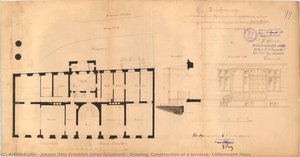
The origins of the agency lie in the need for specialized expertise to manage the complex undertaking that was the Grand Palais. The project demanded not only architectural design but also advanced engineering solutions to create a vast, light-filled space capable of hosting diverse exhibitions and events. While several figures contributed significantly—including Albert Thomas, whose studies for the rear section façade are particularly noteworthy—the agency functioned as a unified body responsible for translating the overarching vision into reality. The team skillfully blended ironwork with stone masonry, creating a structure that was both monumental in scale and remarkably elegant in its detailing.
Technical Mastery and Artistic Integration
The Grand Palais wasn’t conceived as a purely functional building; it was intended to be a celebration of art itself. The agency's drawings—such as the detailed longitudinal cross-section of the rear and middle sections—reveal a meticulous attention to detail, demonstrating a profound understanding of structural mechanics. The use of iron allowed for expansive interior spaces free from obstructive columns, creating an unprecedented sense of openness. This innovative approach was coupled with elaborate ornamentation, including sculptures, mosaics, and painted ceilings, transforming the building into a veritable art gallery. The agency successfully integrated technical mastery with artistic expression, resulting in a harmonious blend of form and function.
Legacy and Historical Significance
Since its inauguration in 1901, the Grand Palais has served as a dynamic cultural hub, hosting everything from art exhibitions and fashion shows to sporting events and political rallies. It has witnessed pivotal moments in French history and continues to be a symbol of national pride. The agency’s work laid the foundation for modern exhibition spaces, influencing architectural design worldwide. Their ability to create a building that was both structurally innovative and aesthetically captivating remains an enduring legacy. Today, the Grand Palais stands as a powerful reminder of France's artistic heritage and its commitment to pushing the boundaries of architectural possibility.
Continuing Influence
The work of Agence D’architecture Du Grand Palais / Emoc continues to inspire architects and engineers today. Their drawings, preserved in archives and collections around the world, offer valuable insights into the design process and the challenges of large-scale construction. The agency's commitment to integrating art and technology remains a relevant principle for contemporary architectural practice. By studying their achievements, we can gain a deeper appreciation for the power of collaboration, innovation, and the enduring beauty of well-crafted architecture.
Breves datos
- Artistic Movement Or Style: Technical illustration
- Date Of Death: Living
- Full Name: Agence D'architecture Du Grand Palais / Emoc
- Notable Artworks:
- Longitudinal cross-section...
- Study for the rear section façade...

