

 Ver en contexto
 Enviar
 Compartir
 Detalles

 Descargar
 Similares
 Radiografía
 Presentación de diapositivas
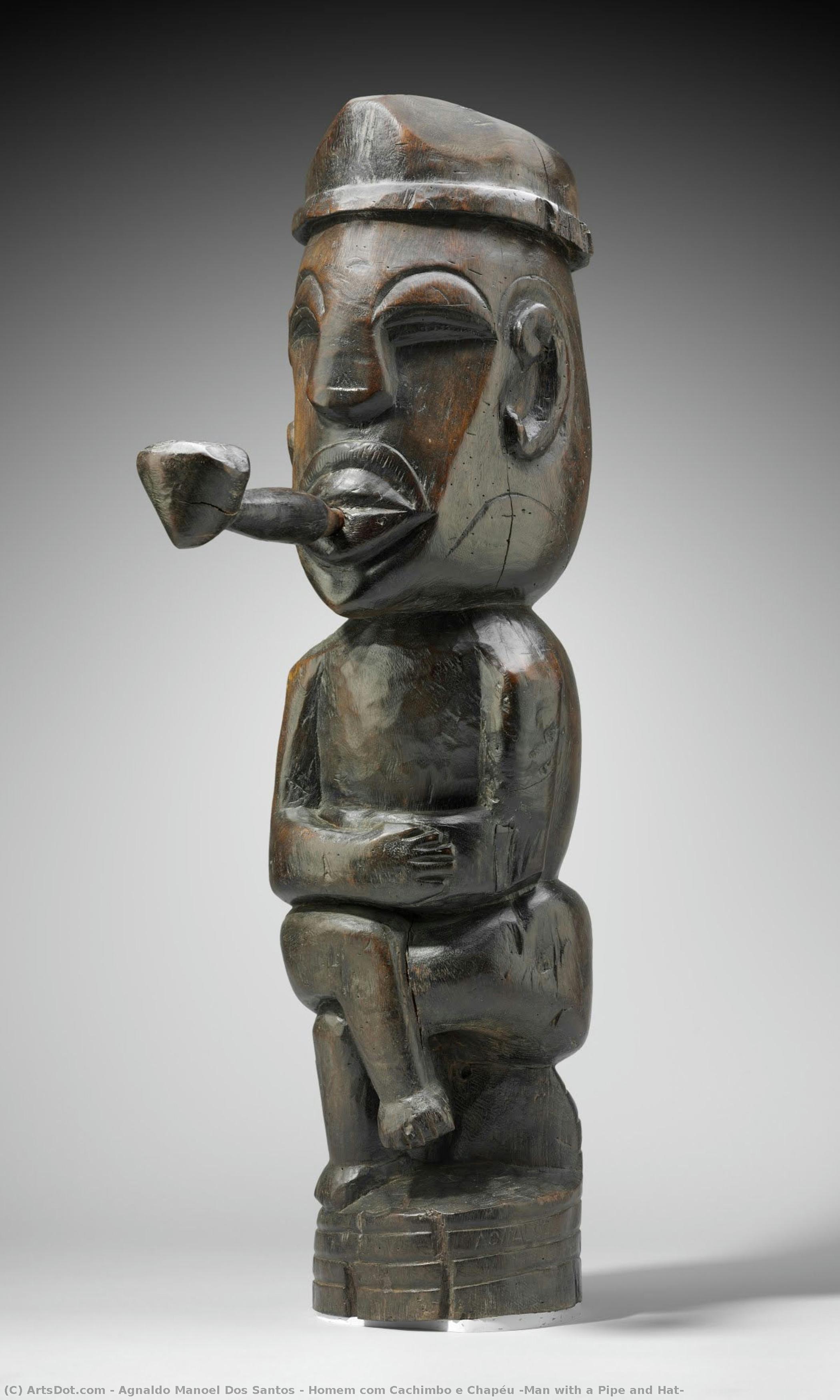
Homem com Cachimbo e Chapéu (Man with a Pipe and Hat)


 Ver más
Adquiera una imagen digital de alta resolución y optimizada, muy superior a la vista previa en línea.
Cada archivo es preparado meticulosamente por nuestros especialistas internos mediante el uso de herramientas avanzadas y un experto retoque manual. Nos aseguramos de que cada imagen posea una claridad excepcional, una precisión cromática impecable y un detalle minucioso.
El archivo final se entrega por correo electrónico en un plazo de 72 horas, optimizado para su uso inmediato en entornos profesionales, editoriales y de impresión. Esta es la misma calidad en la que confían los estudios de diseño, las editoriales y las galerías de primer nivel.
Imagen Digital
Descarga un archivo de alta resolución para exhibición personal, impresión y proyectos creativos. ( Comprar impresión Comprar pintura hecha a mano)
Incluido en cada pedido de imágenes digitales
Entrega digital experta, garantizada.
Al elegir ArtsDot.com, no solo está adquiriendo una imagen; está recibiendo una obra de arte digital mejorada profesionalmente, elaborada con precisión y respaldada por una garantía de satisfacción. Esto es todo lo que incluye su pedido, automáticamente:

Entrega rápida por email
Recibirá su archivo de imagen digital en alta resolución por correo electrónico en un plazo de 72 horas tras realizar su pedido, listo para su uso inmediato.

Archivo digital optimizado por IA
Su obra de arte se optimiza profesionalmente mediante herramientas avanzadas de IA y edición manual, garantizando el máximo detalle, claridad y precisión cromática.

Reenvío gratuito de por vida
¿Has borrado o perdido tu archivo por error? No te preocupes: te lo volveremos a enviar en cualquier momento, sin coste adicional.

Sin gastos de importación, siempre
Disfrute de su obra de arte al instante sin aduanas, aranceles ni gastos de envío; las descargas digitales siempre están libres de impuestos.

Garantía de fidelidad de color
Garantizamos que su imagen digital refleje los colores originales con la mayor fidelidad posible, mediante el uso de herramientas profesionales y gestión del color.

Garantía de satisfacción de 60 días
Si no está satisfecho con su imagen digital, la revisaremos o le reembolsaremos el 100% en un plazo de 60 días, sin preguntas.

100% Garantía de devolución de dinero
¿No está satisfecho? Obtenga un reembolso completo dentro de los 60 días posteriores a la recepción de su archivo digital, sin necesidad de explicaciones.

Descuentos por pedidos grandes
Compra 3 imágenes, ahorra 10% - Compra 5, ahorra 15% - Compra 10+, ahorra 20%. Ideal para proyectos creativos, galerías y agencias.
Obras relacionadas

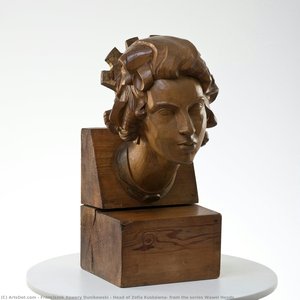
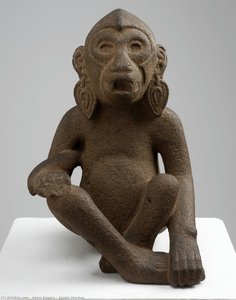
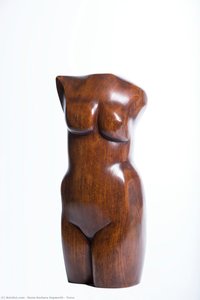
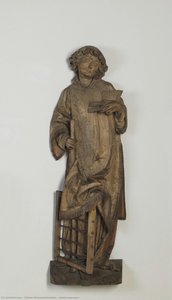
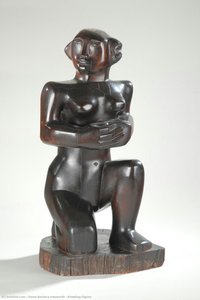
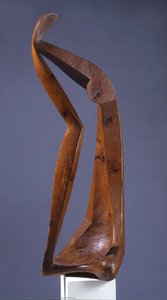
Biografía del artista
A Life Carved in Wood: The Story of Agnaldo Manoel dos Santos
Agnaldo Manoel dos Santos, born on the idyllic island of Itaparica, Bahia, Brazil, in 1926, emerged as a profoundly original voice within Brazilian sculpture. His life, though tragically cut short in 1962, left an indelible mark on the nation’s artistic landscape. He wasn't formally trained in the traditional sense; his education was rooted in the rich cultural soil of Bahia – a place where African heritage intertwined with Catholicism and everyday life to create a unique aesthetic sensibility. Initially working as a studio assistant for Mário Cravo Neto, he quickly demonstrated an innate talent for woodworking, moving beyond mere assistance to forge his own distinct path. This early exposure provided a crucial foundation, but it was Santos’s deep connection to the folklore, religious beliefs, and lived experiences of his community that truly fueled his artistic vision. His biography is often described as having gaps, yet within those silences lies the power of an artist deeply embedded in a world he didn't need academic validation to understand.The Language of Form: Influences and Development
Santos’s sculptures are not easily categorized. They resist simple labels like “primitive” or “folk art,” though they certainly draw upon these traditions. His work is best understood as a synthesis – a powerful distillation of Brazilian popular culture, African iconography, and a distinctly modern sensibility. The *carrancas*, the carved boat figureheads used in the São Francisco River region to ward off evil spirits, were a significant influence, evident in their bold forms and protective symbolism. Catholic imagery, particularly ex-votos – small devotional offerings left as thanks for prayers answered – also permeated his work, though he transformed these familiar motifs into something entirely new. He wasn’t simply replicating these objects; he was reinterpreting them through a contemporary lens, stripping away extraneous detail to reveal the essential emotional and spiritual core. This process of reduction, or subtractive carving, became a hallmark of his style. He began exhibiting in the mid-1950s, quickly gaining recognition for his unique approach. His first solo show in Rio de Janeiro in 1956 brought him wider attention, attracting critics, dealers and collectors who were captivated by the raw power and originality of his work.Themes of Faith, Identity, and the Brazilian Spirit
The themes explored in Santos’s sculptures are deeply rooted in the Brazilian experience. He often depicted figures from everyday life – men with pipes, women carrying burdens, children at play – elevating these ordinary subjects to a level of dignity and significance. His work is imbued with a sense of spirituality, but it's not necessarily tied to any specific religious dogma. Rather, it reflects a broader reverence for the human spirit and the power of belief. His sculptures are often described as embodying a uniquely “Brazilian” identity, reflecting the country’s complex history and cultural diversity. Clarival do Prado Valladares, a pioneering historian of Brazilian art, emphasized this aspect of Santos's work, highlighting his ability to synthesize different racial influences into a cohesive artistic vision. Santos wasn’t interested in creating idealized representations; he sought to capture the essence of his subjects – their strength, resilience, and humanity.Major Achievements and Recognition
Despite his premature death at the age of 36, Agnaldo Manoel dos Santos achieved significant recognition during his lifetime. He participated in the 4th São Paulo Biennial in 1957, winning the sculpture prize – a testament to the growing appreciation for his work within the art world. Posthumously, his sculptures were featured in the First World Festival of Black Arts in Dakar, where he again received acclaim and represented Brazil alongside other important artists like Heitor dos Prazeres and Rubem Valentim. His retrospective exhibition at the Pinacoteca de São Paulo in 1993, curated by Emanoel Araújo, helped to solidify his place as a major figure in Brazilian art history. The exhibition showcased the breadth of his work and highlighted his enduring influence on subsequent generations of artists.A Lasting Legacy: Santos’s Place in Art History
Agnaldo Manoel dos Santos's legacy extends far beyond his sculptures themselves. He challenged conventional notions of what constituted “art” in Brazil, paving the way for a more inclusive and diverse artistic landscape. His work continues to resonate with audiences today, offering a powerful glimpse into the soul of Brazil. He demonstrated that true artistry doesn’t require formal training or academic validation; it emerges from a deep connection to one's culture, community, and lived experience.- His sculptures are celebrated for their raw power, emotional depth, and unique aesthetic sensibility.
- Santos is considered a pivotal figure in the construction of a history of art of northeastern Brazil.
- He remains an inspiration to artists seeking to explore themes of identity, spirituality, and cultural heritage.
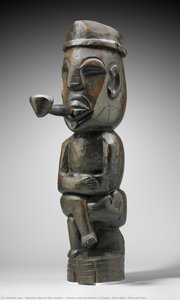
Agnaldo Manoel Dos Santos
1926 - 1962

