 Ver en contexto
 Enviar
 Compartir
 Detalles

 Descargar
 Similares
 Radiografía
 Presentación de diapositivas
 Estadísticas
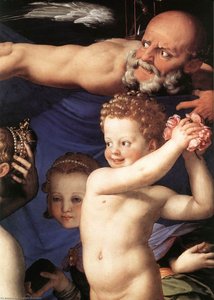
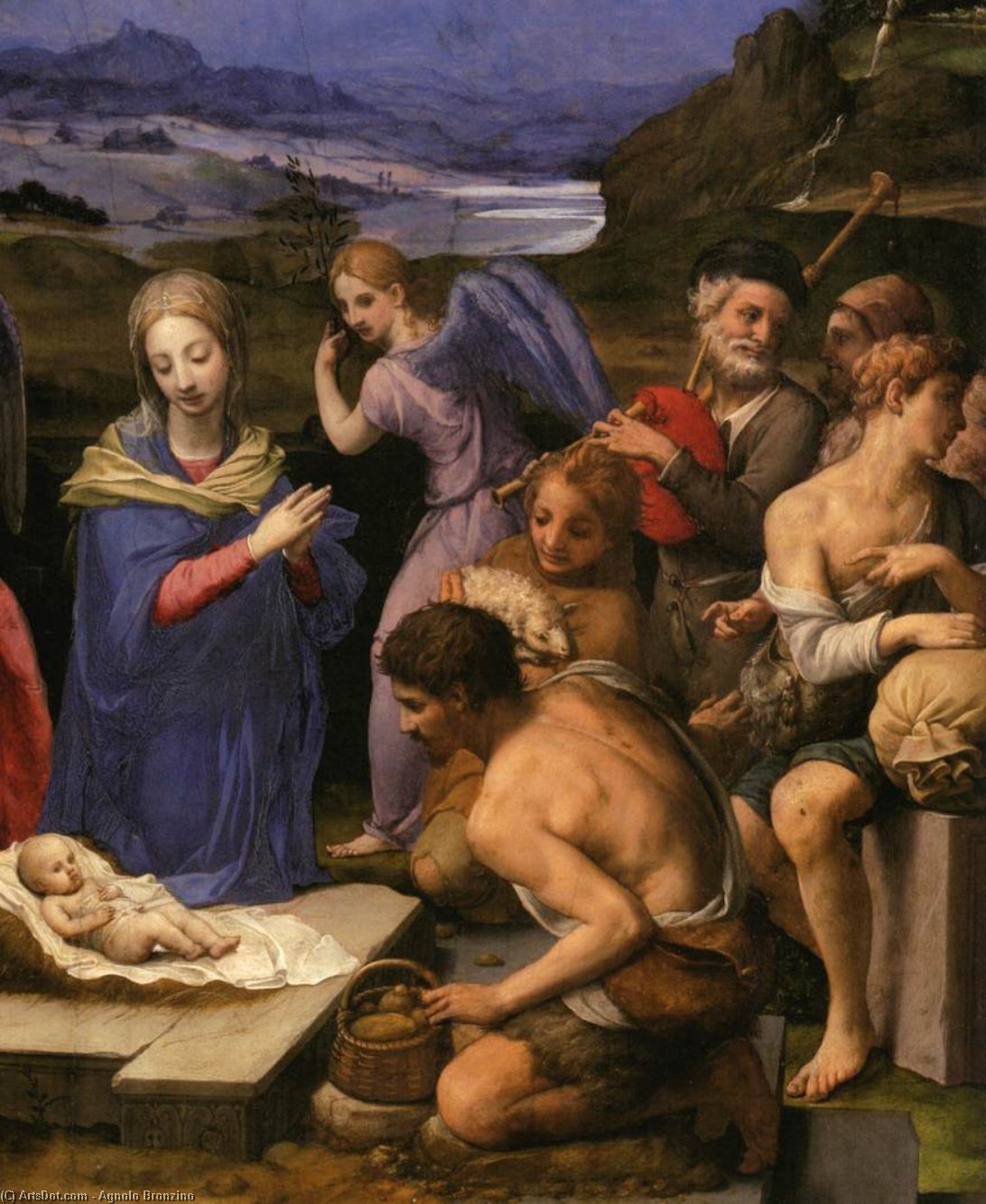
Adoration of the Shepherds (detail) (11)


 Ver más
Giclée / Impresión de arte
Impresiones giclée o en lienzo de calidad de museo con producción rápida y opciones de acabado flexibles. ( Comprar pintura hecha a mano Cambiar a imagen digital)




P118B $10

P118H $10

P118W $10

P438Z $10

P508JH $12

P508YH $12

P805H $10

P805Z $10

P919BZ $10

P919G $10

P919XJ $10

P959ZH $10

P968JZ $12

W106C $8

W218G $10

W218JH $8

W218Y $10

W307PJ $10

W316G $10

W316PJ $8

W316Y $10

W398PJ $8

W4111J $10

W500HY $15

W500JH $15

W692G $12

W849H $8

W940BG $15

W953PJ $8




Elija entre nuestros tamaños predefinidos que respetan las proporciones originales de la obra.

Puede introducir sus propias dimensiones para adaptarse a un marco o espacio específico. Si el tamaño seleccionado no coincide con las proporciones de la imagen original, recortaremos la obra de arte o extenderemos la imagen con un borde con efecto espejo o de color sólido. Se enviará una maqueta digital para su aprobación antes de que comience la producción.
Tenga en cuenta que la vista previa en pantalla no refleja el recorte o la extensión real. Solo la maqueta mostrará con precisión la composición final.
Aunque existen tamaños personalizados, recomendamos seleccionar una dimensión de la lista predefinida para preservar las proporciones originales.
Envío a todo el mundo () en 2 semanas en lugar de las 4/5 semanas estándar. (13 septiembre)

Envío exprés gratuito a todo el mundo

Lienzo de lino de alta calidad

Seguro de envío total

Garantía de reembolso de impuestos aduaneros

Garantía de fidelidad cromática exacta

Política de devolución de 100 días (solo por defectos)

Garantía de devolución del 100% del dinero

Descuento por cantidad
 La opción de vidrio solo está disponible en tamaños inferiores a 110 cm.

Adoration of the Shepherds (detail) (11)
Giclée / Impresión de arte
Dimensiones de la reproducción
-


Precio total final
$ 62
A Vision of Divine Serenity
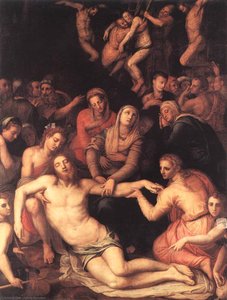
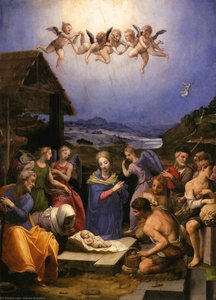
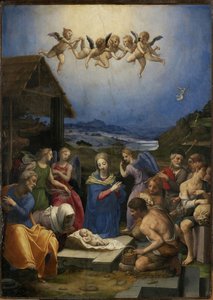
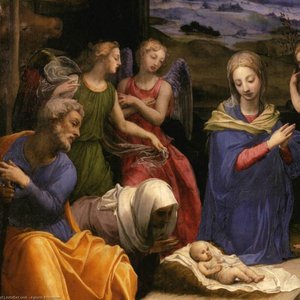
In the heart of the Florentine Renaissance, where the shadows of Mannerism began to dance with the structured grace of the High Renaissance, Agnolo Bronzino captured a moment of profound spiritual stillness. His Adoration of the Shepherds is not merely a depiction of a biblical event; it is a masterclass in controlled emotion and luminous beauty. The scene unfolds as a sacred tableau, centered upon the tender vulnerability of the infant Jesus nestled within a humble manger. Around this divine focal point, a gathering of figures—men and women alike—converge in an atmosphere of quiet reverence. The composition draws the eye inward, guiding the viewer through a landscape of devotion where every gaze and gesture serves to honor the sanctity of the Nativity.
To behold this work is to witness the transition from the expressive fervor of Bronz's teacher, Pontormo, to a more refined, aristocratic elegance. While the subject matter is deeply rooted in Christian iconography, the execution possesses a sophisticated coolness that is uniquely Bronzino. The presence of celestial messengers, or angels, flanking the manger adds a layer of ethereal grace, bridging the gap between the earthly shepherds and the divine realm. Even the small details, such as a cup placed near the bottom center—perhaps an offering of humble tribute—contribute to the narrative of a world paused in awe of the miraculous.
The Mastery of Mannerist Precision
Technically, this piece stands as a testament to Bronzino’s unparalleled ability to manipulate oil on poplar wood. He utilized a meticulous glazing method, applying layers upon layers of translucent pigment to achieve a depth that feels almost breathable. This technique allows for an extraordinary tonal subtlety, where the light seems to emanate from within the flesh of the figures and the heavy folds of their drapery. For the discerning collector or interior designer, this creates a visual richness that commands attention; the textures of fabric and skin are rendered with such astonishing accuracy that they invite close, prolonged inspection.
The brilliance of Bronzino’s technique lies in his ability to balance complexity with clarity. While the painting is rich with detail, the composition remains harmoniously proportioned, reflecting the Renaissance obsession with mathematical and aesthetic balance. The use of expensive pigments, such as the deep lapis lazuli that often characterized the skies of his era, lends a regal quality to the work. This interplay of light and shadow—the chiaroscuro of devotion—creates an illusionistic depth that transforms a flat surface into a window onto a sacred moment.
An Enduring Legacy for the Modern Collector
For those seeking to infuse a space with historical weight and emotional depth, a reproduction of this masterpiece offers more than mere decoration; it provides a focal point of contemplative peace. The Adoration of the Shepherds embodies a "reserved elegance" that transcends time. It does not shout for attention through chaotic movement but rather commands respect through its stillness and impeccable craftsmanship. Whether placed in a curated gallery, a sophisticated study, or a grand living space, the painting brings with it the storied legacy of the Medici court and the refined aesthetic of 16th-century Florence.
Investing in such a piece allows one to surround themselves with the intellectual and spiritual rigor of the Mannerist period. It is an invitation to slow down, to observe the subtle interplay of light on silk, and to find resonance in the timeless themes of faith, humility, and wonder. In an era of rapid change, Bronzino’s ability to freeze a moment of eternal grace offers a sanctuary of beauty for any discerning eye.
Obras relacionadas
Biografía del artista
Primeros años y formación
Agnolo di Cosimo, conocido como Bronzino, nació en Florencia, Italia, el 17 de noviembre de 1503. Era hijo de un carnicero y comenzó su formación artística con Raffaellino del Garbo, seguido por un aprendizaje con Pontormo, un destacado pintor manierista.Estilo artístico e influencias
El estilo de Bronzino se caracteriza por figuras elegantes, calmadas y reservadas, a menudo carentes de la agitación y emoción que se encuentran en las obras de su maestro, Pontormo. Sus retratos, particularmente los de la élite florentina, son reconocidos por su minuciosa atención al detalle y han influido en el retrato cortesano europeo durante siglos.Obras destacadas
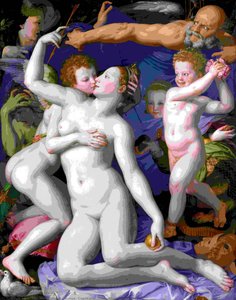
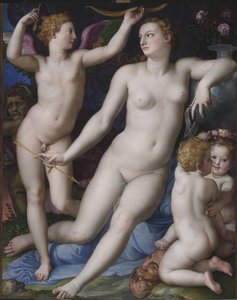
- Venus, Cupido, Falsedad y Tiempo (c. 1544-45), ahora en la Galería Nacional de Londres
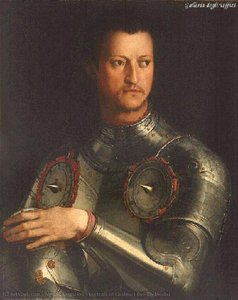
- Retratos de Cosimo I de' Medici y su esposa Eleonora di Toledo, que muestran la maestría de Bronzino en el retrato manierista
- Retratos idealizados de los poetas Dante (c. 1530, ahora en Washington, D.C.) y Petrarca
Legado y vida posterior
Bronzino se convirtió en el pintor oficial de la corte del duque de Toscana y permaneció en esta posición durante la mayor parte de su carrera. Fue miembro fundador de la Accademia delle Arti del Disegno en Florencia en 1563. Bronzino falleció el 23 de noviembre de 1572, en Florencia.- Vea más obras de Agnolo Bronzino en https://ArtsDot.com/@/agnolo_bronzino
- Explore el movimiento artístico barroco florentino y su influencia en el arte occidental en https://ArtsDot.com/@@/a@d3cpvx
- Descubra más sobre el movimiento artístico del Renacimiento italiano y su impacto en el arte occidental en /es/art/show/art-d3cpud-es/
Influencia y Evolución Artística
Bronzino, influenciado inicialmente por Pontormo y el manierismo temprano, desarrolló un estilo distintivo caracterizado por la frialdad emocional y una elegancia formal. Su obra evolucionó hacia una mayor claridad y precisión en los detalles, aunque mantuvo su enfoque en la representación idealizada de sus sujetos. Su habilidad para capturar la esencia del poder y la sofisticación cortesana lo convirtió en el retratista preferido de la familia Medici y otras figuras prominentes de la época. Su influencia se extendió por toda Europa, marcando una etapa importante en la historia del retrato cortesano.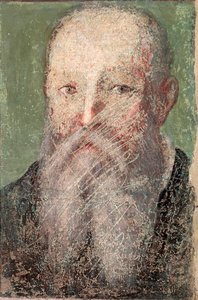
Agnolo Bronzino
1503 - 1572 , Italia
Datos clave
- Artistas Que Influyeron:
- Pontormo
- Raffaellino del Garbo
- Estilo Artístico: Manierismo
- Fecha De Fallecimiento: 23 de noviembre de 1572
- Fecha De Nacimiento: 17 de noviembre de 1503
- Influencia En Artistas: Escuela florentina, retrato cortesano
- Lugar De Nacimiento: Florencia, Italia
- Nacionalidad: Italiana
- Nombre Completo: Agnolo Bronzino
- Obras Notables:
- Venus, Cupido y el Tiempo
- Retratos de Cosimo I
- Retrato de Dante
- Retrato de Petrarca
Artículos relacionados

The Enduring Legacy of Fine Art Prints: Technique, History & Aesthetic Impact
Explore the rich history & techniques of fine art prints. Discover investment potential, assess authenticity, and learn how to preserve your collection with expert guidance. Trusted insights for discerning collectors.
The Enduring Legacy of Printmaking: Techniques, Themes & Artistic Innovation Across Centuries
Explore the rich history of printmaking with ArtsDot. Discover techniques from intaglio to lithography, learn about collecting valuable prints & find museum-quality reproductions. Expert insights for art enthusiasts and collectors.

Giclée Prints: Archival Quality & Aesthetic Nuances for the Discerning Collector
Explore the world of giclée prints with ArtsDot. Learn about archival quality, aesthetic nuances & investment potential. Expert guidance for discerning art collectors seeking museum-quality reproductions and lasting value.

Echoes of Time: Exploring the Enduring Appeal & Historical Context of Vintage Art Prints
Explore the captivating world of vintage art prints! Discover their history, collecting tips & enduring appeal. Expert insights on chromolithography and building a legacy collection with ArtsDot.
The Enduring Legacy of Woodblock Printmaking: Technique, History & Artistic Expression
Explore the rich history of woodblock printmaking – from ancient techniques to Ukiyo-e masterpieces. Discover expert insights on collecting, preserving & appreciating this enduring art form.