 Ver en contexto
 Enviar
 Compartir
 Detalles

 Descargar
 Similares
 Radiografía
 Presentación de diapositivas
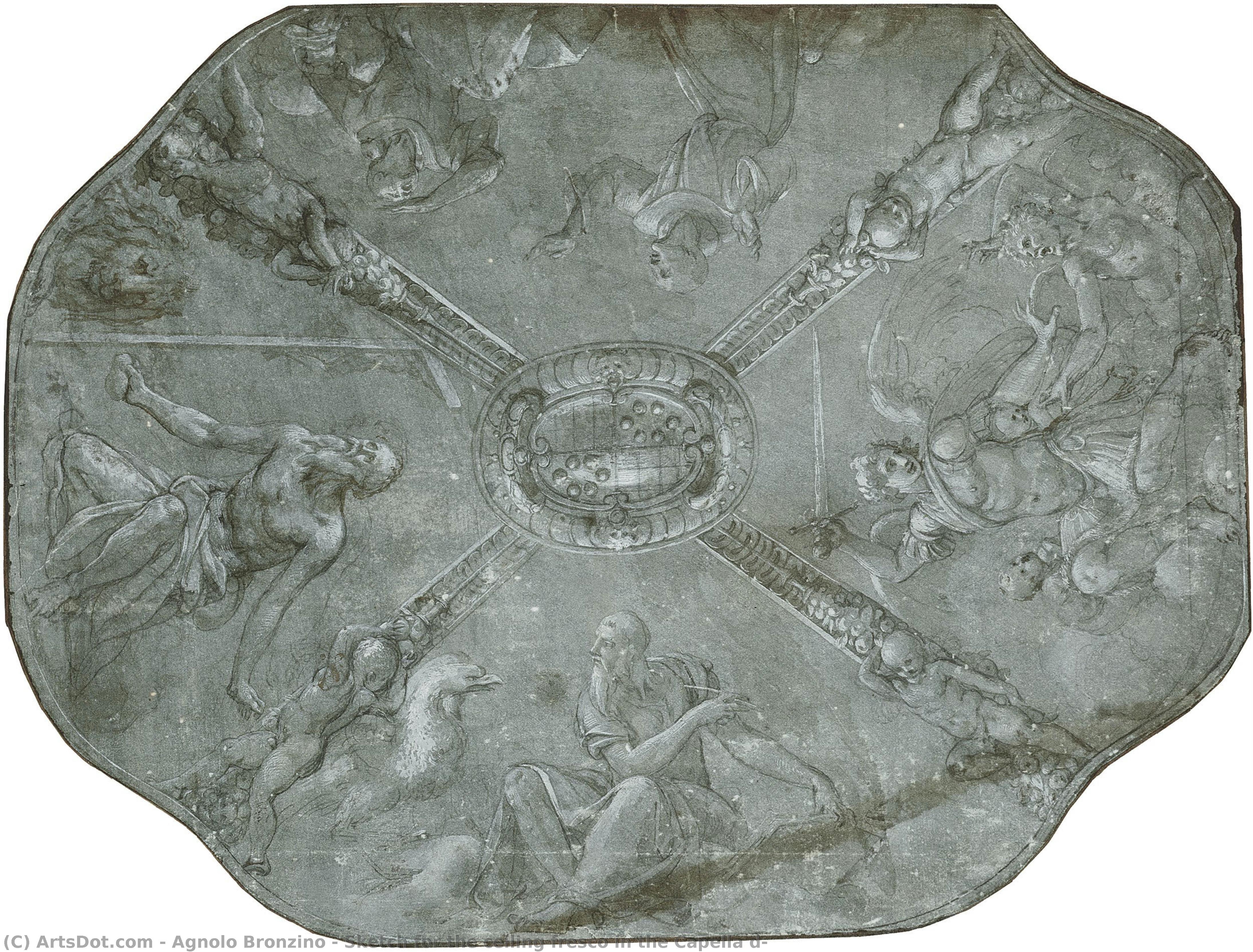
Sketch for the ceiling fresco in the Capella d
 Acrylic On Canvas
- WallArt
- Mannerist Painting
 1541
1541 26.0 x 34.0 cm
 Städel Museum
 Ver más
Reproducción al óleo hecha a mano
Óleo sobre lienzo pintado a mano en el tamaño y marco de su elección, realizado por encargo por nuestros artistas. ( Comprar impresión Comprar imagen)




P118B $10

P118H $10

P118W $10

P438Z $10

P508JH $12

P508YH $12

P805H $10

P805Z $10

P919BZ $10

P919G $10

P919XJ $10

P959ZH $10

P968JZ $12

W106C $8

W218G $10

W218JH $8

W218Y $10

W307PJ $10

W316G $10

W316PJ $8

W316Y $10

W398PJ $8

W4111J $10

W500HY $15

W500JH $15

W692G $12

W849H $8

W940BG $15

W953PJ $8




Elija entre nuestros tamaños predefinidos que respetan las proporciones originales de la obra.

Puede ingresar sus propias dimensiones para adaptarse a un marco o espacio específico. Si el tamaño seleccionado no coincide con las proporciones de la imagen original, recortaremos la obra o extenderemos la pintura con elementos adicionales pintados a mano. Se le enviará una maqueta digital para su aprobación antes de comenzar la producción.
Tenga en cuenta que la vista previa en pantalla no refleja el recorte o la extensión reales. Solo la maqueta mostrará con precisión la composición final.
Si bien existen tamaños personalizados, recomendamos seleccionar una dimensión de la lista predefinida para preservar las proporciones originales.
Tras realizar el pedido, el equipo de ArtsDot.com enviará un correo electrónico al cliente para solicitar instrucciones y proporcionarle una vista previa del boceto.
Envío a todo el mundo () en 3-4 semanas en lugar de las 5 semanas estándar. (30 agosto). Sin comprometer la calidad.

Envío exprés gratuito a todo el mundo

Lienzo de lino de alta calidad

Seguro de envío total

Garantía de reembolso de impuestos aduaneros

Garantía de fidelidad cromática exacta

Política de devolución de 60 días (solo por defectos)

Garantía de devolución del 100% del dinero

Descuento por cantidad
 La opción de vidrio solo está disponible en tamaños inferiores a 110 cm.

Sketch for the ceiling fresco in the Capella d
Técnica de reproducción
Dimensiones de la reproducción
-


Precio total final
$ 263
A Frozen Moment of Grace: Agnolo Bronzino’s Ceiling Fresco in the Capella Eleonora
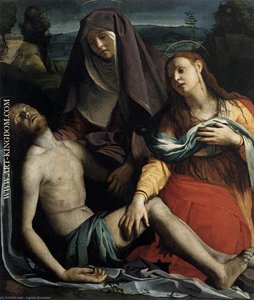
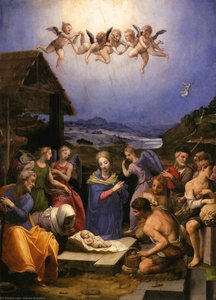
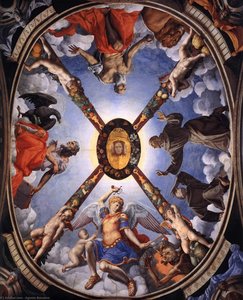
Step into a realm of exquisite stillness and profound contemplation within Agnolo Bronzino's ceiling fresco, adorning the private chapel of Eleonora di Toledo at Palazzo Vecchio in Florence. Completed around 1540-1541, this remarkable work transcends mere decoration; it’s a meticulously crafted tableau of allegorical figures, divine grace, and the subtle power dynamics of Renaissance courtly life. Bronzino, a master of Mannerism, doesn't offer dramatic action or overt emotion—instead, he presents a carefully orchestrated scene of serene composure, inviting viewers to lose themselves in its intricate details and symbolic language.
The fresco’s design is immediately striking: a vast, circular space dominated by a luminous golden medallion at the center. This radiant point acts as the focal point, drawing the eye through a constellation of figures arranged around it. The composition unfolds with a deliberate balance—on one side, we encounter Francis of Assisi receiving the stigmata, an image imbued with spiritual devotion; on the opposite wall, John the Evangelist gazes upwards, his hand outstretched in reverence. Between them, Jerome sits in quiet contemplation, a lion at his feet – a potent symbol of wisdom and divine guidance. The figures are rendered with Bronzino’s signature elegance: elongated forms, subtly distorted proportions, and an almost unnerving stillness that speaks to the formality and restraint characteristic of Mannerist art.
The Language of Symbolism
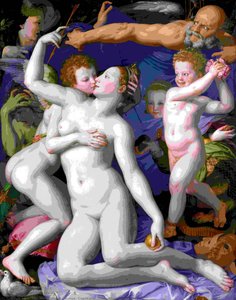
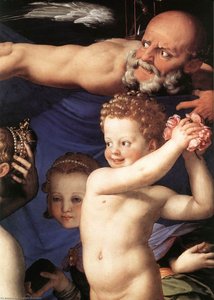
Bronzino's genius lies not just in his technical skill but also in his masterful deployment of symbolism. Each figure is laden with meaning, reflecting the theological and political concerns of the Medici court. The placement of these figures within the chapel itself speaks volumes about Eleonora’s role as a powerful consort—a woman who wielded considerable influence behind the scenes. The inclusion of allegorical elements – such as Folly and Time, often depicted in playful interaction with Venus – suggests a commentary on the fleeting nature of earthly pleasures and the importance of spiritual virtue. The eagle accompanying John the Evangelist is a direct reference to his role as the messenger of God’s word, reinforcing the fresco's sacred purpose.
The use of color is equally deliberate. The dominant hue—a deep, saturated blue derived from lapis lazuli—creates an atmosphere of otherworldly splendor. This intense blue contrasts dramatically with the gold of the central medallion, further emphasizing its importance as a symbol of divine light and grace. The careful layering of pigments and the meticulous attention to detail demonstrate Bronzino’s unparalleled mastery of technique.
Technique and Artistic Innovation
Bronzino's approach to fresco painting was revolutionary for his time. He employed a highly polished, almost glazed surface finish—a technique known as *buon fresco*—that created an illusion of depth and luminosity. This meticulous layering of paint allowed him to achieve the smooth, reflective surfaces that are so characteristic of his portraits and ceiling frescoes. His use of light and shadow is particularly noteworthy; he masterfully manipulates these elements to create a sense of three-dimensionality and to draw attention to key figures within the composition.
The fresco’s scale—spanning 14 x 14 feet—further enhances its impact, enveloping viewers in a world of serene beauty. It's a testament to Bronzino’s ability to transform a relatively small space into an immersive experience, inviting contemplation and reflection.
A Legacy of Elegance
Bronzino’s ceiling fresco in the Capella Eleonora stands as a pinnacle of Renaissance Mannerism—a captivating blend of technical virtuosity, symbolic richness, and emotional restraint. It offers a glimpse into the world of Florence's elite, revealing their aspirations, beliefs, and artistic sensibilities. Today, reproductions of this extraordinary artwork continue to inspire admiration for its timeless beauty and profound depth. Its quiet grandeur serves as a reminder of the power of art to transcend time and connect us with the enduring values of human experience.
Obras relacionadas
Biografía del artista
Primeros años y formación
Agnolo di Cosimo, conocido como Bronzino, nació en Florencia, Italia, el 17 de noviembre de 1503. Era hijo de un carnicero y comenzó su formación artística con Raffaellino del Garbo, seguido por un aprendizaje con Pontormo, un destacado pintor manierista.Estilo artístico e influencias
El estilo de Bronzino se caracteriza por figuras elegantes, calmadas y reservadas, a menudo carentes de la agitación y emoción que se encuentran en las obras de su maestro, Pontormo. Sus retratos, particularmente los de la élite florentina, son reconocidos por su minuciosa atención al detalle y han influido en el retrato cortesano europeo durante siglos.Obras destacadas
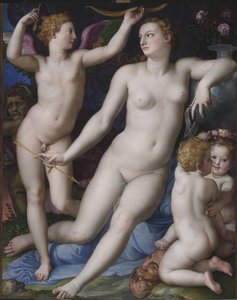
- Venus, Cupido, Falsedad y Tiempo (c. 1544-45), ahora en la Galería Nacional de Londres
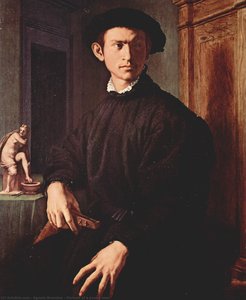
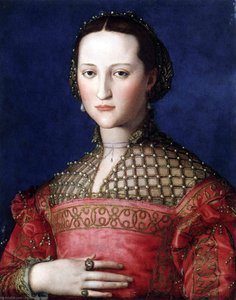
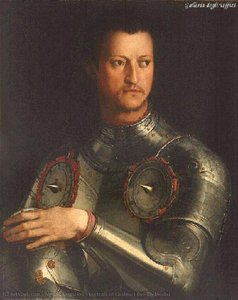
- Retratos de Cosimo I de' Medici y su esposa Eleonora di Toledo, que muestran la maestría de Bronzino en el retrato manierista
- Retratos idealizados de los poetas Dante (c. 1530, ahora en Washington, D.C.) y Petrarca
Legado y vida posterior
Bronzino se convirtió en el pintor oficial de la corte del duque de Toscana y permaneció en esta posición durante la mayor parte de su carrera. Fue miembro fundador de la Accademia delle Arti del Disegno en Florencia en 1563. Bronzino falleció el 23 de noviembre de 1572, en Florencia.- Vea más obras de Agnolo Bronzino en https://ArtsDot.com/@/agnolo_bronzino
- Explore el movimiento artístico barroco florentino y su influencia en el arte occidental en https://ArtsDot.com/@@/a@d3cpvx
- Descubra más sobre el movimiento artístico del Renacimiento italiano y su impacto en el arte occidental en /es/art/show/art-d3cpud-es/
Influencia y Evolución Artística
Bronzino, influenciado inicialmente por Pontormo y el manierismo temprano, desarrolló un estilo distintivo caracterizado por la frialdad emocional y una elegancia formal. Su obra evolucionó hacia una mayor claridad y precisión en los detalles, aunque mantuvo su enfoque en la representación idealizada de sus sujetos. Su habilidad para capturar la esencia del poder y la sofisticación cortesana lo convirtió en el retratista preferido de la familia Medici y otras figuras prominentes de la época. Su influencia se extendió por toda Europa, marcando una etapa importante en la historia del retrato cortesano.
Agnolo Bronzino
1503 - 1572 , Italia
Datos clave
- Artistas Que Influyeron:
- Pontormo
- Raffaellino del Garbo
- Estilo Artístico: Manierismo
- Fecha De Fallecimiento: 23 de noviembre de 1572
- Fecha De Nacimiento: 17 de noviembre de 1503
- Influencia En Artistas: Escuela florentina, retrato cortesano
- Lugar De Nacimiento: Florencia, Italia
- Nacionalidad: Italiana
- Nombre Completo: Agnolo Bronzino
- Obras Notables:
- Venus, Cupido y el Tiempo
- Retratos de Cosimo I
- Retrato de Dante
- Retrato de Petrarca
Artículos relacionados
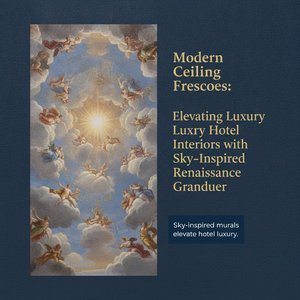
El Fresco Moderno en Techo: Un Cielo Interior para Diseñadores de Hotel
Descubre el arte del fresco moderno para hoteles. Expertos en diseño mural y restauración. te ofrece soluciones personalizadas, calidad superior y un legado artístico único.

Legado en las Paredes: Frescos Familiares que Trascienden el Tiempo
Descubre el arte del fresco muralístico para inmortalizar tu historia familiar. Expertos en frescos personalizados y técnicas ancestrales. Crea un legado visual único con .
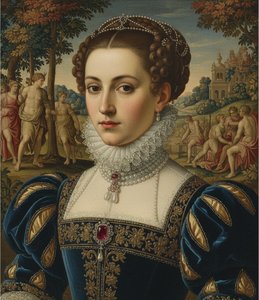
Agnolo Bronzino: Mastering Courtly Portraiture & the Enigmatic Gaze of Renaissance Florence
Explore the captivating world of Agnolo Bronzino, Renaissance master portraitist. Discover his elegant style, symbolic depth & lasting influence on art history. Expert insights for collectors.

The Enduring Legacy of Fresco Painting: Techniques, History & Contemporary Relevance
Explore the rich history & enduring artistry of fresco painting – from Giotto to Michelangelo! Discover techniques, conservation efforts, & modern applications. Learn how ArtsDot brings this timeless art form to your home.

The Enduring Legacy of Fresco: Technique, History & Artistic Expression Across Cultures
Explore the rich history & enduring legacy of fresco painting! Discover ancient techniques, Giotto's masterpieces, and modern applications. Expert insights for art lovers & professionals.