

 Ver en contexto
 Enviar
 Compartir
 Detalles

 Descargar
 Similares
 Radiografía
 Presentación de diapositivas
 Stats
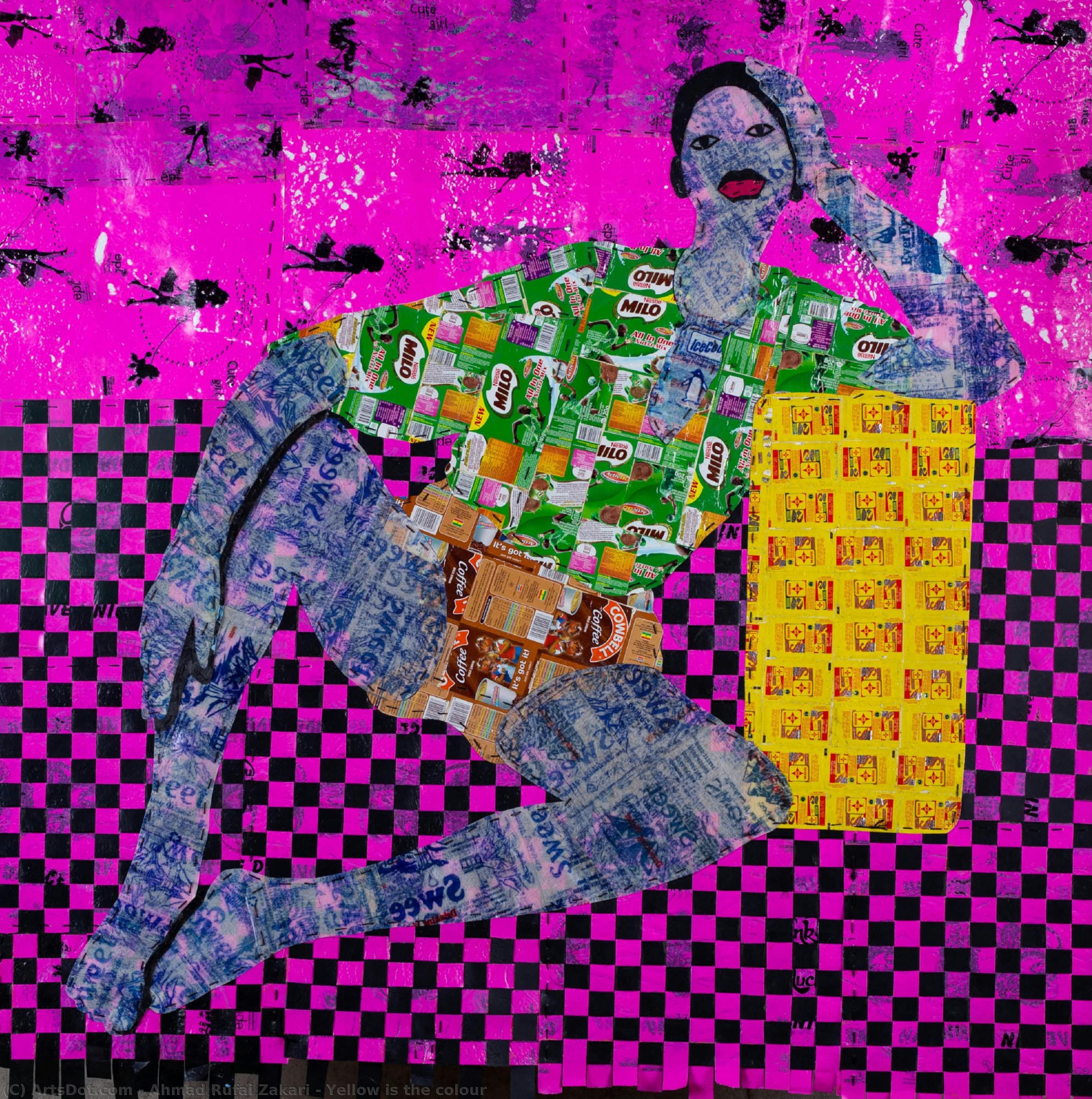
StatsYellow is the colour


 Ver más
Reproducción al óleo hecha a mano
Óleo sobre lienzo pintado a mano en el tamaño y marco de su elección, realizado por encargo por nuestros artistas. ( Switch to Print Switch to Digital Image)




P118B $10

P118H $10

P118W $10

P438Z $10

P508JH $12

P508YH $12

P805H $10

P805Z $10

P919BZ $10

P919G $10

P919XJ $10

P959ZH $10

P968JZ $12

W106C $8

W218G $10

W218JH $8

W218Y $10

W307PJ $10

W316G $10

W316PJ $8

W316Y $10

W398PJ $8

W4111J $10

W500HY $15

W500JH $15

W692G $12

W849H $8

W940BG $15

W953PJ $8




Elija entre nuestros tamaños predefinidos que respetan las proporciones originales de la obra.

Puede ingresar sus propias dimensiones para adaptarse a un marco o espacio específico. Si el tamaño seleccionado no coincide con las proporciones de la imagen original, recortaremos la obra o extenderemos la pintura con elementos adicionales pintados a mano. Se le enviará una maqueta digital para su aprobación antes de comenzar la producción.
Tenga en cuenta que la vista previa en pantalla no refleja el recorte o la extensión reales. Solo la maqueta mostrará con precisión la composición final.
Si bien existen tamaños personalizados, recomendamos seleccionar una dimensión de la lista predefinida para preservar las proporciones originales.
Tras realizar el pedido, el equipo de ArtsDot.com enviará un correo electrónico al cliente para solicitar instrucciones y proporcionarle una vista previa del boceto.
Envío a todo el mundo () en 3-4 semanas en lugar de las 5 semanas estándar. (8 septiembre). Sin comprometer la calidad.

Envío exprés gratuito a todo el mundo

Lienzo de lino de alta calidad

Seguro de envío total

Garantía de reembolso de impuestos aduaneros

Garantía de fidelidad cromática exacta

Política de devolución de 100 días (solo por defectos)

Garantía de devolución del 100% del dinero

Descuento por cantidad
 La opción de vidrio solo está disponible en tamaños inferiores a 110 cm.

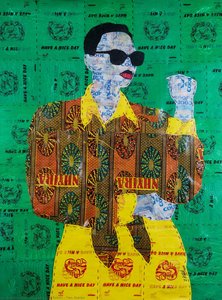
Yellow is the colour
Técnica de reproducción
Dimensiones de la reproducción
-


Precio total final
$ 263
Obras relacionadas

Biografía del artista
The Alchemy of Waste: The Visionary Art of Ahmad Rufai Zakari
In the vibrant landscape of contemporary Ghanaian art, few voices resonate with as much tactile urgency and social depth as Ahmad Rufai Zakari. Born in Ghana in 1990, Zakari has emerged not merely as a creator of images, but as an alchemist of the discarded. His practice is a profound engagement with the realities of modern existence, specifically the environmental and human costs of global consumerism. Growing up amidst the shifting tides of Ghanaian society, Zakari witnessed firsthand the pervasive impact of industrialization—the way single-use plastics, once convenient, become permanent scars upon the landscape. This observation became the seed for an artistic journey that seeks to transform the ephemeral debris of modern life into enduring monuments of human dignity.
Zakari’s medium is perhaps his most radical statement. Eschewing traditional oils or acrylics, he utilizes a sophisticated form of collage and assemblage, meticulously repurposing single-use plastics—bags, food packaging, water sachets, and bottles—to construct his figures. This technique is far more than an aesthetic choice; it is a deliberate act of environmental stewardship. By trimming these found objects into precise shapes and stitching them together with rope and needle, he creates a textured, multidimensional surface that mimics the depth of fine art painting while retaining the raw, physical reality of its components. In his hands, the very materials that threaten our ecosystems are reborn as canvases of beauty, forcing the viewer to confront their own relationship with consumption and the culture of disposability.
Reimagining Identity Through Plastic and Thread
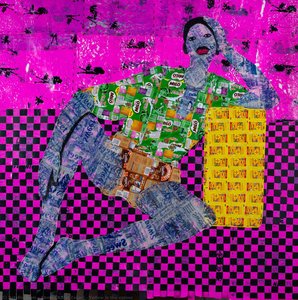
The subjects of Zakari’s work are often powerful, dynamic portraits of women, particularly Black women, who serve as vessels for themes of resilience, strength, and defiance. His compositions frequently feature figures in motion or poised with a commanding presence, embodying aspirations for liberation and empowerment. Through his use of vibrant, often clashing colors found within plastic wrappers, he creates a visual rhythm that feels both contemporary and deeply rooted in the aesthetic traditions of African textiles and folklore. These portraits are not mere representations; they are reimagined icons that challenge conventional perspectives on femininity and social status.
Several of his works stand as pillars of his creative achievement, each exploring different facets of the human condition:
- Janet: A mesmerizing masterpiece that functions as a complex, tactile tapestry. In this piece, Zakari explores themes of carelessness and transgression, using the textures of food packages to create a figure that is both fragile and indomitable.
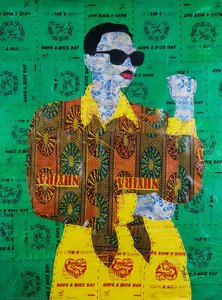
- Zakiya: A vibrant celebration of modernity where the boundaries between waste and wonder dissolve. Clad in a brilliant yellow shirt, the subject stands as a beacon of joy against a lush backdrop, illustrating how beauty can be reclaimed from the overlooked.
- Hawa One: A work that invites the viewer into a world where the discarded becomes divine, featuring a serene presence draped in luminous colors that radiate warmth and spiritual depth.
- Melanin I: An energetic exploration of movement and identity, where the rhythmic presence of a dancing figure captures the uninhibited spirit of life amidst the remnants of consumer culture.
A Legacy of Social Commentary and Artistic Evolution
The evolution of Zakari’s style reveals a deep connection to the history of collage, drawing subtle inspirations from Surrealist pioneers such as Kurt Schwitters and Max Ernst. However, he has moved beyond mere imitation to create a uniquely African narrative that addresses the specificities of labor exploitation and environmental degradation in contemporary Ghana. His work sits at the intersection of fine art and activism, where every stitch of thread and every fragment of plastic serves as a critique of the pervasive culture of waste.
As his practice continues to develop, Zakari’s historical significance lies in his ability to bridge the gap between the environmental crisis and the human spirit. He compels us to look closer at what we cast aside, suggesting that within the wreckage of modern consumerism, there exists the potential for profound rebirth. Through his innovative technique and unflinching social gaze, Ahmad Rufai Zakari ensures that the voices of the marginalized and the stories of our changing planet are not just heard, but seen in all their textured, brilliant glory.
ahmad rufai zakari
1990 - , Ghana
Datos clave
- Artistic Movement Or Style: Plastic Collage Art
- Full Name: Ahmad Rufai Zakari
- Nationality: Ghanaian
- Notable Artworks:
- Janet
- Yellow is the colour
- Place Of Birth: Ghana
Artículos relacionados
Theo van Doesburg: Pioneering De Stijl & the Evolution of Neo-Plasticism
Explore the revolutionary De Stijl movement & Neo-Plasticism with our expert guide. Discover Piet Mondrian, Theo van Doesburg, and the lasting impact of this influential art style. Learn about collecting & investing in De Stijl masterpieces.
The Magic of Collage: How to Layer Texture and Story into Your Home Decor
Elevate your interiors with the magic of collage. Discover expert tips on layering texture, 3D elements, and personal narratives through mixed media art to create a soulful, sophisticated home decor experience.
Pop Art 2.0: Recontextualizando la Apropiación y el Consumismo para una Generación Digital Nativa
Descubre cómo el Pop Art ha evolucionado en la era digital. Analizamos su influencia en la cultura visual actual y cómo te permite disfrutar de sus obras maestras.
Piet Mondrian: Deconstructing Reality – A Study of Neo-Plasticism & Universal Harmony
Explore the revolutionary art of Piet Mondrian and the principles of Neo-Plasticism. Discover De Stijl's influence, iconic compositions like 'Composition with Red, Yellow and Blue,' and Mondrian’s lasting legacy on modern design.
Cultivando la Conexión: Representaciones Estéticas Eco-Filosóficas de las Filosofías 'De la Granja a la Mesa' en el Arte Contemporáneo
Explora la conexión entre el arte contemporáneo y la filosofía 'de la granja a la mesa'. Análisis experto de obras que promueven la sostenibilidad, la conciencia ecológica y un futuro artístico responsable. Descubre artistas innovadores y reflexiones profundas.