 Ver en contexto
 Enviar
 Compartir
 Detalles

 Descargar
 Similares
 Radiografía
 Presentación de diapositivas
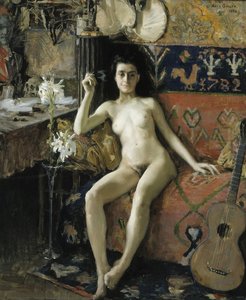
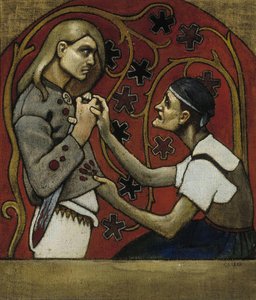
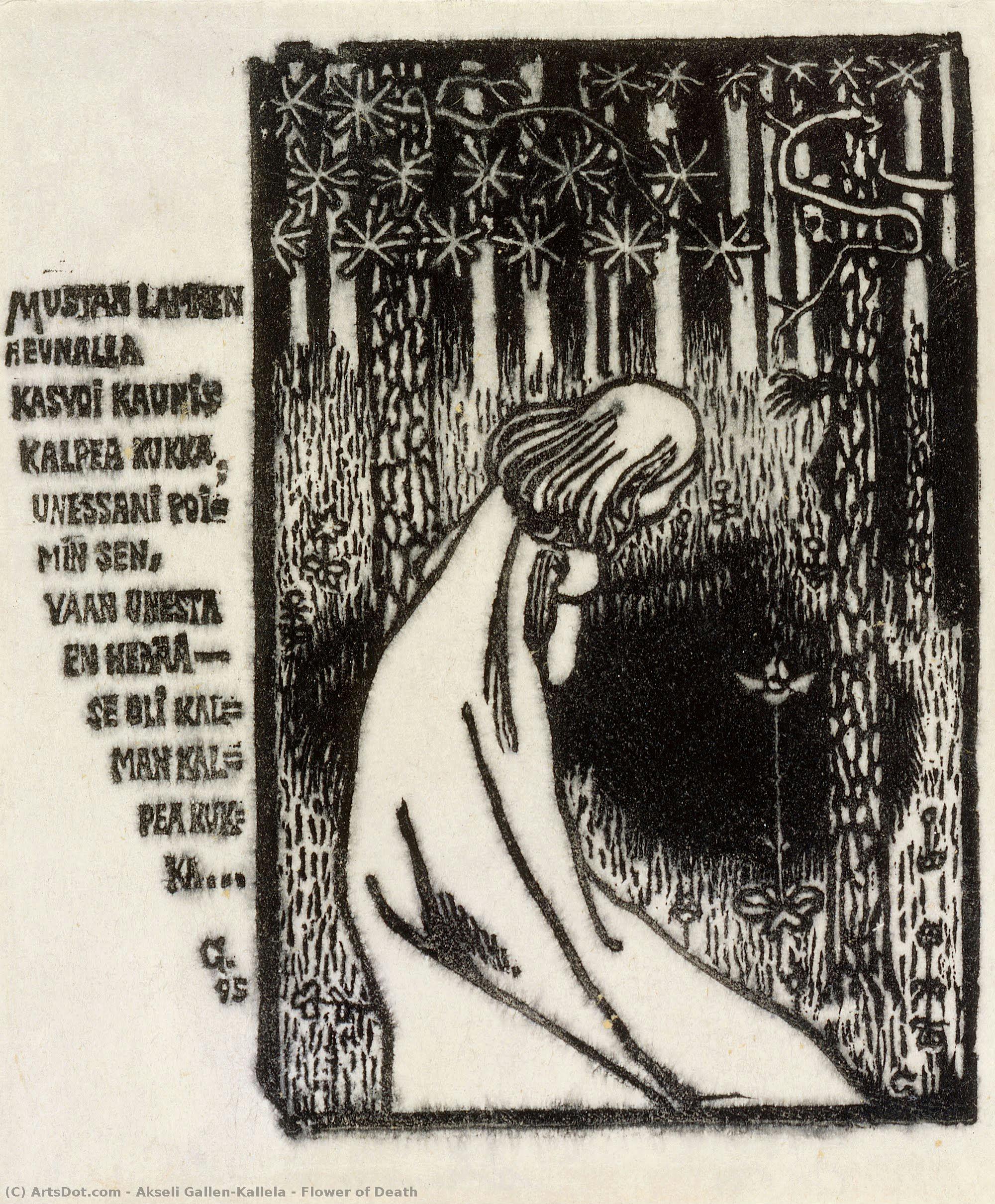
Flower of Death
 Acrylic On Canvas
- WallArt
- National Romanticism
 1895
1895 14.0 x 16.0 cm
 Museo Ateneo de Arte
 Ver más
Reproducción al óleo hecha a mano
Óleo sobre lienzo pintado a mano en el tamaño y marco de su elección, realizado por encargo por nuestros artistas. ( Comprar impresión Comprar imagen)




P118B $10

P118H $10

P118W $10

P438Z $10

P508JH $12

P508YH $12

P805H $10

P805Z $10

P919BZ $10

P919G $10

P919XJ $10

P959ZH $10

P968JZ $12

W106C $8

W218G $10

W218JH $8

W218Y $10

W307PJ $10

W316G $10

W316PJ $8

W316Y $10

W398PJ $8

W4111J $10

W500HY $15

W500JH $15

W692G $12

W849H $8

W940BG $15

W953PJ $8




Elija entre nuestros tamaños predefinidos que respetan las proporciones originales de la obra.

Puede ingresar sus propias dimensiones para adaptarse a un marco o espacio específico. Si el tamaño seleccionado no coincide con las proporciones de la imagen original, recortaremos la obra o extenderemos la pintura con elementos adicionales pintados a mano. Se le enviará una maqueta digital para su aprobación antes de comenzar la producción.
Tenga en cuenta que la vista previa en pantalla no refleja el recorte o la extensión reales. Solo la maqueta mostrará con precisión la composición final.
Si bien existen tamaños personalizados, recomendamos seleccionar una dimensión de la lista predefinida para preservar las proporciones originales.
Tras realizar el pedido, el equipo de ArtsDot.com enviará un correo electrónico al cliente para solicitar instrucciones y proporcionarle una vista previa del boceto.
Envío a todo el mundo () en 3-4 semanas en lugar de las 5 semanas estándar. (30 agosto). Sin comprometer la calidad.

Envío exprés gratuito a todo el mundo

Lienzo de lino de alta calidad

Seguro de envío total

Garantía de reembolso de impuestos aduaneros

Garantía de fidelidad cromática exacta

Política de devolución de 60 días (solo por defectos)

Garantía de devolución del 100% del dinero

Descuento por cantidad
 La opción de vidrio solo está disponible en tamaños inferiores a 110 cm.

Flower of Death
Técnica de reproducción
Dimensiones de la reproducción
-


Precio total final
$ 263
A Portrait of Grief – The Genesis of ‘Flower of Death’
Akseli Gallen-Kallela's “Flower of Death” (1895) isn’t merely a painting; it’s a visceral embodiment of loss, meticulously crafted from the somber depths of personal tragedy. Born Axel Waldemar Gallén in Pori, Finland, Gallen-Kallela was already a rising star in the Finnish art scene when his young daughter, Marjatta, succumbed to diphtheria in March 1895. This devastating event served as the catalyst for what would become one of his most profoundly moving and enduring works – a poignant memorial rendered not in vibrant color, but in the restrained beauty of woodcut on pine. The genesis of this piece lies within a brief sojourn to Berlin, where Gallen-Kallela sought to refine his printmaking skills amidst the burgeoning popularity of Japanese woodblock prints and the evocative aesthetics of Art Nouveau. The trip was tragically cut short by Marjatta’s death, forcing him to confront grief directly through artistic expression.
Symbolism Woven into the Grain – A Language of Loss
The painting’s power resides not in overt drama, but in a carefully constructed tapestry of symbolism. The central figure, a woman seated before a skeletal tree, is shrouded in a veil, her face turned away from the viewer—a deliberate act of shielding herself from unbearable sorrow. This veiled presence speaks to the private nature of grief and the difficulty of confronting profound loss. The tree itself, rendered with coarse, uneven lines, represents mortality and decay, mirroring the fragility of life and the permanence of death. Crucially, the “flower” – a pale, almost spectral bloom – is not a symbol of beauty or joy, but rather a poignant reminder of Marjatta’s fleeting existence. The birds perched nearby—one near the top left corner, another to the right—add layers of interpretation; they could represent mourning doves, symbols of sorrow and remembrance, or perhaps even the departed soul taking flight.
Technique and Material – A Dialogue with Wood
Gallen-Kallela’s choice of medium is integral to the work's emotional impact. The woodcut technique—a subtractive process involving carving away areas of the wood to reveal the lighter grain beneath—creates a remarkable sense of texture and depth. The coarse, uneven lines contribute to the painting’s somber mood, while the subtle gradations of tone evoke a feeling of quiet melancholy. The use of pine wood, known for its soft, workable grain, allowed Gallen-Kallela to achieve both delicacy and strength in his execution. He skillfully manipulated the wood's natural imperfections, transforming them into expressive elements within the composition. The limited palette—primarily shades of gray and brown—further enhances the painting’s mood of quiet contemplation.
A National Icon – Gallen-Kallela and Finnish Identity
“Flower of Death” is more than just a personal memorial; it's a pivotal work in the development of Finnish national identity. Gallen-Kallela, deeply committed to celebrating his homeland’s folklore and mythology, used his art to explore themes of loss, remembrance, and the connection between humanity and nature—elements central to Finnish culture. His illustrations for the Kalevala, the epic poem that forms the foundation of Finnish literature, solidified his reputation as a national artist. “Flower of Death” can be seen as a precursor to this broader body of work, demonstrating his ability to imbue traditional subjects with profound emotional resonance. It’s a testament to Gallen-Kallela's role in shaping Finland’s artistic and cultural landscape, transforming personal grief into a powerful symbol of national mourning and remembrance.
Obras relacionadas

Biografía del artista
Primeros años y carrera
Akseli Gallen-Kallela, un renombrado pintor finlandés, nació el 26 de abril de 1865 en Pori, Finlandia. Su temprana vida estuvo marcada por una familia de habla sueca, y su nombre fue inicialmente Axel Waldemar Gallén. Posteriormente finnicizó su nombre a Akseli Gallen-Kallela en 1907.Contribuciones artísticas
El trabajo de Gallen-Kallela es más conocido por sus ilustraciones del Kalevala, el poema épico nacional de Finlandia. Sus contribuciones al arte finlandés se consideran un aspecto crucial de la identidad nacional del país. Algunas de sus obras notables incluyen:- La defensa del Sampo (1897), una pintura que muestra su habilidad para capturar la esencia del Kalevala.
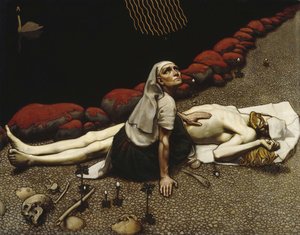
- La madre de Lemminkäinen (1893), una conmovedora representación de un personaje del Kalevala, que destaca la capacidad de Gallen-Kallela para evocar emociones a través de su arte.
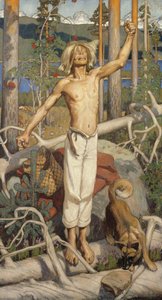
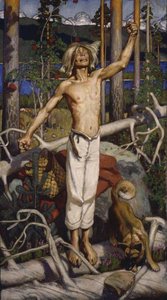
- La maldición de Kullervo (1893), otra obra inspirada en el Kalevala que demuestra la maestría de Gallen-Kallela para transmitir las complejidades de la épica.
Significado museológico
El trabajo de Gallen-Kallela se puede encontrar en varios museos, incluyendo:- Museo Ateneo de Arte (Helsinki, Finlandia), que presenta varias de sus pinturas, como el pico bastado negro y el fratricidio.
- Suomen Kansallisgalleria (Galería Nacional Finlandesa), donde sus obras forman parte de la colección, mostrando su influencia en el arte finlandés.
Legado e Influencia
El impacto de Gallen-Kallela en el arte finlandés es innegable. Sus ilustraciones del Kalevala se han convertido en una parte integral del patrimonio cultural de Finlandia. Como artista del romanticismo nacional, jugó un papel significativo en la configuración de la identidad artística del país.- Vea más obras de Gallen-Kallela en Akseli Gallen-Kallela | ArtsDot
- Explore la colección de la Galería Nacional Finlandesa, que presenta las obras de Gallen-Kallela, en Suomen Kansallisgalleria | ArtsDot
- Lea más sobre el Kalevala y su influencia en la cultura finlandesa en Kalevala - Wikipedia
Conclusión
El legado de Akseli Gallen-Kallela como maestro de las ilustraciones del Kalevala sigue siendo insuperable. Sus contribuciones al arte finlandés han cimentado su lugar en la historia cultural del país, y su influencia continúa inspirando a los artistas hasta el día de hoy.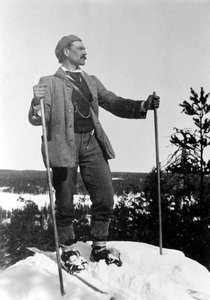
Akseli Gallen-Kallela
1865 - 1931 , Finlandia
Datos clave
- Estilo Artístico: Romanticismo Nacional
- Fecha De Fallecimiento: 1931
- Fecha De Nacimiento: 26 de abril de 1865
- Lugar De Nacimiento: Pori, Finlandia
- Nacionalidad: Finlandés
- Nombre Completo: Akseli Gallen-Kallela
- Obras Notables:
- La defensa del Sampo
- Lemminkäinen's Mother
- Kullervo's Curse
Artículos relacionados
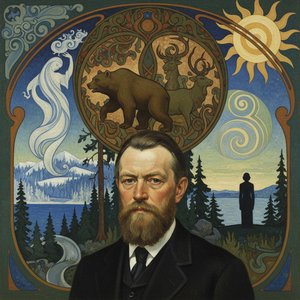
Akseli Gallen-Kallela: Shaping Finnish Identity Through National Romanticism & Symbolism
Explore the captivating world of Akseli Gallen-Kallela, Finland's iconic National Romantic painter. Discover his symbolic landscapes, Kalevala illustrations & lasting impact on Finnish identity. Expert analysis & high-quality reproductions at ArtsDot.
Blossoming Symbolism: A Historical Journey Through Flowers in Western Painting
Explore the rich history of flower symbolism in Western painting! Discover how artists from the Renaissance to Modernism used blossoms to convey meaning, emotion & beauty. Learn about iconic artworks and movements.
Blossoms of Time: A Historical Journey Through Flower Painting
Explore the captivating history of flower painting! Discover Dutch masters, symbolic meanings, & botanical art. Expert insights & high-quality reproductions at ArtsDot.
Albert Edelfelt: A Pioneer of Finnish Realism & International Impressionist Circles
Explore the life & work of Albert Edelfelt, a pioneering Finnish Realist painter who bridged Impressionism & national identity. Discover his masterpieces and lasting influence on art history.
Blossoms of Time: A Historical & Aesthetic Exploration of Floral Painting Across Cultures
Explore the rich history of floral painting! Discover symbolism, techniques & masterpieces from Van Huysum to O'Keeffe. Expert insights for art lovers & collectors at ArtsDot.