 Ver en contexto
 Enviar
 Compartir
 Detalles

 Descargar
 Similares
 Radiografía
 Presentación de diapositivas
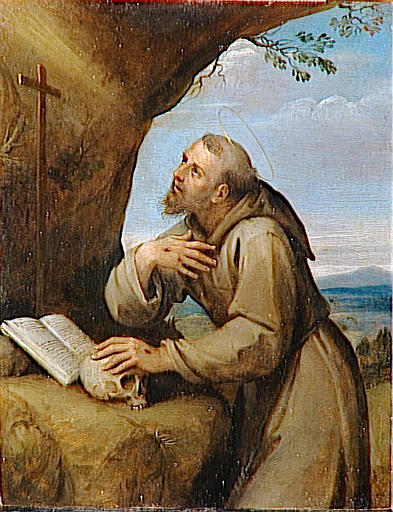
SAINT FRANCOIS D'ASSISE EN ORAISON DEVANT UN CRUCIFIX


 Ver más
Reproducción al óleo hecha a mano
Óleo sobre lienzo pintado a mano en el tamaño y marco de su elección, realizado por encargo por nuestros artistas. ( Comprar impresión Comprar imagen)




P118B $10

P118H $10

P118W $10

P438Z $10

P508JH $12

P508YH $12

P805H $10

P805Z $10

P919BZ $10

P919G $10

P919XJ $10

P959ZH $10

P968JZ $12

W106C $8

W218G $10

W218JH $8

W218Y $10

W307PJ $10

W316G $10

W316PJ $8

W316Y $10

W398PJ $8

W4111J $10

W500HY $15

W500JH $15

W692G $12

W849H $8

W940BG $15

W953PJ $8




Elija entre nuestros tamaños predefinidos que respetan las proporciones originales de la obra.

Puede ingresar sus propias dimensiones para adaptarse a un marco o espacio específico. Si el tamaño seleccionado no coincide con las proporciones de la imagen original, recortaremos la obra o extenderemos la pintura con elementos adicionales pintados a mano. Se le enviará una maqueta digital para su aprobación antes de comenzar la producción.
Tenga en cuenta que la vista previa en pantalla no refleja el recorte o la extensión reales. Solo la maqueta mostrará con precisión la composición final.
Si bien existen tamaños personalizados, recomendamos seleccionar una dimensión de la lista predefinida para preservar las proporciones originales.
Tras realizar el pedido, el equipo de ArtsDot.com enviará un correo electrónico al cliente para solicitar instrucciones y proporcionarle una vista previa del boceto.
Envío a todo el mundo () en 3-4 semanas en lugar de las 5 semanas estándar. (28 agosto). Sin comprometer la calidad.

Envío exprés gratuito a todo el mundo

Lienzo de lino de alta calidad

Seguro de envío total

Garantía de reembolso de impuestos aduaneros

Garantía de fidelidad cromática exacta

Política de devolución de 60 días (solo por defectos)

Garantía de devolución del 100% del dinero

Descuento por cantidad
 La opción de vidrio solo está disponible en tamaños inferiores a 110 cm.

SAINT FRANCOIS D'ASSISE EN ORAISON DEVANT UN CRUCIFIX
Técnica de reproducción
Dimensiones de la reproducción
-


Precio total final
$ 263
A Moment of Profound Contemplation: Francesco Albani’s “Saint François d'Assise en oraison devant un crucifix”
Francesco Albani’s “Saint François d'Assise en oraison devant un crucifix,” painted in the mid-17th century, is more than just a religious depiction; it’s a profound meditation on faith, mortality, and the enduring power of spiritual devotion. This masterpiece, now housed within the Louvre Museum in Paris, captures a pivotal moment in the life of Saint Francis – a figure revered for his humility, simplicity, and unwavering commitment to service – as he kneels before a crucifix, enveloped in quiet contemplation. Albani, a key figure in the development of Baroque painting in Italy, masterfully employs dramatic lighting, rich color palettes, and intricate symbolism to create an image that resonates with both intellectual depth and emotional intensity.
A Symphony of Light and Shadow: Artistic Technique and Style
Albani’s style is a compelling blend of Baroque drama and Renaissance realism. The painting showcases his signature use of *chiaroscuro*, the masterful manipulation of light and shadow, to sculpt form and draw the viewer's eye directly to Saint Francis. Notice how the strong contrasts between illuminated areas and deep shadows create a sense of depth and volume, imbuing the scene with an almost theatrical quality. The artist’s brushwork is remarkably detailed yet fluid, particularly evident in the rough texture of the tree trunk upon which the crucifix is affixed – a deliberate choice that anchors the figure within a naturalistic setting while simultaneously symbolizing strength and connection to the divine. The muted earth tones of the landscape, contrasted with the vibrant hues of the monk’s robe and the crucifix, further enhance the visual drama.
- Oil on Panel: The medium itself contributes to the painting's rich texture and luminous quality.
- Renaissance Realism blended with Baroque Drama: Albani skillfully balances meticulous detail with expressive emotionality.
- Chiaroscuro Technique: The dramatic use of light and shadow creates depth, volume, and a sense of theatrical intensity.
Symbolic Layers: Unpacking the Depths of Meaning
Beyond its immediate depiction, “Saint François d'Assise en oraison devant un crucifix” is laden with symbolic meaning. The tree itself represents strength, resilience, and a connection to God’s enduring presence – mirroring the roots of faith that anchor Saint Francis in his devotion. The open book resting at his feet symbolizes knowledge, scripture, and the path to spiritual enlightenment. Crucially, the skull beneath the book serves as a stark reminder of mortality and the transience of earthly life, urging contemplation on the eternal significance of faith. The crucifix, of course, represents Christ’s sacrifice and offers a pathway to redemption. The hazy landscape in the background suggests a rural setting, emphasizing the simplicity and humility of Saint Francis's life.
Albani masterfully uses these elements to create a complex visual narrative that invites viewers to engage with profound questions about faith, mortality, and the human condition.A Legacy of Spiritual Reflection: Historical Context and Artistic Influence
Francesco Albani’s work emerged during a period of significant artistic innovation in Italy. Following the High Renaissance, Baroque painting embraced heightened emotion, dramatic lighting, and dynamic compositions. Albani was deeply influenced by artists like Caravaggio, whose use of *chiaroscuro* profoundly shaped his own style. His depiction of Saint Francis aligns with the broader trend of portraying religious figures as relatable human beings grappling with complex spiritual challenges. The painting’s enduring appeal lies in its ability to capture a universal experience – the search for meaning and connection in a world often marked by uncertainty and suffering. Albani's work continues to inspire contemplation and serves as a testament to the power of art to illuminate the depths of the human spirit.
Further research into this artwork can be found at ArtsDot.com and on the Louvre Museum website: https://collections.louvre.fr/en/ark:/53355/cl010066549
Obras relacionadas


Biografía del artista
Albani Francesco, también conocido como l'albane, fue un destacado pintor italiano nacido en 1578 y activo hasta su muerte en 1660. Fue una figura clave en el desarrollo de la pintura barroca en Italia, particularmente en Roma.
Primeros años y formación
Francesco Albani nació en Bolonia, Italia, en una familia de artistas. Su padre, Daniele Albani, era pintor, y su tío, Giovanni Paolo Cavagna, fue un artista renombrado. La formación temprana de Francesco tuvo lugar en el estudio de Denzio Ferrari, donde aprendió los fundamentos de la pintura. Más tarde, se trasladó a Roma para estudiar bajo la guía de Guidobaldo Gandolfi.Carrera artística
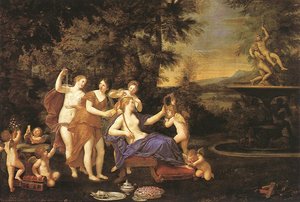
La carrera artística de Albani estuvo marcada por su estilo único, que fusionaba elementos del arte barroco y el clásico. Era conocido por sus hermosas y delicadas representaciones de escenas mitológicas y bíblicas. Una de sus obras más famosas es El Tocador de Venus, una pintura que exhibe su habilidad para capturar la belleza de la forma humana. Algunas de las obras notables de Albani incluyen:- El Bautismo de Cristo, una pintura que demuestra su capacidad para transmitir emoción y drama.
- San Sebastián, una obra que resalta su maestría con la luz y la sombra.
- La Virgen y el Niño con San Juan Bautista, una pintura que muestra su habilidad para capturar los matices de la expresión humana.
Influencia y legado
La influencia de Albani en el desarrollo de la pintura barroca en Italia fue significativa. Fue uno de los primeros artistas en introducir el uso del claroscuro, una técnica que enfatiza el contraste entre la luz y la oscuridad. Su obra también tuvo un impacto en el desarrollo de la pintura paisajística, ya que a menudo incorporaba paisajes naturales en sus composiciones. Hoy en día, las pinturas de Albani se pueden encontrar en varios museos, incluido el Museo del Louvre en París, donde está expuesto su El Tocador de Venus. Su obra también ha sido presentada en ArtsDot.com, donde los entusiastas del arte pueden aprender más sobre su vida y logros artísticos.Conclusión
Francesco Albani fue un pintor talentoso que dejó una marca indeleble en el mundo del arte. Su estilo único, que fusionaba elementos del arte barroco y clásico, continúa inspirando a artistas hoy en día. A través de su obra, podemos apreciar la belleza y el drama de la forma humana, así como la importancia de la luz y la sombra para crear una sensación de profundidad y emoción. Para más información sobre la vida y obra de Albani, visite ArtsDot.com o consulte su biografía en Wikipedia.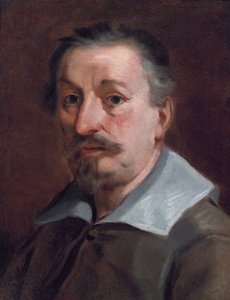
Francesco Albani (L'Albano)
1578 - 1660 , Italia
Artículos relacionados

Barroco Sublime: 10 Obras Maestras que Definieron una Época |
Descubre las 10 obras maestras del Barroco que marcaron una época. Caravaggio, Bernini y Velázquez cobran vida en . Reproducciones de arte de calidad museo para decorar tu hogar con elegancia. ¡Explora la colección online!
Discover the Divine: Inspiring Saint Anthony Artworks to Elevate Your Home Decor
Transform your home with the profound beauty of Saint Anthony artworks. Explore exquisite Baroque reproductions by Murillo and Zurbarán, hand-painted on 100% cotton canvas to bring divine serenity and timeless elegance to your interior design.

Drama Barroca: Llevando la Grandeza y la Emoción a los Interiores Contemporáneos
Descubre cómo el drama y la grandeza del arte barroco pueden transformar tus interiores. Guía experta, inspiración y reproducciones de alta calidad en .
Simon Vouet: A Baroque Master's Journey from Italian Influence to French Classicism
Explore the life & art of Simon Vouet, a pivotal French Baroque painter who introduced Italian styles to France. Discover his masterpieces and lasting influence on 17th-century art.

The Dramatic Flourish: Exploring the Baroque Movement's Enduring Legacy in Art History
Explore the dramatic world of Baroque art! Discover iconic artists like Caravaggio & Rubens, defining techniques, and its lasting impact on art history. Expert insights for collectors & enthusiasts at ArtsDot.