 Ver en contexto
 Enviar
 Compartir
 Detalles

 Descargar
 Similares
 Radiografía
 Presentación de diapositivas
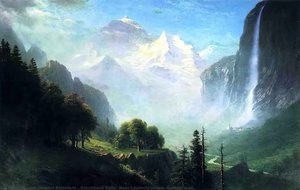
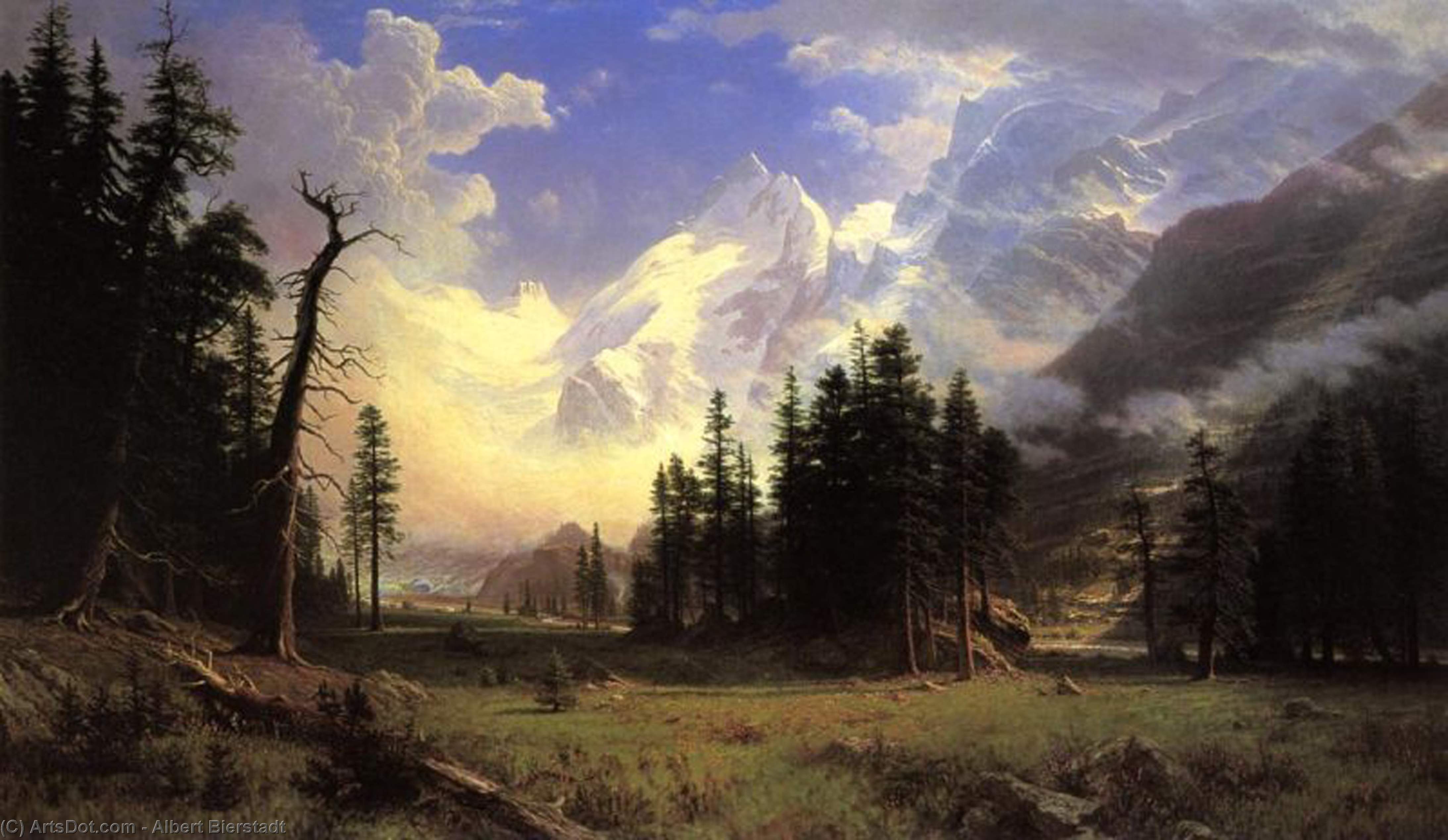
The Morteratsch Glacier, Upper Engadine Valley, Pontresina


 Ver más
Reproducción al óleo hecha a mano
Óleo sobre lienzo pintado a mano en el tamaño y marco de su elección, realizado por encargo por nuestros artistas. ( Comprar impresión Comprar imagen)




P118B $10

P118H $10

P118W $10

P438Z $10

P508JH $12

P508YH $12

P805H $10

P805Z $10

P919BZ $10

P919G $10

P919XJ $10

P959ZH $10

P968JZ $12

W106C $8

W218G $10

W218JH $8

W218Y $10

W307PJ $10

W316G $10

W316PJ $8

W316Y $10

W398PJ $8

W4111J $10

W500HY $15

W500JH $15

W692G $12

W849H $8

W940BG $15

W953PJ $8




Elija entre nuestros tamaños predefinidos que respetan las proporciones originales de la obra.

Puede ingresar sus propias dimensiones para adaptarse a un marco o espacio específico. Si el tamaño seleccionado no coincide con las proporciones de la imagen original, recortaremos la obra o extenderemos la pintura con elementos adicionales pintados a mano. Se le enviará una maqueta digital para su aprobación antes de comenzar la producción.
Tenga en cuenta que la vista previa en pantalla no refleja el recorte o la extensión reales. Solo la maqueta mostrará con precisión la composición final.
Si bien existen tamaños personalizados, recomendamos seleccionar una dimensión de la lista predefinida para preservar las proporciones originales.
Tras realizar el pedido, el equipo de ArtsDot.com enviará un correo electrónico al cliente para solicitar instrucciones y proporcionarle una vista previa del boceto.
Envío a todo el mundo () en 3-4 semanas en lugar de las 5 semanas estándar. (23 agosto). Sin comprometer la calidad.

Envío exprés gratuito a todo el mundo

Lienzo de lino de alta calidad

Seguro de envío total

Garantía de reembolso de impuestos aduaneros

Garantía de fidelidad cromática exacta

Política de devolución de 60 días (solo por defectos)

Garantía de devolución del 100% del dinero

Descuento por cantidad
 La opción de vidrio solo está disponible en tamaños inferiores a 110 cm.

The Morteratsch Glacier, Upper Engadine Valley, Pontresina
Técnica de reproducción
Dimensiones de la reproducción
-


Precio total final
$ 263
Descripción de la obra
A Majestic Vision of the Alps: Bierstadt’s “The Morteratsch Glacier”
Albert Bierstadt's "The Morteratsch Glacier, Upper Engadine Valley, Pontresina" is more than just a landscape painting; it’s a meticulously crafted portal into the heart of the American West – and, in this case, a stunningly realized depiction of the Swiss Alps. Completed in 1895, the monumental canvas captures a fleeting moment of sublime beauty within the dramatic grandeur of the Bernina Range, showcasing Bierstadt's mastery of Luminism and his profound understanding of capturing atmospheric perspective and emotional resonance. The painting immediately commands attention with its sheer scale – a testament to Bierstadt’s ambition to transport the viewer into the vastness of the mountain wilderness. It wasn’t merely about replicating a scene; it was about evoking a feeling, a sense of awe and reverence for nature's power.The Hudson River School and the Romantic Ideal
Bierstadt’s artistic journey is deeply rooted in the traditions of the Hudson River School, a movement that flourished in 19th-century America. Artists like Thomas Cole and Frederic Church sought to elevate landscape painting beyond mere representation, aiming instead to capture the spiritual essence of nature. Bierstadt, however, took this ambition to new heights, particularly when venturing westward. He absorbed the techniques of European Romanticism – the dramatic lighting, the sweeping vistas, and the emphasis on emotional experience – and skillfully adapted them to the American context. His work reflects a fascination with the untamed wilderness, mirroring the nation’s burgeoning desire for expansion and its romanticized vision of the frontier. The painting embodies this spirit, presenting the Alps not as a distant, exotic locale but as a source of profound inspiration and spiritual connection.Technical Brilliance: Luminism in Action
Bierstadt's technical prowess is immediately apparent upon close examination. He employed a technique known as Luminism, characterized by its subtle gradations of light and shadow, creating an almost ethereal quality to the scene. The artist meticulously layered thin washes of oil paint, building up color gradually to achieve remarkable depth and atmospheric perspective. Notice how the distant peaks are rendered in pale blues and purples, fading into a hazy atmosphere, while the foreground meadow bursts with vibrant greens and yellows. This masterful use of light and shadow not only creates a sense of realism but also draws the viewer’s eye deep into the composition, inviting them to explore every detail. The texture of the rocks, the snow-capped peaks, and the dense forest are all rendered with astonishing precision, demonstrating Bierstadt's keen observational skills and his ability to translate three-dimensional reality onto a two-dimensional surface.Symbolism and the American West
Beyond its technical brilliance, “The Morteratsch Glacier” is rich in symbolic meaning. The imposing mountains represent strength, resilience, and perhaps even spiritual aspiration – qualities that resonated deeply with the American spirit of exploration and self-reliance. The winding path through the foreground meadow suggests a journey, an invitation for the viewer to embark on their own adventure into the wilderness. The inclusion of the Morteratsch Glacier itself carries significant weight; it’s a powerful symbol of nature's enduring force, its ability to both inspire awe and remind us of our own insignificance in the face of such grandeur. Bierstadt’s painting served as a visual ambassador for the American West, showcasing its breathtaking beauty to a nation eager to embrace its vastness and potential.A Legacy of Romantic Landscape
Albert Bierstadt's "The Morteratsch Glacier" remains a cornerstone of American landscape art, exemplifying the Luminist style and capturing the spirit of the American West with unparalleled skill and emotional depth. Its monumental scale, masterful technique, and evocative symbolism continue to captivate viewers today, reminding us of the enduring power of nature and the transformative potential of art. Reproductions of this iconic painting offer a remarkable opportunity to bring this breathtaking vista into any home or office, serving as a constant source of inspiration and a celebration of the sublime beauty of the natural world.Obras relacionadas

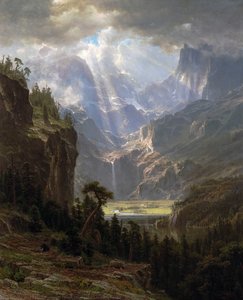
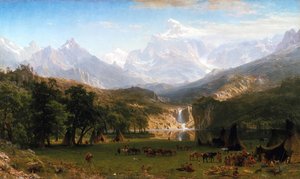
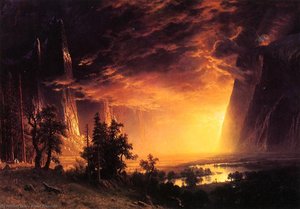
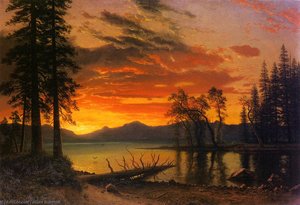
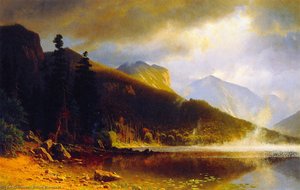
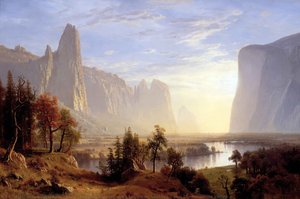
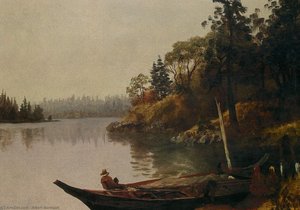
Biografía del artista
Primeros años y educación
Albert Bierstadt, un renombrado pintor germano-americano, nació el 7 de enero de 1830 en Solingen, Prusia. Su familia emigró a los Estados Unidos cuando él era tan solo un año de edad, estableciéndose en New Bedford, Massachusetts. La vida temprana de Bierstadt se caracterizó por su creciente gusto por el arte, y comenzó a hacer hábiles bocetos con crayones en su juventud.Carrera artística
La carrera artística de Bierstadt despegó en 1851 cuando comenzó a pintar al óleo. Regresó a Alemania en 1853 para estudiar pintura durante varios años en Düsseldorf, lo que influyó enormemente en su estilo. Al regresar a los Estados Unidos, Bierstadt se unió a la Escuela del Río Hudson, un grupo de pintores afines que se centraban en capturar los majestuosos paisajes del valle del río Hudson. En 1858, Bierstadt expuso una gran pintura de un paisaje suizo en la Academia Nacional de Diseño, obteniendo una recepción crítica positiva y el ingreso honorífico a la academia. Sus viajes posteriores al oeste americano con Frederick W. Lander y Fitz Hugh Ludlow inspiraron sus icónicos paisajes, que mostraban la grandeza del oeste americano.Estilo e Influencias
El estilo de Bierstadt se caracterizaba por su meticuloso detalle, su uso dramático de la luz y la sombra, y su capacidad para evocar una sensación de asombro y reverencia ante la naturaleza. Estuvo fuertemente influenciado por el luminismo, un movimiento artístico que enfatizaba la representación precisa de la luz natural y los efectos atmosféricos. También se inspiró en las obras de artistas europeos como Caspar David Friedrich, conocido por sus paisajes románticos y melancólicos. La Escuela del Río Hudson fue una influencia crucial, compartiendo su compromiso con la representación fiel y grandiosa de los paisajes americanos.Obras destacadas y legado
Entre las obras más notables de Bierstadt se encuentran "Paisaje occidental", que es un testimonio de su habilidad para capturar los vastos paisajes del oeste americano; "Escena costera", que demuestra su capacidad para transmitir la belleza de la costa americana; y sus representaciones épicas de las Montañas Rocosas, Alaska y otros lugares emblemáticos. Sus pinturas se caracterizan por su gran escala y su realismo detallado, lo que le valió el apodo de "el pintor del oeste americano". Bierstadt dejó un legado duradero como uno de los pintores de paisajes más importantes del siglo XIX, contribuyendo significativamente al desarrollo del arte americano y ayudando a moldear la percepción pública del paisaje occidental.Datos clave
- Nacido: 7 de enero de 1830, Solingen, Prusia
- Fallecido: 18 de febrero de 1902
- Nacionalidad: Germano-americano
- Estilo: Pintura de paisajes, Escuela del Río Hudson
- Obras notables: Paisaje occidental, Escena costera
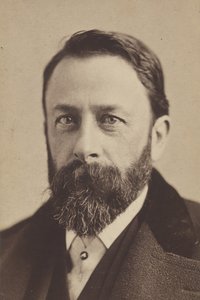
Albert Bierstadt
1830 - 1902 , Alemania
Datos clave
- Artistas Que Influyeron: ['Escuela del Río Hudson']
- Estilo Artístico: Pintura paisajista, Escuela del Río Hudson
- Fecha De Fallecimiento: 18 de febrero de 1902
- Fecha De Nacimiento: 7 de enero de 1830
- Lugar De Nacimiento: Solingen, Alemania
- Nacionalidad: Germano-estadounidense
- Nombre Completo: Albert Bierstadt
- Obras Notables:
- Paisaje occidental
- Escena costera
- Cascadas de Staubbach
- Molino rústico
- Búfalos en las Llanuras
- Alaska
- Montañas Rocosas
- Entre montañas Sierra Nevada
Artículos relacionados
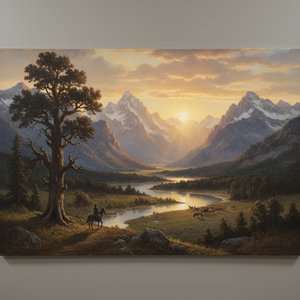
Albert Bierstadt: Luminosity, Landscape & the American Ideal
Explore the breathtaking landscapes of Albert Bierstadt, master of the American West & a leading figure in the Hudson River School. Discover his luminous style and iconic paintings – a timeless investment for art lovers.

Paisajes Románticos: 10 Obras Maestras que Definieron un Movimiento Artístico
Descubre los 10 paisajes románticos más influyentes de artistas como Caspar David Friedrich y Turner. Explora la belleza, el simbolismo y las técnicas del movimiento romántico. Reproducciones de arte exclusivas en ArtsDot.com.
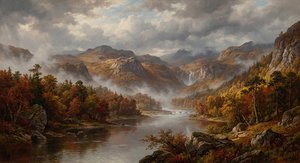
Los 10 Maestros del Río Hudson: Obras que Definieron un Movimiento Artístico
Descubre los 10 lienzos más emblemáticos de la Escuela del Río Hudson. Explora las obras maestras de Thomas Cole, Church y Bierstadt que capturan la belleza del paisaje americano. Encuentra reproducciones de arte exclusivas en ArtsDot.com.

Evocations of Place: A Historical Journey Through Landscape Art
Explore the rich history of landscape art with ArtsDot. Discover renowned artists, movements like Impressionism & Romanticism, and expert guidance for collecting timeless pieces. Find your perfect serene escape today!
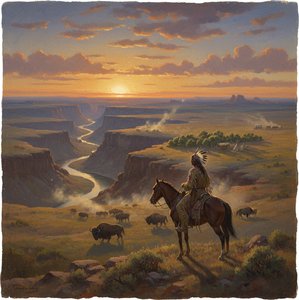
Henry Farny: Romantic Visions of the American West & Indigenous Life
Explore the evocative paintings of Henry Farny, renowned for his romantic realism & depictions of Native American life in the 19th-century West. Discover his legacy and key artworks at ArtsDot.