

 Enviar
 Compartir
 Detalles

 Descargar
 Similares
 Presentación de diapositivas
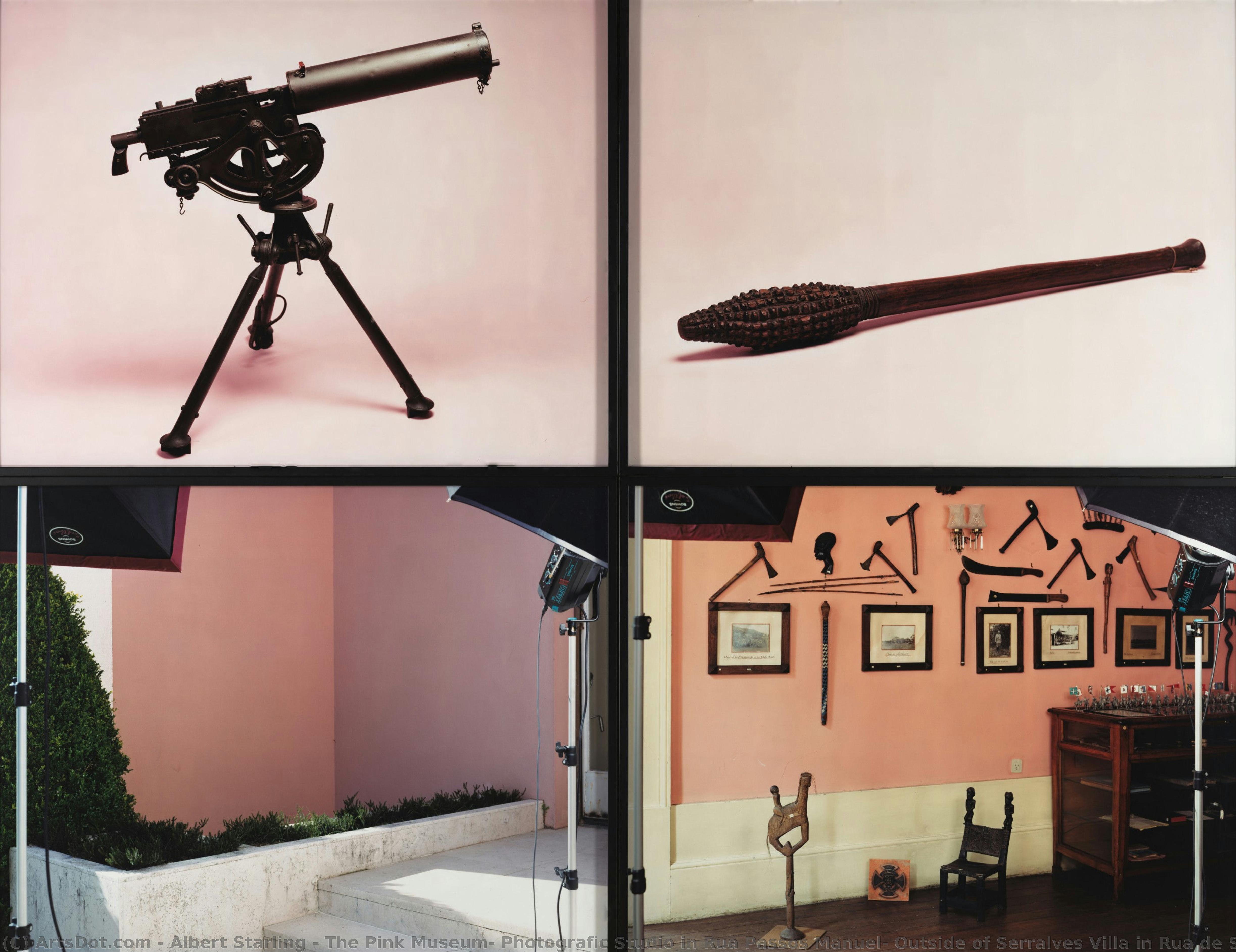
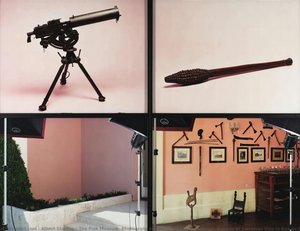
The Pink Museum: Photografic Studio in Rua Passos Manuel, Outside of Serralves Villa in Rua de Serralves, Museum in Rua da Alegria, Collection Liga dos Combatentes, Machine gun, Club, Hand grenade, Helmet, Basket, Shell transportation basket, Chair ,....
 Photography
- Photo
- Contemporary Art
 2001
2001- Contemporary
 75.0 x 98.0 cm
 Fundación Serralves
 Ver más
Adquiera una imagen digital de alta resolución y optimizada, muy superior a la vista previa en línea.
Cada archivo es preparado meticulosamente por nuestros especialistas internos mediante el uso de herramientas avanzadas y un experto retoque manual. Nos aseguramos de que cada imagen posea una claridad excepcional, una precisión cromática impecable y un detalle minucioso.
El archivo final se entrega por correo electrónico en un plazo de 72 horas, optimizado para su uso inmediato en entornos profesionales, editoriales y de impresión. Esta es la misma calidad en la que confían los estudios de diseño, las editoriales y las galerías de primer nivel.
Imagen Digital
Descarga un archivo de alta resolución para exhibición personal, impresión y proyectos creativos. ( Comprar impresión Comprar pintura hecha a mano)
Incluido en cada pedido de imágenes digitales
Entrega digital experta, garantizada.
Al elegir ArtsDot.com, no solo está adquiriendo una imagen; está recibiendo una obra de arte digital mejorada profesionalmente, elaborada con precisión y respaldada por una garantía de satisfacción. Esto es todo lo que incluye su pedido, automáticamente:

Entrega rápida por email
Recibirá su archivo de imagen digital en alta resolución por correo electrónico en un plazo de 72 horas tras realizar su pedido, listo para su uso inmediato.

Archivo digital optimizado por IA
Su obra de arte se optimiza profesionalmente mediante herramientas avanzadas de IA y edición manual, garantizando el máximo detalle, claridad y precisión cromática.

Reenvío gratuito de por vida
¿Has borrado o perdido tu archivo por error? No te preocupes: te lo volveremos a enviar en cualquier momento, sin coste adicional.

Sin gastos de importación, siempre
Disfrute de su obra de arte al instante sin aduanas, aranceles ni gastos de envío; las descargas digitales siempre están libres de impuestos.

Garantía de fidelidad de color
Garantizamos que su imagen digital refleje los colores originales con la mayor fidelidad posible, mediante el uso de herramientas profesionales y gestión del color.

Garantía de satisfacción de 60 días
Si no está satisfecho con su imagen digital, la revisaremos o le reembolsaremos el 100% en un plazo de 60 días, sin preguntas.

100% Garantía de devolución de dinero
¿No está satisfecho? Obtenga un reembolso completo dentro de los 60 días posteriores a la recepción de su archivo digital, sin necesidad de explicaciones.

Descuentos por pedidos grandes
Compra 3 imágenes, ahorra 10% - Compra 5, ahorra 15% - Compra 10+, ahorra 20%. Ideal para proyectos creativos, galerías y agencias.
Composition and Symbolism
The image is a collage of four different photographs, each featuring various objects that evoke a sense of conflict and remembrance. The first picture shows a large telescope on display against a pink wall, symbolizing the act of observation and reflection. The second picture features two hand grenades placed side by side, representing the destructive power of war. The third picture depicts a machine gun mounted on a tripod, emphasizing the mechanized nature of modern conflict. Finally, the fourth picture displays a chair situated near the right side of the image, suggesting a place for contemplation and remembrance. In addition to these objects, other elements such as a clock in the top left corner of the first picture and a bottle at the bottom right corner of the second picture add depth and complexity to the composition. The overall effect is an intriguing visual juxtaposition that challenges the viewer to consider the interconnectedness of war, memory, and human experience.Artistic Context
Albert Starling's work can be seen in the context of contemporary art practices that explore themes of conflict, identity, and historical memory. His use of photography as a medium allows for a direct and powerful representation of these themes. The Serralves Foundation, where this piece is housed, is known for its commitment to showcasing innovative and thought-provoking works of art.Relevance in Modern Art
The Pink Museum: Photografic Studio in Rua Passos Manuel, Outside of Serralves Villa in Rua de Serralves, Museum in Rua da Alegria, Collection Liga dos Combatentes, Machine gun, Club, Hand grenade, Helmet, Basket, Shell transportation basket, Chair , Pot plant, Ammunition case, Mine antipersonnel by Albert Starling is a significant contribution to the discourse on war and memory in modern art. It invites viewers to reflect on the impact of conflict on human lives and the importance of preserving historical artifacts as a means of understanding our past. For those interested in exploring more works that delve into similar themes, The Pink Museum: Photografic Studio in Rua Passos Manuel and Epiphany by Michelangelo Buonarroti are notable examples. These works, available on ArtsDot, offer a deeper insight into the artistic exploration of human experience and historical memory. In conclusion, The Pink Museum: Photografic Studio in Rua Passos Manuel, Outside of Serralves Villa in Rua de Serralves, Museum in Rua da Alegria, Collection Liga dos Combatentes, Machine gun, Club, Hand grenade, Helmet, Basket, Shell transportation basket, Chair , Pot plant, Ammunition case, Mine antipersonnel by Albert Starling is a powerful and thought-provoking work that challenges viewers to consider the complexities of war, memory, and human experience. Its presence in the Serralves Foundation underscores the importance of preserving historical artifacts and reflecting on our collective past.Obras relacionadas

Biografía del artista
Albert Starling: Bridging Light and Landscape in Victorian Britain
Albert Starling (1858-1947) emerges from the late 19th century as a quietly significant figure within British art, a painter who skillfully captured the essence of the English countryside while subtly engaging with broader artistic currents. Born in Hastings, his early life remains somewhat shrouded in detail, yet it’s clear that a deep connection to the natural world and an appreciation for light were formative influences. Starling's career unfolded primarily during the height of the Victorian era, a period marked by both rapid industrialization and a fervent desire to preserve traditional values – themes that resonate powerfully within his artistic output.
Initially trained in London, Starling’s artistic journey took him to Paris in 1882. This immersion in the vibrant Parisian art scene proved transformative. He encountered the Impressionists, absorbing their revolutionary techniques of capturing fleeting moments and utilizing broken color palettes. However, unlike many British artists who simply adopted Impressionism wholesale, Starling retained a distinctly realist sensibility. His paintings weren’t merely reproductions of light; they were imbued with a careful observation of detail and a sensitivity to the textures and forms of his subjects – from the weathered faces of fishermen to the rolling hills of Cornwall.
The Cornish Influence: Light, Sea, and Working Men
Starling's most celebrated work emerged during his extended periods spent in Cornwall. The rugged coastline, dramatic light, and close-knit communities of fishing villages provided an endless source of inspiration. He became particularly renowned for his depictions of the Cornish coast – scenes of fishermen hauling their nets, boats bobbing on the waves, and the ever-changing interplay of sunlight and shadow. These paintings aren’t romanticized fantasies; they are honest portrayals of a demanding life, rendered with remarkable empathy and technical skill.
His technique was characterized by a meticulous approach to color mixing and brushwork. He employed short, broken strokes to build up layers of paint, creating a shimmering effect that captured the dynamism of the sea and sky. The light, in particular, is a central concern – Starling sought to convey not just its presence but also its quality, its warmth, and its ability to transform the landscape. He was heavily influenced by the works of Turner, particularly his atmospheric landscapes, and Ruskin’s theories on color and beauty, which encouraged artists to find inspiration in nature.
A Shift Towards Portraiture and Haitian Art
As the decades progressed, Starling's subject matter broadened beyond purely landscape. He increasingly turned to portraiture, producing a series of striking portraits of local figures – fishermen, farmers, and members of the gentry. These portraits are notable for their psychological depth and their ability to capture the character of their subjects. He also developed an interest in Haitian art, particularly the work of Jean-Baptiste Sansouci, a Haitian painter who had settled in Cornwall. Starling’s fascination with Haitian art led him to create a series of paintings depicting scenes from Haitian life, often infused with a sense of exoticism and cultural curiosity.
His exploration of Haitian themes demonstrates a willingness to engage with diverse artistic traditions and to challenge conventional notions of British identity. These works are considered among his most innovative and thought-provoking, reflecting a growing awareness of the complexities of the colonial world.
Legacy and Recognition
Albert Starling’s work remained largely overlooked during his lifetime, but in recent decades he has been increasingly recognized as a significant figure in British art. His paintings are now held in major museums across the United Kingdom, including the Royal Albert Memorial Museum in Exeter and the Victoria & Albert Museum in London. His ability to capture the beauty of the English countryside while simultaneously engaging with broader artistic and cultural themes ensures that his legacy will continue to grow.
The Mutual Art website highlights several key works, showcasing his mastery of light, color, and composition. His paintings offer a valuable glimpse into Victorian England – a time of both great prosperity and profound social change – and a testament to the enduring power of art to capture the spirit of a place and its people.
Further research through Art UK reveals that Starling was part of the wider artistic community, exhibiting at the Royal Academy between 1882 and 1903. His work continues to be studied and appreciated for its technical skill, emotional depth, and historical significance.
albert starling
1858 - 1947

