

 Ver en contexto
 Enviar
 Compartir
 Detalles

 Descargar
 Similares
 Radiografía
 Presentación de diapositivas
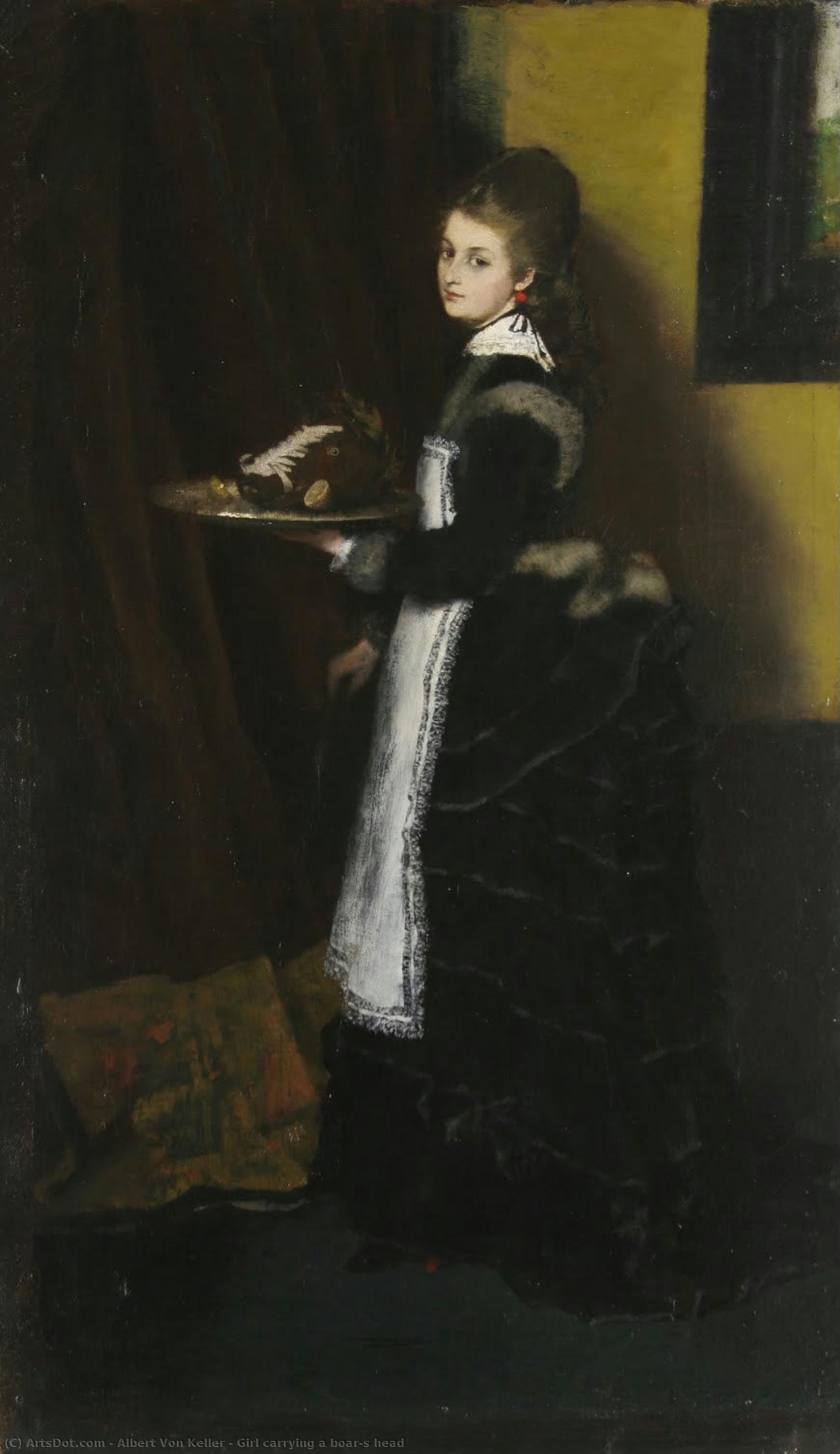
Girl carrying a boar´s head

 Ver más
Reproducción al óleo hecha a mano
Óleo sobre lienzo pintado a mano en el tamaño y marco de su elección, realizado por encargo por nuestros artistas. ( Comprar impresión Comprar imagen)




































Elija entre nuestros tamaños predefinidos que respetan las proporciones originales de la obra.

Puede ingresar sus propias dimensiones para adaptarse a un marco o espacio específico. Si el tamaño seleccionado no coincide con las proporciones de la imagen original, recortaremos la obra o extenderemos la pintura con elementos adicionales pintados a mano. Se le enviará una maqueta digital para su aprobación antes de comenzar la producción.
Tenga en cuenta que la vista previa en pantalla no refleja el recorte o la extensión reales. Solo la maqueta mostrará con precisión la composición final.
Si bien existen tamaños personalizados, recomendamos seleccionar una dimensión de la lista predefinida para preservar las proporciones originales.
Tras realizar el pedido, el equipo de ArtsDot.com enviará un correo electrónico al cliente para solicitar instrucciones y proporcionarle una vista previa del boceto.
Envío a todo el mundo () en 3-4 semanas en lugar de las 5 semanas estándar. (22 agosto). Sin comprometer la calidad.

Envío exprés gratuito a todo el mundo

Lienzo de lino de alta calidad

Seguro de envío total

Garantía de reembolso de impuestos aduaneros

Garantía de fidelidad cromática exacta

Política de devolución de 60 días (solo por defectos)

Garantía de devolución del 100% del dinero

Descuento por cantidad
 La opción de vidrio solo está disponible en tamaños inferiores a 110 cm.

Girl carrying a boar´s head
Técnica de reproducción
Dimensiones de la reproducción
-


Precio total final
$ 263
Obras relacionadas









Biografía del artista
Albert von Keller: A Pioneer of Psychological Art
Albert von Keller (1844-1920) stands as a singular figure in German art history—a painter who seamlessly blended realism with the burgeoning fascination for psychology and symbolism, establishing himself as one of the foremost proponents of the Munich Secession. Born in Gais, Switzerland, amidst a family steeped in artistic tradition, Keller’s early life foreshadowed his lifelong dedication to visual expression. His father, a professor of law, instilled in him a disciplined intellect alongside an appreciation for beauty, shaping him into an artist acutely aware of both observation and inner contemplation. Keller's formal training commenced at the Munich Academy under Arthur von Ramberg, where he honed his technical skills while simultaneously absorbing the stylistic currents of the time. However, it was Ramberg’s insistence on studying nude studies—a practice considered controversial by many contemporaries—that profoundly impacted Keller’s artistic vision. This exposure to anatomical precision combined with a sensitivity to emotion would become hallmarks of his oeuvre. He traveled extensively throughout Europe – Italy, France, England and the Netherlands – absorbing influences from Impressionism and Japonisme, yet he steadfastly maintained an individual style rooted in German Romantic tradition. Keller's artistic breakthrough arrived in 1873 when he debuted at the Salon in Paris with “Roman Bath,” a painting that immediately garnered critical acclaim for its masterful depiction of light and atmosphere—a technique heavily indebted to Claude Monet and Pierre-Auguste Renoir. This success propelled him into the spotlight, attracting commissions from wealthy patrons and establishing him as a respected artist within the artistic circles of his day. Notably, he married Irene von Eichthal in 1878, forging a partnership that would endure until her death in 1907. Their marriage produced two sons, though tragedy struck when their eldest succumbed to illness shortly after birth. Keller’s artistic output expanded dramatically during the Secession era (1892), where he collaborated with fellow artists like Edvard Munch and Gustav Klimt to challenge academic conventions and explore uncharted territories of psychological expression. He embraced Symbolism's preoccupation with dreams, myths, and spiritual themes, channeling his anxieties about mortality and the human condition into haunting canvases imbued with profound emotional resonance. His fascination with hypnosis—documented in “Hypnosis at Schrenck Notzing’s”—reflected a broader interest in paranormal phenomena and fueled his artistic explorations of altered states of consciousness. Keller's oeuvre encompasses portraits that capture not merely physical likeness but also psychological character, demonstrating an uncanny ability to convey inner turmoil and vulnerability. His landscapes are imbued with melancholic beauty—particularly “In the Moonlight,” which exemplifies his masterful manipulation of tonal gradations and dramatic lighting—creating immersive environments that evoke feelings of solitude and contemplation. Among his most celebrated works are "Faustina in the Temple of Juno at Praeneste," portraying a woman caught in a moment of profound introspection; “The Witches Sleep,” capturing an unsettling scene of nocturnal terror; “The Judgment of Paris,” exploring themes of beauty, desire, and moral ambiguity; “The Happy Sister” and “Temptation”—both depicting female figures with exquisite sensitivity. Furthermore, he produced evocative depictions of biblical narratives—such as "The Crucifixion"—demonstrating his unwavering commitment to conveying spiritual truths through visual art. Keller’s legacy extends beyond his individual paintings; he served as a pivotal figure in shaping the Munich Secession's artistic ethos and championed the pursuit of psychological realism, influencing generations of artists who followed him. His enduring contribution to German art lies not merely in his technical prowess but also in his courageous willingness to confront existential questions—a testament to his profound understanding of the human psyche and his unwavering belief in the transformative power of art.
albert von keller
1844 - 1920
Datos clave
- Artistic Movement Or Style: Munich Secession
- Artists Or Movements Influenced By This Artist: ['Symbolism']
- Artists Who Influenced This Artist:
- Arthur von Ramberg
- Ludwig Maximilian University
- Date Of Birth: April 27, 1844
- Date Of Death: July 14, 1920
- Full Name: Albert Ritter von Keller
- Nationality: Swiss
- Notable Artworks:
- Hypnosis at Schrenck Notzing’s
- In the moonlight
- Place Of Birth: Gais, Switzerland

