 Ver en contexto
 Enviar
 Compartir
 Detalles

 Descargar
 Similares
 Radiografía
 Presentación de diapositivas
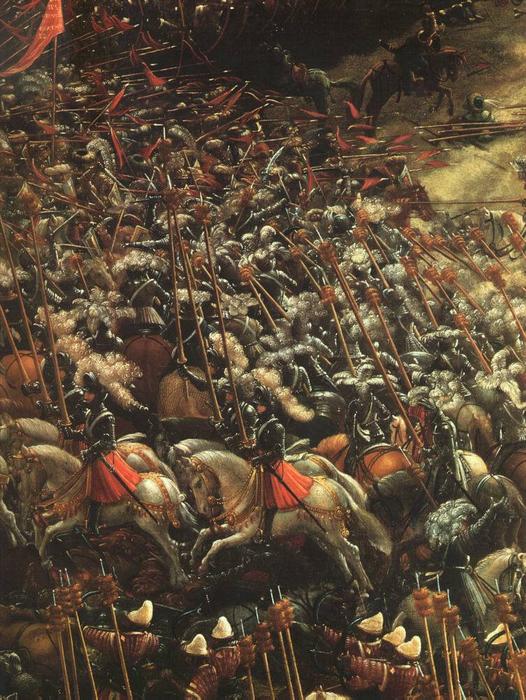
The Battle of Alexander (detail)


 Ver más
Reproducción al óleo hecha a mano
Óleo sobre lienzo pintado a mano en el tamaño y marco de su elección, realizado por encargo por nuestros artistas. ( Comprar impresión Comprar imagen)




P118B $10

P118H $10

P118W $10

P438Z $10

P508JH $12

P508YH $12

P805H $10

P805Z $10

P919BZ $10

P919G $10

P919XJ $10

P959ZH $10

P968JZ $12

W106C $8

W218G $10

W218JH $8

W218Y $10

W307PJ $10

W316G $10

W316PJ $8

W316Y $10

W398PJ $8

W4111J $10

W500HY $15

W500JH $15

W692G $12

W849H $8

W940BG $15

W953PJ $8




Elija entre nuestros tamaños predefinidos que respetan las proporciones originales de la obra.

Puede ingresar sus propias dimensiones para adaptarse a un marco o espacio específico. Si el tamaño seleccionado no coincide con las proporciones de la imagen original, recortaremos la obra o extenderemos la pintura con elementos adicionales pintados a mano. Se le enviará una maqueta digital para su aprobación antes de comenzar la producción.
Tenga en cuenta que la vista previa en pantalla no refleja el recorte o la extensión reales. Solo la maqueta mostrará con precisión la composición final.
Si bien existen tamaños personalizados, recomendamos seleccionar una dimensión de la lista predefinida para preservar las proporciones originales.
Tras realizar el pedido, el equipo de ArtsDot.com enviará un correo electrónico al cliente para solicitar instrucciones y proporcionarle una vista previa del boceto.
Envío a todo el mundo () en 3-4 semanas en lugar de las 5 semanas estándar. (31 agosto). Sin comprometer la calidad.

Envío exprés gratuito a todo el mundo

Lienzo de lino de alta calidad

Seguro de envío total

Garantía de reembolso de impuestos aduaneros

Garantía de fidelidad cromática exacta

Política de devolución de 60 días (solo por defectos)

Garantía de devolución del 100% del dinero

Descuento por cantidad
 La opción de vidrio solo está disponible en tamaños inferiores a 110 cm.

The Battle of Alexander (detail)
Técnica de reproducción
Dimensiones de la reproducción
-


Precio total final
$ 263
The Clash of Empires: Albrecht Altdorfer’s “The Battle of Alexander at Issus”
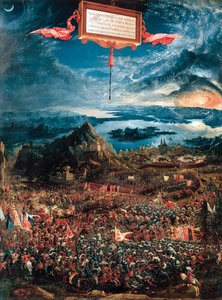
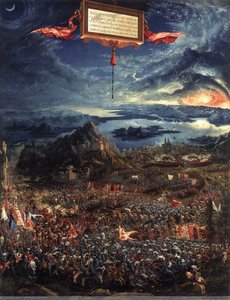
Albrecht Altdorfer's "The Battle of Alexander at Issus," painted in 1529 and now residing within the Alte Pinakothek in Munich, isn’t merely a depiction of a historical battle; it’s a visceral embodiment of ambition, conflict, and the precarious balance between East and West. More than just a military scene, this monumental work is a carefully constructed panorama—a stage upon which the destinies of empires collide, rendered with an unprecedented dynamism and emotional intensity for its time. The painting immediately assaults the viewer with its scale and frenetic energy; figures surge across the canvas in a swirling vortex of steel, color, and movement, creating a sense of overwhelming chaos that belies the strategic brilliance at play.
Altdorfer’s genius lies not simply in his technical skill—though it is undeniably masterful—but in his ability to fuse meticulous detail with an almost hallucinatory intensity. Every shield gleams, every plume of war paint reflects the light, and the musculature of each soldier is rendered with a startling realism. Yet, this hyper-realism isn’t employed to create a photographic likeness; rather, it serves to amplify the drama and heighten the sense of immediacy. The artist masterfully employs atmospheric perspective—distant figures fading into a hazy blue – to draw the eye deeper into the scene, while simultaneously utilizing bold color contrasts—the fiery reds of the Macedonian cavalry against the somber blues and greens of the Persian ranks—to establish a clear visual hierarchy.
A Landscape Transformed: The Dawn of Independent Landscape
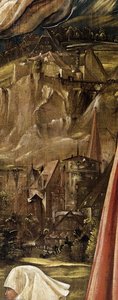
What truly distinguishes “The Battle of Alexander” is Altdorfer’s revolutionary approach to landscape. Prior to this painting, landscapes were typically relegated to secondary roles, serving merely as backdrops for historical or religious narratives. Altdorfer, however, elevates the landscape to a central protagonist, imbuing it with its own expressive power and significance. The rolling hills of the Bavarian countryside—recognizable in the distant background—are not simply a setting; they are actively engaged in the drama unfolding before them, mirroring the turmoil and uncertainty of the conflict. The artist’s use of color – particularly the vibrant greens and blues – evokes both the beauty and the danger inherent in nature, suggesting that even the landscape itself is caught in the crosscurrents of war.
This shift towards independent landscape marked a pivotal moment in art history, establishing Altdorfer as one of the pioneers of what would later be known as the “world landscape.” He wasn’t interested in creating a realistic representation of a specific place; instead, he used the landscape to amplify the emotional impact of the scene and to convey a sense of timelessness. The inclusion of elements like the rising sun on the left side of the painting—a symbol of hope and renewal—further reinforces this notion of landscape as an active participant in the unfolding drama.
Symbolism and Political Undertones
Beyond its purely visual impact, “The Battle of Alexander” is laden with symbolic meaning. The battle itself represents a clash between two civilizations – the burgeoning power of the West, embodied by Alexander the Great, and the declining empire of Persia. However, Altdorfer subtly complicates this narrative by incorporating elements that suggest a broader political context. The painting was commissioned by Duke William IV of Bavaria, who was actively preparing for war against the Ottoman Turks—a formidable threat to Europe at the time. Some art historians believe that Altdorfer deliberately used the imagery of Alexander’s victory to bolster morale and inspire his patrons to confront this contemporary enemy.
The inclusion of figures fleeing in disarray, particularly those representing Darius III, reinforces this sense of impending doom. The composition itself—with Alexander positioned at the center, radiating authority and control—suggests that Western civilization is destined to triumph over Eastern decadence. Even the sky, with its dramatic interplay of light and shadow, seems to foreshadow a future of conflict and uncertainty.
A Timeless Masterpiece: Reproduction and Beyond
“The Battle of Alexander at Issus” remains a profoundly moving and intellectually stimulating work of art. Its dynamic composition, masterful technique, and rich symbolism continue to captivate viewers centuries after its creation. High-quality reproductions offer an accessible way to experience the painting’s power and beauty, allowing art lovers, collectors, and interior designers alike to bring this iconic image into their homes or offices. When selecting a reproduction, seek out versions that faithfully capture Altdorfer's vibrant color palette and dramatic lighting—elements that are crucial to understanding the painting’s emotional impact. This monumental work serves as a potent reminder of the enduring power of art to both reflect and shape our understanding of history, politics, and the human condition.
Obras relacionadas
Biografía del artista
Primeros años y carrera
Albrecht Altdorfer, un renombrado pintor, grabador y arquitecto alemán, nació en Regensburg, Baviera, alrededor de 1480. Su padre, Ulrich Altdorfer, pintor y miniaturista, probablemente influyó en su interés por el arte desde temprana edad.Ascenso a la prominencia
La carrera artística de Altdorfer ganó impulso con la creación de pequeñas obras íntimas en medios no convencionales. Se estableció en Regensburg en 1505, convirtiéndose eventualmente en arquitecto de la ciudad y concejal. Sus primeras obras firmadas, incluyendo grabados y dibujos como los *Stygmata de San Francisco* y *San Jerónimo*, datan de alrededor de 1506.Contribución a la Escuela del Danubio
Altdorfer es considerado el principal representante de la Escuela del Danubio, un círculo que pionero el paisaje como género independiente en el sur de Alemania. Sus viajes por el río Danubio y hacia los Alpes en 1511 lo inspiraron a convertirse en el primer pintor de paisajes en el sentido moderno, liderando la Escuela del Danubio.Obras notables y colaboraciones
- La Batalla de Alejandro en Issos (1529) para el duque Guillermo IV de Baviera
- Colaboración con Maximiliano I en Innsbruck desde 1513
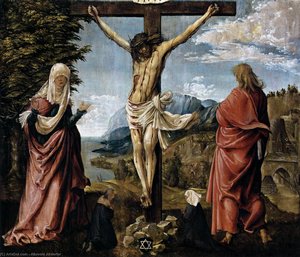
- Influenciado por artistas como Giorgione y Lucas Cranach, como se ve en su crucifixión
Colecciones de museos y legado
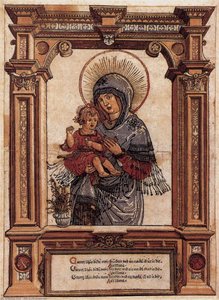
- El Museum Ostdeutsche Galerie (Alemania) presenta obras de Altdorfer, incluyendo la *Madonna* (hermosa María de Regensburg).
- Las Kunstsammlungen und Museen Augsburg (Austria) también exhiben su arte.
- El legado de Altdorfer se extiende más allá de sus 55 paneles, 120 dibujos y numerosos grabados, con un impacto duradero en el Renacimiento alemán.
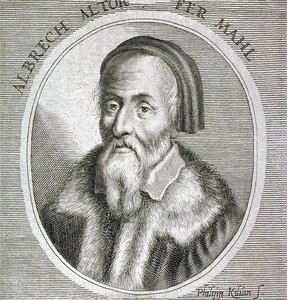
Albrecht Altdorfer
1480 - 1538 , Alemania
Datos clave
- Artistas Que Influyeron:
- Giorgione
- Lucas Cranach el Viejo
- Alberto Durero
- Fecha De Muerte: 1538
- Fecha De Nacimiento: c. 1480
- Influenciado A Artistas: ['Escuela del Danubio']
- Lugar De Nacimiento: Regensburg, Alemania
- Movimiento Artístico: Renacimiento alemán
- Nacionalidad: Alemán
- Nombre Completo: Albrecht Altdorfer
- Obras Notables:
- La Batalla de Alejandro en Issos
- Susana y los viejos
- Natividad de la Virgen
Artículos relacionados
Albrecht Dürer: Las 25 Obras Maestras del Renacimiento Alemán | ArtsDot
Descubre las 25 obras maestras de Albrecht Dürer, el genio del Renacimiento alemán. Explora grabados icónicos como 'Melancolía I' y aprende sobre su técnica innovadora. Encuentra reproducciones de arte de alta calidad para decorar tu hogar en ArtsDot.com.
Albrecht Altdorfer: Innovation, Spirituality & the Northern Renaissance Landscape
Explore the groundbreaking art of Albrecht Altdorfer, a pioneer of the Northern Renaissance's Danube School. Discover his innovative landscapes, spiritual symbolism & lasting influence on German painting.

Paisajes Románticos: 10 Obras Maestras que Definieron un Movimiento Artístico
Descubre los 10 paisajes románticos más influyentes de artistas como Caspar David Friedrich y Turner. Explora la belleza, el simbolismo y las técnicas del movimiento romántico. Reproducciones de arte exclusivas en ArtsDot.com.

Evocations of Place: A Historical Journey Through Landscape Art
Explore the rich history of landscape art with ArtsDot. Discover renowned artists, movements like Impressionism & Romanticism, and expert guidance for collecting timeless pieces. Find your perfect serene escape today!

John Constable: Las 25 Obras Maestras del Paisaje Inglés | ArtsDot
Descubre las 25 obras maestras de John Constable, el pintor romántico inglés que capturó la belleza del paisaje. Explora su técnica, historia y significado en ArtsDot.com. Reproducciones de arte de alta calidad para tu hogar.