 Ver en contexto
 Enviar
 Compartir
 Detalles

 Descargar
 Similares
 Radiografía
 Presentación de diapositivas
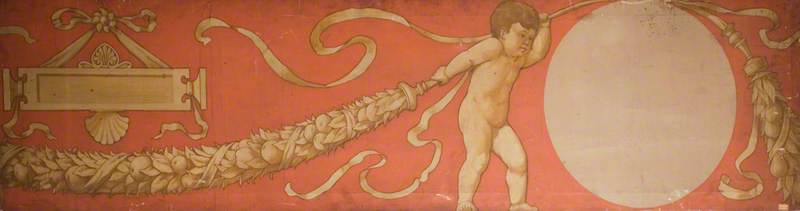
Putti Flanking a Medallion (design for a frieze in the Victoria and Albert Museum)
 1910
1910 56.0 x 230.0 cm
 Ver más
Adquiera una imagen digital de alta resolución y optimizada, muy superior a la vista previa en línea.
Cada archivo es preparado meticulosamente por nuestros especialistas internos mediante el uso de herramientas avanzadas y un experto retoque manual. Nos aseguramos de que cada imagen posea una claridad excepcional, una precisión cromática impecable y un detalle minucioso.
El archivo final se entrega por correo electrónico en un plazo de 72 horas, optimizado para su uso inmediato en entornos profesionales, editoriales y de impresión. Esta es la misma calidad en la que confían los estudios de diseño, las editoriales y las galerías de primer nivel.
Imagen Digital
Descarga un archivo de alta resolución para exhibición personal, impresión y proyectos creativos. ( Comprar impresión Comprar pintura hecha a mano)
Incluido en cada pedido de imágenes digitales
Entrega digital experta, garantizada.
Al elegir ArtsDot.com, no solo está adquiriendo una imagen; está recibiendo una obra de arte digital mejorada profesionalmente, elaborada con precisión y respaldada por una garantía de satisfacción. Esto es todo lo que incluye su pedido, automáticamente:

Entrega rápida por email
Recibirá su archivo de imagen digital en alta resolución por correo electrónico en un plazo de 72 horas tras realizar su pedido, listo para su uso inmediato.

Archivo digital optimizado por IA
Su obra de arte se optimiza profesionalmente mediante herramientas avanzadas de IA y edición manual, garantizando el máximo detalle, claridad y precisión cromática.

Reenvío gratuito de por vida
¿Has borrado o perdido tu archivo por error? No te preocupes: te lo volveremos a enviar en cualquier momento, sin coste adicional.

Sin gastos de importación, siempre
Disfrute de su obra de arte al instante sin aduanas, aranceles ni gastos de envío; las descargas digitales siempre están libres de impuestos.

Garantía de fidelidad de color
Garantizamos que su imagen digital refleje los colores originales con la mayor fidelidad posible, mediante el uso de herramientas profesionales y gestión del color.

Garantía de satisfacción de 60 días
Si no está satisfecho con su imagen digital, la revisaremos o le reembolsaremos el 100% en un plazo de 60 días, sin preguntas.

100% Garantía de devolución de dinero
¿No está satisfecho? Obtenga un reembolso completo dentro de los 60 días posteriores a la recepción de su archivo digital, sin necesidad de explicaciones.

Descuentos por pedidos grandes
Compra 3 imágenes, ahorra 10% - Compra 5, ahorra 15% - Compra 10+, ahorra 20%. Ideal para proyectos creativos, galerías y agencias.
Obras relacionadas





Biografía del artista
A Life Dedicated to Beauty: The Art of Alexander Fisher
Alexander Fisher (born in 1867, died 1934) was a pivotal figure in the British Arts and Crafts movement, though his name remains surprisingly less known than contemporaries like William Morris or Charles Ashbee. This is perhaps due to the breadth of his talents – he excelled not only as a painter, particularly renowned for his exquisite depictions of roses, but also as an accomplished enamelist and highly respected silversmith. Fisher’s life was one devoted to the pursuit of beauty in all its forms, seamlessly blending classical influences with the aesthetic principles of the Arts and Crafts ethos. He wasn't merely replicating styles; he was synthesizing them into a uniquely personal vision that celebrated craftsmanship, naturalism, and refined elegance. His early training laid the foundation for this multifaceted career, beginning at the Birmingham School of Art under Henry Payne, where he developed a strong grounding in drawing and design. This formal education was followed by studies at the South Kensington Schools (later the Royal College of Art), exposing him to a wider range of artistic traditions and techniques. However, it was his subsequent apprenticeship with A.J. Collings, a leading silversmith, that truly shaped his path, instilling in him a deep appreciation for the meticulous processes involved in creating objects of lasting quality.From Silverware to Canvas: The Evolution of an Artistic Style
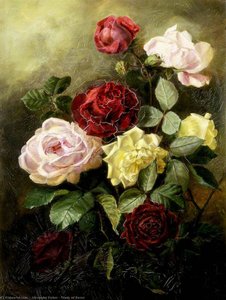
Fisher initially established himself as a skilled silversmith, producing pieces characterized by their graceful forms and delicate detailing. His work during this period often drew inspiration from 18th-century designs, reflecting a broader revival of interest in historical styles within the Arts and Crafts movement. However, he soon began to explore other artistic avenues, most notably painting. This transition wasn’t abrupt; rather, it was a natural extension of his existing sensibilities. The same attention to detail and refined aesthetic that informed his silverware found expression in his canvases. He became particularly celebrated for his paintings of roses – not the idealized, romanticized roses of earlier traditions, but meticulously observed studies capturing their subtle nuances of color, form, and texture. These weren’t simply botanical illustrations; they were imbued with a sense of quiet contemplation and poetic beauty. Simultaneously, Fisher embarked on a remarkable career in enamel work, becoming one of the leading exponents of *Limoges enameling* techniques in Britain. His enamel panels, often depicting floral motifs or classical scenes, showcased his mastery of color and his ability to create luminous, jewel-like surfaces. He frequently combined these different mediums – incorporating enamel into his silverwork or using painted designs as studies for larger enamel compositions.Influences and Artistic Philosophy
Fisher’s artistic development was shaped by a confluence of influences. The Pre-Raphaelites, with their emphasis on naturalism and detailed observation, undoubtedly played a role in his early work. He admired the clarity of form and vibrant color found in Italian Renaissance painting, particularly the works of Botticelli and Fra Angelico. However, he wasn’t simply imitating these masters; he was adapting their principles to suit his own aesthetic vision. The Arts and Crafts movement itself provided a crucial framework for his artistic philosophy. Fisher believed strongly in the importance of craftsmanship, rejecting mass-produced objects in favor of handmade items that celebrated skill and individuality. He also embraced the movement's emphasis on *naturalism*, seeking inspiration from the natural world and striving to depict it with accuracy and sensitivity. His work often reflects a sense of harmony between art and nature, suggesting a deep respect for the beauty and order inherent in the natural world. He saw his role as an artist not merely as creating beautiful objects, but as elevating everyday life through the quality and artistry of his creations.Major Achievements and Legacy
Throughout his career, Fisher exhibited widely, gaining recognition for his exceptional skill and refined aesthetic. He contributed to numerous Arts and Crafts exhibitions, showcasing his silverware, paintings, and enamel work. His pieces were highly sought after by collectors and connoisseurs, and he received commissions from prominent patrons of the arts. While he didn’t found a large workshop like some of his contemporaries, Fisher exerted a significant influence on other artists through his teaching and mentorship. He lectured at various art schools and encouraged students to embrace craftsmanship and naturalism in their own work. His enamel panels were particularly influential, inspiring a new generation of enamelists to explore the possibilities of this ancient medium. His paintings of roses remain highly prized for their delicate beauty and meticulous detail. Today, Fisher’s work is held in numerous public and private collections, including the Victoria and Albert Museum and the British Museum. His legacy lies not only in the exquisite objects he created but also in his unwavering commitment to craftsmanship, naturalism, and refined elegance – principles that continue to resonate with artists and designers today.Historical Significance
Alexander Fisher occupies a unique position within the history of the Arts and Crafts movement. He wasn’t solely focused on one particular craft; he excelled in multiple disciplines, demonstrating a remarkable versatility and artistic range. This breadth of talent allowed him to explore the interconnectedness between different art forms and to create works that seamlessly blended painting, enamel work, and silversmithing. His emphasis on classical influences set him apart from some of his more overtly medievalist contemporaries, suggesting a broader understanding of historical styles and their potential for contemporary expression.- He helped to elevate the status of enamel work within British art.
- His paintings of roses represent a significant contribution to botanical art.
- His silverwork embodies the aesthetic principles of the Arts and Crafts movement.