 Ver en contexto
 Enviar
 Compartir
 Detalles

 Descargar
 Similares
 Radiografía
 Presentación de diapositivas
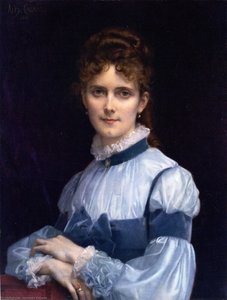
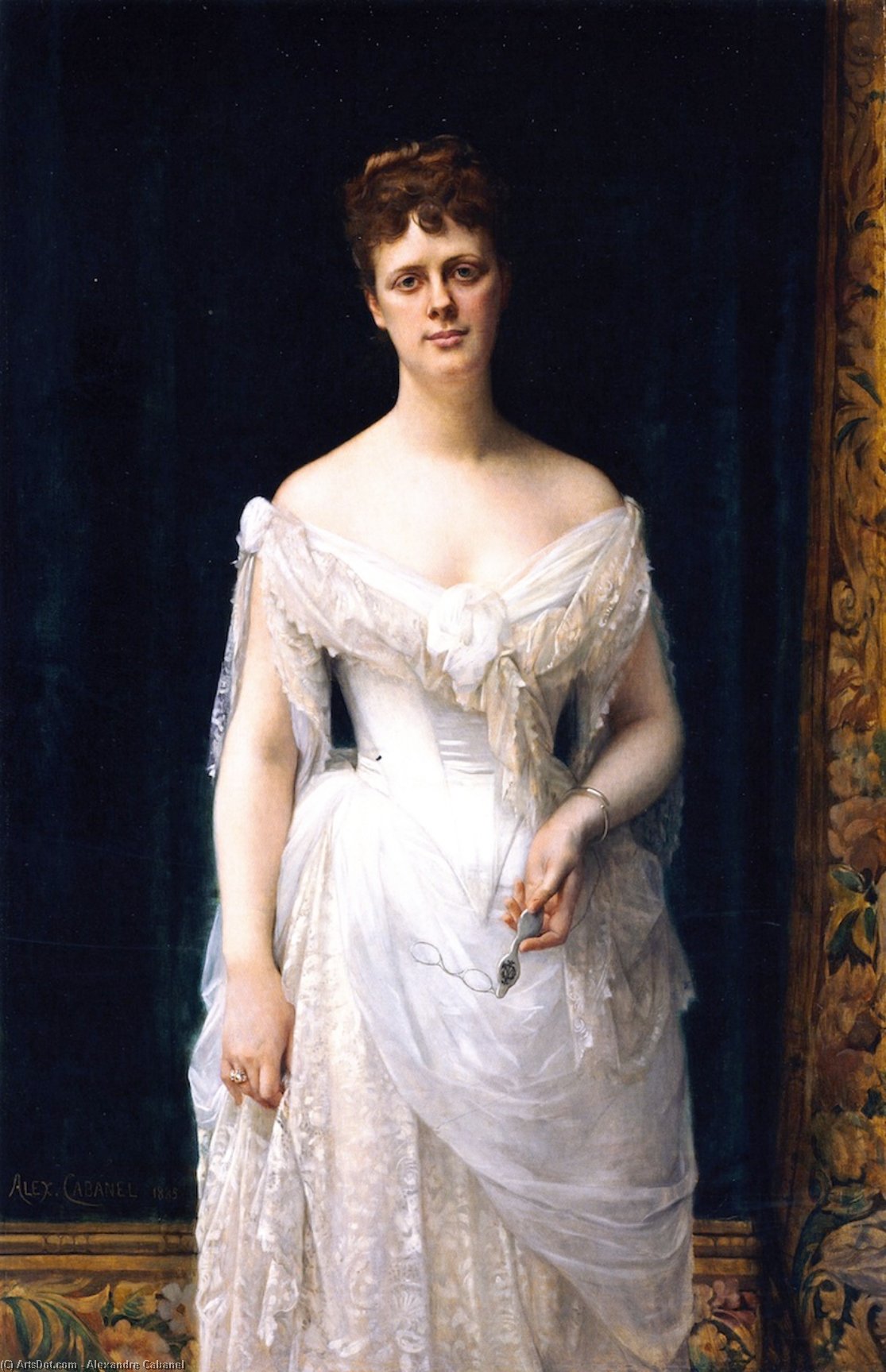
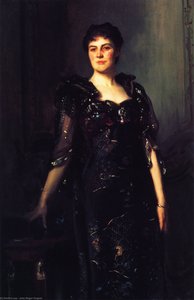
Mary Frick Garrett (later Mrs. Henry Barton Jacobs)


 Ver más
Reproducción al óleo hecha a mano
Óleo sobre lienzo pintado a mano en el tamaño y marco de su elección, realizado por encargo por nuestros artistas. ( Comprar impresión Comprar imagen)




P118B $10

P118H $10

P118W $10

P438Z $10

P508JH $12

P508YH $12

P805H $10

P805Z $10

P919BZ $10

P919G $10

P919XJ $10

P959ZH $10

P968JZ $12

W106C $8

W218G $10

W218JH $8

W218Y $10

W307PJ $10

W316G $10

W316PJ $8

W316Y $10

W398PJ $8

W4111J $10

W500HY $15

W500JH $15

W692G $12

W849H $8

W940BG $15

W953PJ $8




Elija entre nuestros tamaños predefinidos que respetan las proporciones originales de la obra.

Puede ingresar sus propias dimensiones para adaptarse a un marco o espacio específico. Si el tamaño seleccionado no coincide con las proporciones de la imagen original, recortaremos la obra o extenderemos la pintura con elementos adicionales pintados a mano. Se le enviará una maqueta digital para su aprobación antes de comenzar la producción.
Tenga en cuenta que la vista previa en pantalla no refleja el recorte o la extensión reales. Solo la maqueta mostrará con precisión la composición final.
Si bien existen tamaños personalizados, recomendamos seleccionar una dimensión de la lista predefinida para preservar las proporciones originales.
Tras realizar el pedido, el equipo de ArtsDot.com enviará un correo electrónico al cliente para solicitar instrucciones y proporcionarle una vista previa del boceto.
Envío a todo el mundo () en 3-4 semanas en lugar de las 5 semanas estándar. (22 agosto). Sin comprometer la calidad.

Envío exprés gratuito a todo el mundo

Lienzo de lino de alta calidad

Seguro de envío total

Garantía de reembolso de impuestos aduaneros

Garantía de fidelidad cromática exacta

Política de devolución de 60 días (solo por defectos)

Garantía de devolución del 100% del dinero

Descuento por cantidad
 La opción de vidrio solo está disponible en tamaños inferiores a 110 cm.

Mary Frick Garrett (later Mrs. Henry Barton Jacobs)
Técnica de reproducción
Dimensiones de la reproducción
-


Precio total final
$ 263
Descripción de la obra
A Portrait of Gilded Age Grace: Mary Frick Garrett and the Legacy of Alexandre Cabanel
Alexandre Cabanel’s “Mary Frick Garrett, later Mrs. Henry Barton Jacobs,” painted in 1885, is more than just a portrait; it's a meticulously crafted window into the opulent world of late 19th-century Baltimore and the aspirations of its most prominent families. The painting captures not merely a likeness but an entire persona – a woman embodying both aristocratic bearing and quiet domesticity, perfectly reflecting the societal expectations and artistic trends of the era. It’s a testament to Cabanel's mastery of academic realism, a style that prioritized idealized beauty, precise technique, and a reverence for classical forms.

The Painter and His Patron: A Meeting of Artistic Vision
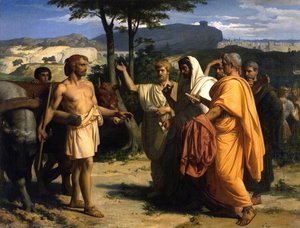
Alexandre Cabanel, born in Montpellier in 1823, was a product of the rigorous training afforded at the École des Beaux-Arts in Paris. He initially struggled to gain recognition within the competitive Salon system, facing repeated rejections before finally achieving success with his evocative “Cincinnatus receiving the ambassadors of Rome” (1843). His early works established him as a skilled historical and mythological painter, but it was his portraits that truly cemented his reputation, particularly among wealthy American collectors. Mary Frick Garrett, a woman of considerable social standing and wealth – her husband Robert Garrett being a pivotal figure in the Baltimore & Ohio Railroad’s success – recognized Cabanel's ability to capture not just physical appearance but also an aura of refined elegance and understated power.
A Study in Light, Texture, and Symbolism
Cabanel’s technique is immediately apparent: a smooth, almost velvety application of paint creates a luminous surface that seems to radiate from within. The delicate modeling of Mary's form – the subtle curve of her neck, the gentle folds of her dress – demonstrates his profound understanding of anatomy and drapery. Note the careful rendering of the lace collar, the intricate details of her jewelry, and the soft light illuminating her face. These elements aren’t merely decorative; they contribute to a sense of quiet dignity and understated wealth. The muted color palette—primarily creams, browns, and subtle greens—reinforces this atmosphere of refined elegance. The background curtain, rendered with meticulous detail, adds depth and richness to the composition.
A Gilded Age Portrait: Reflecting Social Status
“Mary Frick Garrett” is a quintessential example of the portraiture popular during the Gilded Age. It’s not simply a representation of an individual; it's a carefully constructed image designed to project status, wealth, and social grace. The pose—slightly turned towards the viewer, with one hand resting gracefully on her lap—is deliberately formal and dignified. The inclusion of the small table and the delicate flowers further emphasize her refined taste and domestic sensibilities. This painting speaks volumes about the aspirations of a woman navigating the complexities of high society – a desire to be seen as both beautiful and accomplished, a pillar of her community, and a symbol of her family’s success. The portrait ultimately serves as a visual shorthand for the values and ideals of the era.
Collecting a Legacy: The Mary Frick Jacobs Collection
The painting is part of the esteemed Mary Frick Jacobs collection at the Baltimore Museum of Art, a testament to her discerning eye and significant contribution to American art. Her passion for collecting not only enriched the museum’s holdings but also helped establish Baltimore as a prominent center for European art in the United States. The legacy of this remarkable woman—a socialite, philanthropist, and art collector—continues to resonate through the works she cherished and preserved.
Obras relacionadas
Biografía del artista
Primeros años y formación
Alexandre Cabanel, un renombrado pintor francés, nació el 28 de septiembre de 1823 en Montpellier, Hérault. A los diecisiete años, ingresó en la École des Beaux-Arts de París, donde estudió bajo la tutela de François-Édouard Picot.Estilo artístico y obras notables
El estilo artístico de Cabanel se caracterizó por su adhesión al estilo académico, centrándose en temas históricos, clásicos y religiosos. También fue un hábil retratista. Algunas de sus obras más destacadas incluyen:- Ophelia (1883), una obra maestra que muestra su habilidad para capturar la esencia de una escena.
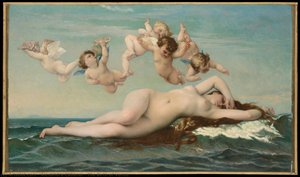
- El nacimiento de Venus (1863), un claro ejemplo de la pintura académica del siglo XIX, que fue comprada por el emperador Napoleón III.
- Retrato de la condesa E. A. Vorontsova Dashkova, que demuestra su capacidad para capturar la esencia de sus sujetos.
Influencias y desarrollo artístico
Cabanel recibió influencias significativas de artistas como François-Édouard Picot y Jacques-Louis David, quienes establecieron las bases de su formación en el estilo neoclásico. Su paso por la Villa Medici en Roma le permitió estudiar directamente las antigüedades romanas y las obras maestras del Renacimiento, enriqueciendo su comprensión de la técnica pictórica y la composición artística. Su amistad con Alfred Bruyas fue crucial para su desarrollo artístico, ya que Bruyas se convirtió en un importante mecenas y coleccionista de sus obras. A lo largo de su carrera, Cabanel evolucionó desde temas religiosos y mitológicos hacia retratos y escenas más románticas, manteniendo siempre una fuerte conexión con la tradición académica francesa.Reconocimientos y legado
El trabajo de Cabanel fue ampliamente reconocido, y recibió varios premios, incluyendo:- La beca Prix de Rome en 1845
- La medalla de honor en los Salones de 1865, 1867 y 1878
Obras adicionales y contexto histórico
Además de las obras mencionadas, Cabanel pintó numerosos cuadros menos conocidos como Armonía, Fedra, La condesa de Keller, entre otros. Su obra se desarrolló en un período de transición en el arte francés, donde la tradición académica coexistía con el surgimiento del Naturalismo y el Impresionismo. Aunque Cabanel se mantuvo fiel a los principios académicos, su trabajo reflejó una sensibilidad romántica que lo distinguió de sus contemporáneos. Su estilo fue criticado por algunos naturalistas como Émile Zola, pero continuó siendo muy apreciado por coleccionistas e instituciones, incluyendo a los emperadores Napoleón III y Eugenia de Montijo.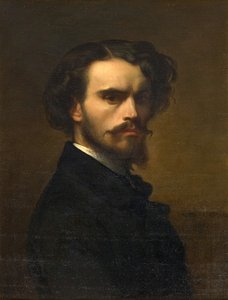
Alexandre Cabanel
1875 - 1889 , Francia
Datos clave
- Artistas Que Influyeron:
- François-Édouard Picot
- Jacques-Louis David
- Fecha De Fallecimiento: 23 de enero de 1889
- Fecha De Nacimiento: 28 de septiembre de 1823
- Lugar De Nacimiento: Montpellier, Francia
- Movimiento Artístico: Arte académico
- Nacionalidad: Francés
- Nombre Completo: Alexandre Cabanel
- Obras Notables:
- Ofelia (1883)
- El nacimiento de Venus (1863)
Artículos relacionados

El Retrato Académico: Tradición, Técnica y la Evolución del Arte Representacional
Descubra el legado del retrato académico: técnica, artistas clave como Dubufe y Roden, e influencia en la historia del arte. Análisis experto y profundo.
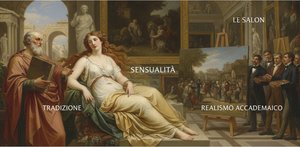
Alexandre Cabanel: Sensuality, Tradition & the Salon's Embrace of Academic Realism
Explore the captivating world of Alexandre Cabanel, master of French Academic painting. Discover his iconic works, Salon success & lasting influence on art history. High-quality reproductions available at ArtsDot.

Sir Francis Grant: Portraiture, Patronage & Victorian Society
Explore the life & work of Sir Francis Grant, a leading Victorian portraitist. Discover his aristocratic clientele, role at the Royal Academy, and enduring artistic legacy. Learn about art patronage in 19th-century Britain.
Los 10 Maestros del Realismo Académico: Obras que Marcaron la Historia del Arte
Descubre los 10 lienzos más emblemáticos del Realismo Académico. Explora la historia, técnica y belleza de obras maestras de Bouguereau, Gérôme y Cabanel. Encuentra reproducciones de arte clásico en ArtsDot.com.
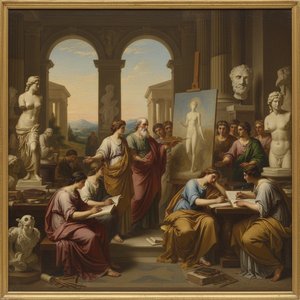
El Auge del Arte Académico: Tradición, Técnica y la Búsqueda de la Forma Ideal en el Siglo XIX
Descubre el auge del arte académico en el siglo XIX: técnicas impecables, maestros como Bouguereau y Gérôme, y la búsqueda de la belleza ideal. Un análisis profundo para amantes del arte clásico.